Why Surface Hardening Defines Gear Rack Service Life
Contact Fatigue & Pitting Resistance
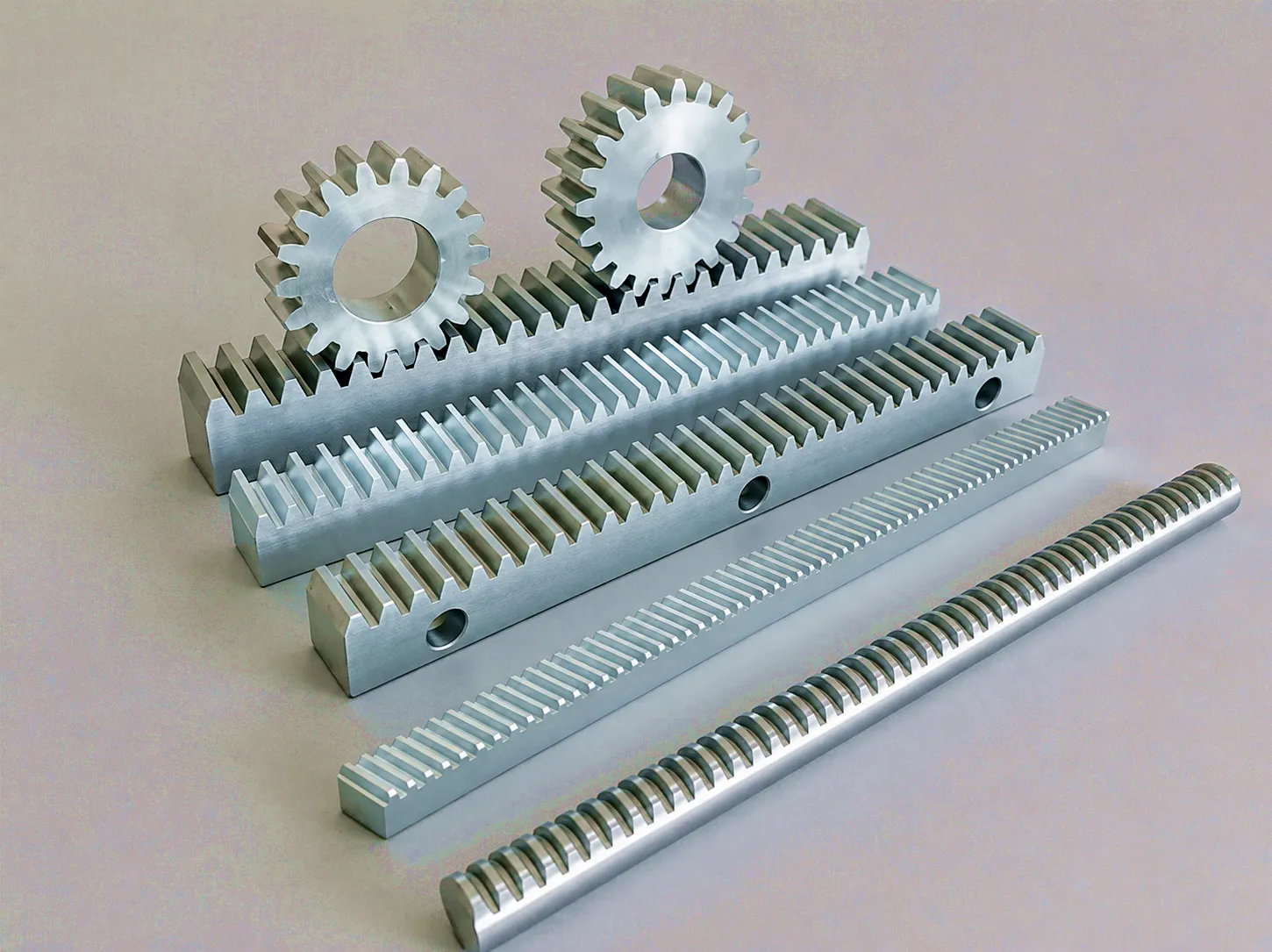
Every meshing cycle between a gear rack and its pinion subjects the tooth flanks to Hertzian contact stress. Without adequate surface hardness — typically expressed in Vickers (HV) or Rockwell C (HRC) — the subsurface zone immediately below the contact area becomes susceptible to shear-driven crack initiation. This leads to the characteristic pitting failures that UK maintenance engineers encounter in high-cycle conveyor and gantry systems. A hardened surface layer of 0.5 mm to 2.5 mm depth, depending on the method, dramatically raises the threshold before fatigue-driven damage begins.
Abrasive Wear Protection
Industrial environments across the UK Midlands and northern England expose gear racks to abrasive particles, metal swarf, and scale from surrounding manufacturing processes. The sliding contact that occurs during meshing combines with these particles to create a micro-cutting action across tooth surfaces. Surface hardening converts the outer structure of the steel into a wear-resistant phase — typically martensite in induction and carburized racks — that resists this form of material loss far more effectively than untreated mild or medium carbon steel. The result is dimensional stability maintained over far longer operational periods, reducing the frequency and cost of scheduled replacements.
Toughness Preservation in the Core
One of the most important — and frequently misunderstood — aspects of surface hardening is that it is not through-hardening. The deliberate aim is to create a hard, wear-resistant outer shell while retaining a relatively tough, ductile core that can absorb bending stresses and shock loads without catastrophic fracture. This dual-layer structure is especially critical in gear racks installed in applications with frequent start-stop cycles, heavy payloads, or sudden load reversals — conditions common in UK automotive press shops, steel stockholder handling systems, and quarrying equipment where full brittleness would cause tooth breakage rather than manageable surface wear.
Method 02
Carburizing — Maximum Surface Carbon, Maximum Hardness
Process Conditions
- Temperature: 850–950 °C in controlled atmosphere
- Carbon potential: 0.8–1.2% C at surface
- Case depth: 0.5–2.5 mm
- Quench: oil or polymer quench
- Temper: 150–200 °C to relieve stress
- Final hardness: 58–64 HRC
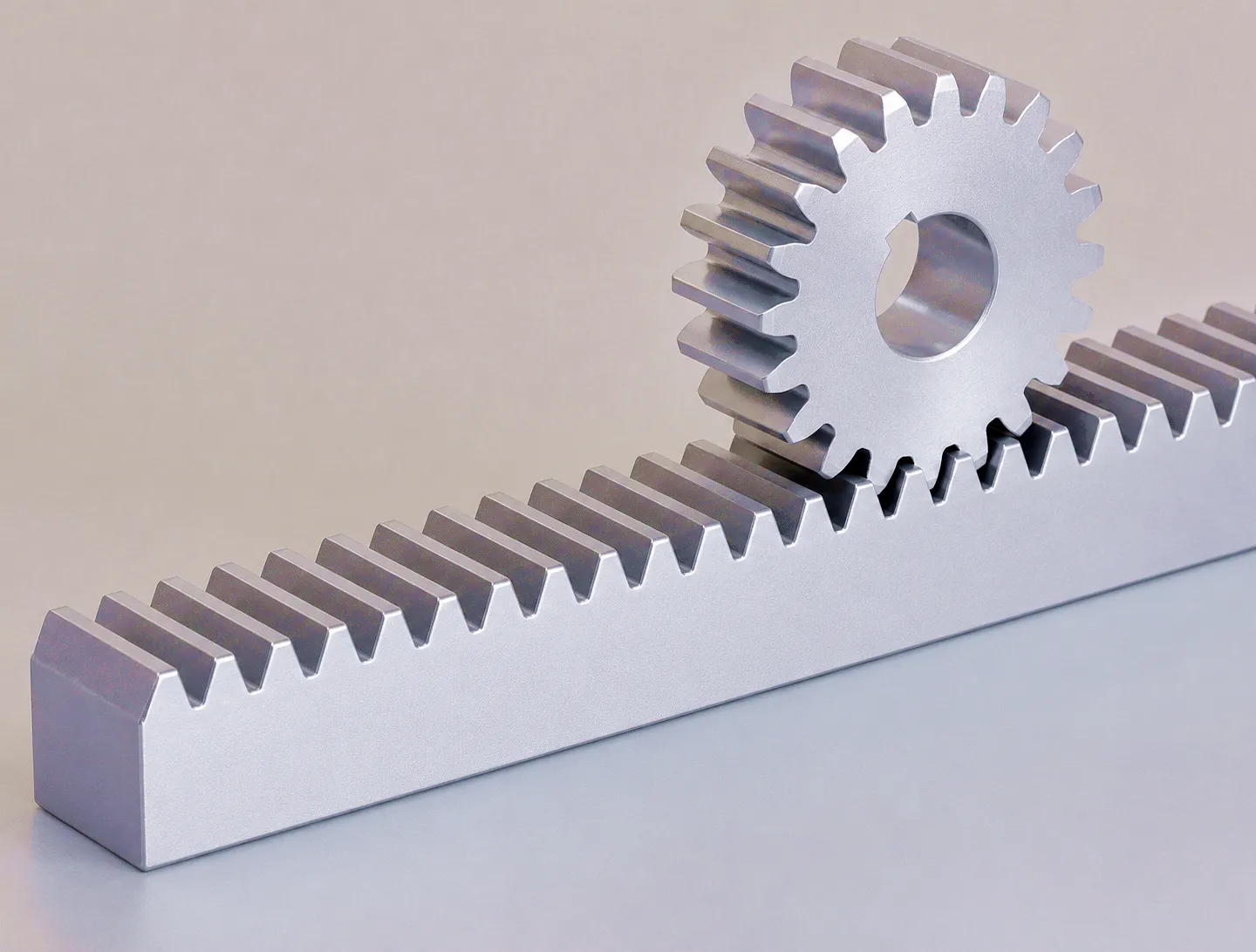
Carburizing addresses a specific metallurgical limitation: low-carbon steels, such as 20MnCr5 or 16MnCr5, possess excellent toughness and machinability but cannot be induction hardened to high surface hardness because they simply don’t have enough carbon to form a fully martensitic structure. The carburizing process solves this by enriching the surface layer with carbon before hardening. The gear rack is placed in a furnace with a carbon-rich atmosphere — typically a mixture of endothermic gas and natural gas — and held at temperature for several hours. Carbon atoms diffuse into the steel surface, raising the local carbon content from the original 0.15–0.25% of the base steel to 0.75–1.0% at depths up to 2.5 mm.
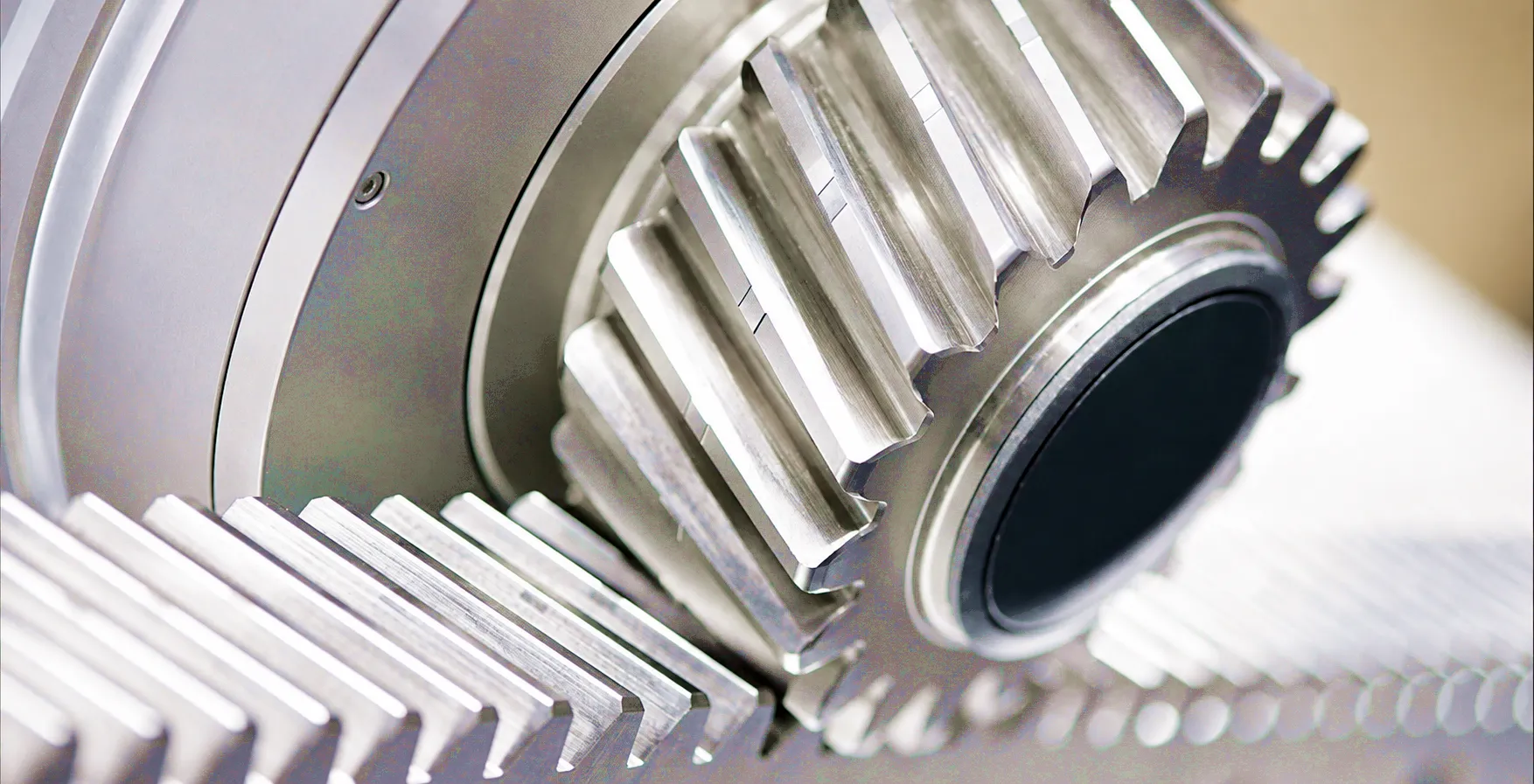
Once the carbon enrichment cycle is complete, the rack is quenched — typically in oil — transforming the high-carbon surface layer into martensite while the core, still low in carbon, transforms into a tougher pearlitic or bainitic structure. This produces the highest combination of surface hardness (58–64 HRC) and core toughness of any of the three methods, making carburized gear racks the preferred specification for the most demanding applications in UK industry. These include press-room automation at car body stamping plants in the West Midlands, automated storage and retrieval systems in logistics centres, and heavy material handling equipment in Scottish offshore fabrication yards where shock loads are frequent and gear rack replacement is logistically difficult and costly.
The main engineering trade-off with carburizing is dimensional change. The combination of high-temperature soaking and rapid quenching introduces thermal gradients that cause growth and distortion, particularly in long rack sections. This is why carburized gear racks destined for precision applications are almost always finish-ground after hardening to restore tooth profile accuracy and achieve pitch tolerances within DIN or ISO quality grades. The process adds cost and lead time, but for applications where both maximum hardness and geometric precision are non-negotiable, it is the benchmark solution.
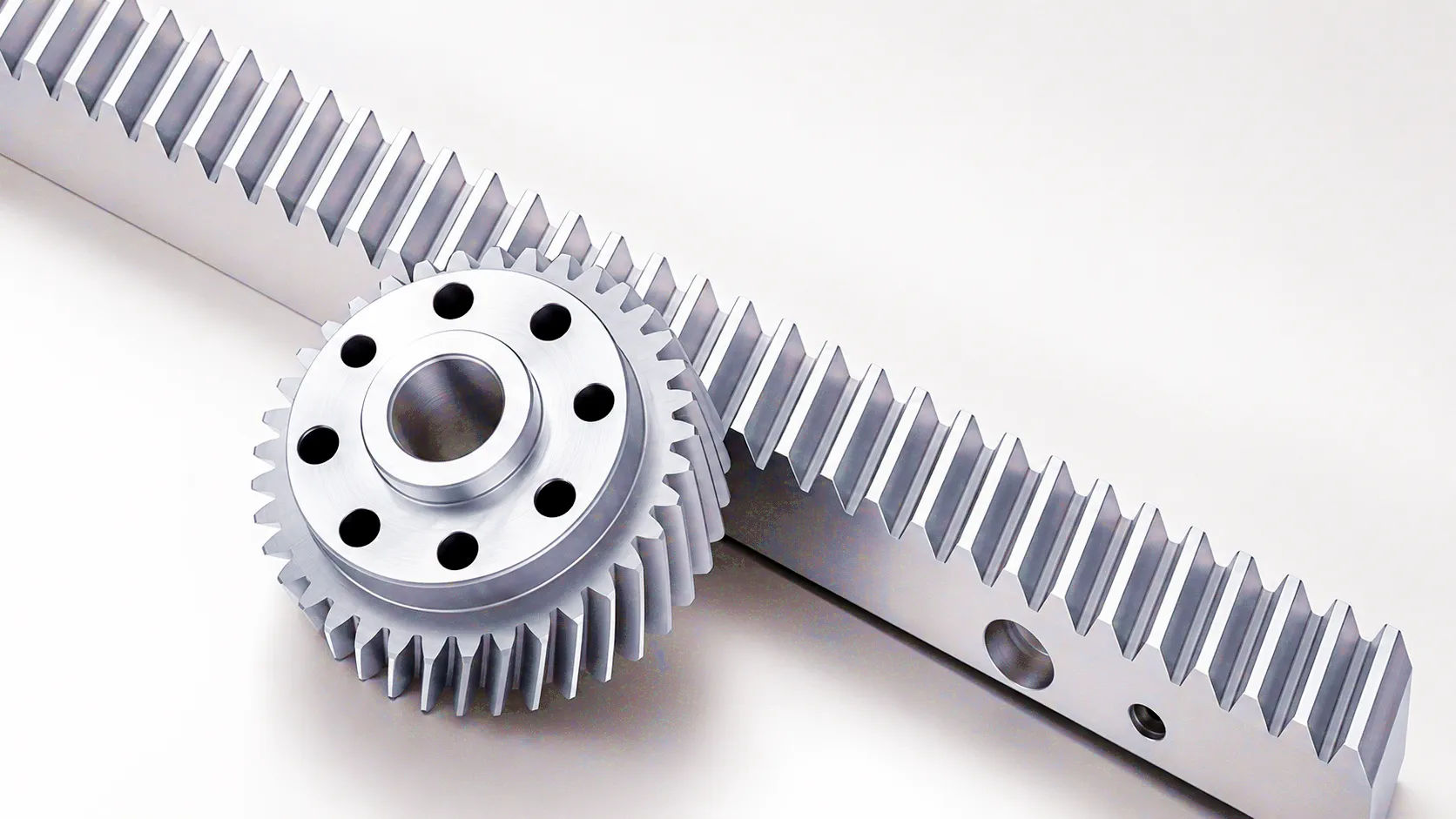
Gear Rack Surface Hardening: Technical & Performance Parameters
| Parameter | Induction Hardening | Carburizing | Gas/Plasma Nitriding |
|---|---|---|---|
| Process Temperature | 850–950 °C (surface only) | 850–950 °C (full soak) | 480–570 °C (sub-transformation) |
| Surface Hardness (HRC/HV) | 55–62 HRC | 58–64 HRC | 700–1100 HV (67–70 HRC equiv.) |
| Effective Case Depth | 0.5–3.0 mm | 0.5–2.5 mm | 0.1–0.7 mm (diffusion zone) |
| Dimensional Distortion Risk | Low–Medium | Medium–High | Very Low |
| Compatible Base Steels | C45, 42CrMo4, 41Cr4 | 20MnCr5, 16MnCr5, 18CrNiMo7-6 | 31CrMoV9, 34CrAlNi7, Nitralloy 135M |
| Post-Process Grinding Required | Optional / Recommended | Yes (for precision grades) | Often not required |
| Corrosion Resistance | Low (requires coating) | Low–Medium | Good (white layer protective) |
| Typical Rack Modules | Module 1–16+ | Module 1–12 | Module 1–8 (fine pitch) |
| Typical Precision Grade (DIN) | DIN 6–9 | DIN 5–8 (post-ground) | DIN 4–7 |
| Typical Application Load Rating | Medium–Heavy | Heavy–Very Heavy | Light–Medium |
Material Selection: The Foundation Beneath the Hardened Surface
No hardening process can compensate for an unsuitable substrate material. The choice of base steel for a gear rack must precede — and directly inform — the choice of hardening method. Understanding the metallurgical logic behind material selection allows engineers to optimise cost, performance, and manufacturing lead time simultaneously, particularly important in a UK manufacturing environment where procurement lead times and material availability through domestic steel stockholders in Sheffield and the Black Country are practical constraints.
C45 / EN8 Carbon Steel
With a carbon content of approximately 0.45%, C45 is the workhorse steel for induction-hardened gear racks. Its combination of adequate hardenability, competitive raw material cost, and broad availability through UK steel distributors makes it the most common substrate in standard gear rack production. When induction hardened, it reliably achieves surface hardness in the 55–58 HRC range. It is not suitable for carburizing (too high a base carbon content makes the carbon gradient from enrichment less meaningful), and only marginally suitable for nitriding without achieving the very highest hardness values.
20MnCr5 / 18CrNiMo7-6
These low-carbon alloy steels are the primary materials for carburized gear racks. Their low carbon content (0.16–0.22%) means they are inherently tough but cannot be directly hardened. After carburizing to raise the surface carbon to approximately 0.8–1.0%, followed by quenching and tempering, they develop exceptional surface hardness on a core that retains excellent impact resistance. 18CrNiMo7-6 in particular is specified for the most demanding UK applications — turbine component transfer systems, heavy automotive press shop transfer gear racks — where shock resistance is as important as wear resistance.
31CrMoV9 (Nitriding Steel)
Chromium, molybdenum, and vanadium form nitrides of exceptional hardness during the nitriding process, making 31CrMoV9 — and the related 34CrAlNi7 — the preferred substrates for nitrided gear racks. The aluminium in the latter alloy is particularly effective at forming very hard aluminium nitrides. These steels are pre-hardened and tempered before machining and nitriding, which means dimensional stability is exceptional throughout the entire manufacturing sequence. Their higher alloy content carries a cost premium, justified in pharmaceutical packaging lines, precision optical manufacturing equipment, and measurement-critical CNC gantries.
Explore Our Precision Gear Rack Range
Industrial Application Scenarios for Surface-Hardened Gear Racks
The Right Specification Changes Everything
 A gear rack that is over-specified wastes budget. One that is under-specified fails prematurely and disrupts production. Getting the surface hardening method right — matched to load profile, environment, precision grade, and budget — is one of the highest-leverage engineering decisions in any rack-and-pinion drive system design. Ever Power’s engineering team exists to support UK procurement professionals and design engineers through exactly this decision process, from initial application review through to final delivery and after-sales support.
Customer Success Story: Rotherham Structural Steel Plant
Heavy Industrial Steel Handling | South Yorkshire, UK
The Challenge
A major structural steel manufacturer in Rotherham, South Yorkshire, operating a hot-rolling line feeding an overhead crane-based transfer system, was experiencing premature gear rack failures at approximately 14 months of service — well short of the 36-month target replacement interval. The racks in question were standard C45 induction-hardened metric racks, Module 8, 2,000 mm lengths, sourced domestically. Post-failure analysis showed pitting concentrated at the pitch line and early plastic deformation of tooth profiles, consistent with surface-initiated contact fatigue under loads exceeding the surface layer’s capacity. Downtime cost associated with each failure was estimated at £28,000, factoring in lost production, crane hire for rack replacement, and engineering time.
The Ever Power Solution
Ever Power’s technical sales team conducted a remote load analysis using the plant’s available process data. The review identified that peak pinion loads during rapid traverse exceeded the rated capacity of the existing rack material by approximately 35%, particularly during emergency stops. The recommended replacement specification was a carburized 18CrNiMo7-6 Module 8 gear rack with a case depth of 1.4 mm and surface hardness of 61 HRC, followed by a profile-grinding operation to restore DIN 7 accuracy after the hardening-induced distortion. A custom mounting hole pattern was incorporated to match the existing crane track channel without modification. Delivery of the first four 2,000 mm rack sections was achieved in eight weeks — including material procurement, heat treatment, and grinding operations — with the full rack run completed in twelve weeks.
The Outcome
After 28 months of continuous operation with the carburized Ever Power gear rack set installed, no maintenance intervention has been required. The plant’s engineering director confirmed that scheduled inspection showed no detectable flank wear or pitting at the 18-month inspection milestone — a performance standard that the previous racks failed to reach at any point during their operational lives. The 50% improvement in projected service life translates directly to two fewer unplanned shutdown events per rack run, with an estimated annual saving of approximately £56,000 in averted downtime costs alone.
What Our UK Customers Say
“
We had tried three different suppliers before Ever Power. None of them could give us the carburized 18CrNiMo7-6 specification with the profile grinding and the custom hole pattern in a reasonable lead time. Ever Power delivered exactly what the engineering team specified, with full material certs, in eight weeks. The racks have now outlasted everything we’ve ever fitted in that crane run.
— Martin T., Senior Mechanical Engineer, Rotherham Steel & Structural Ltd
“
Our CNC gantry at our Sheffield tooling facility needed DIN 5 ground helical racks with nitrided flanks. Most rack suppliers I contacted couldn’t confirm the combination or had lead times of 16 weeks or more. Ever Power had done this before, quoted competitively, and the racks arrived on time with a hardness verification report for every tooth section. Positioning repeatability has been exactly as designed.
— Andrew P., Mechanical Design Lead, Sheffield Precision Tooling Systems
“
Working in pharmaceutical packaging means the gear racks in our filling line have to be plasma-nitrided and compatible with our washdown process. Ever Power understood that requirement immediately — they didn’t try to sell me standard induction-hardened racks. The plasma-nitrided 31CrMoV9 racks they supplied passed our validation protocol first time. For a supply partner, that level of technical competence is rare.
— Sarah W., Engineering Procurement Manager, Cambridge Pharmaceutical Equipment Ltd
Frequently Asked Questions
Practical answers for UK engineering, procurement, and maintenance teams
What is the difference between induction hardening and carburizing for gear racks used in heavy industrial applications in the UK?
Induction hardening heats the surface of an existing medium-carbon steel rack electromagnetically and quenches it to form a hard martensitic layer, while carburizing first enriches the surface of a low-carbon steel with carbon in a controlled-atmosphere furnace and then hardens it. For heavy UK industrial applications — such as press shops in the West Midlands or crane systems in Northern England — carburizing typically produces higher surface hardness (up to 64 HRC) and better core toughness, making it the better choice where shock loads and very high cyclic stresses are present. Induction hardening is faster and more cost-effective for medium-duty applications and for racks that need to be processed in-line without the furnace soak times that carburizing requires.
How much does a custom induction-hardened gear rack cost when ordered from a supplier in the UK, and what affects the price?
The price of a custom induction-hardened gear rack from a UK-market supplier depends primarily on the module (tooth size), cross-section dimensions, overall length, required precision grade (DIN 5 versus DIN 8, for example), the base steel grade, and the total order quantity. Surface hardening, particularly if profile grinding is required after hardening, adds a meaningful cost increment — often 30–60% above the price of an unhardened equivalent. Material certifications (EN10204 3.1), non-destructive testing, and specific packaging or delivery requirements add further to the price. For an accurate quote tailored to your specific UK application, contact Ever Power’s technical sales team directly at sales@farm-equipment-parts.com.
Which gear rack surface hardening method is best for a food processing plant in Yorkshire that needs corrosion resistance and precision positioning?
For food processing environments in Yorkshire or anywhere in the UK where both washdown corrosion resistance and precision positioning are required, gas nitriding or plasma nitriding is the preferred choice. The nitride compound layer (white layer) formed on the rack surface is inherently more corrosion-resistant than induction-hardened or carburized surfaces, and the sub-transformation process temperature (480–570 °C) means dimensional distortion is minimal — allowing final-ground tooth geometry to be preserved through the hardening stage. If the positioning accuracy requirement is moderate and the loading is relatively light, a stainless steel substrate with plasma nitriding offers a strong combination of hygiene compliance, corrosion resistance, and adequate hardness.
Where can I find a reliable gear rack supplier in the UK who offers both carburized and nitrided options with fast delivery and full material certs?
While several domestic and European gear rack suppliers serve the UK market, finding one that can supply both carburized and nitrided options with full EN10204 3.1 material certification, profile-grinding capability, and reasonable lead times from a single source is genuinely challenging. Ever Power specialises in precisely this breadth of capability, offering UK procurement teams a single technical point of contact for all surface hardening specifications, supported by documented hardness verification and dimensional inspection reports. Samples, technical datasheets, and quotes can be requested directly via sales@farm-equipment-parts.com.
How does the case depth of an induction-hardened gear rack affect its load-carrying capacity and fatigue life in a Birmingham automotive press shop environment?
In a Birmingham automotive press shop environment, where gear racks are subjected to high-frequency, high-load transfer cycles, case depth is one of the most critical parameters in the specification. A shallow case depth (less than 0.8 mm) produces a hard shell that is prone to subsurface crack initiation at the case-core interface when the Hertzian contact stress field extends below the hardened zone — which it will at the loads typical of press-room transfer bar systems. A deeper case (1.5–3.0 mm for the large modules used in these applications) ensures that the entire critical stress volume remains within the hard martensitic layer, pushing the fatigue initiation site below the relevant stress zone. The optimum case depth is a function of module size, tooth geometry, and the applied load — a relationship that should be calculated using contact stress analysis rather than estimated.
When should a UK engineer specify a precision ground helical gear rack rather than a standard straight-tooth rack, and does the hardening method change?
A helical gear rack is specified when noise reduction, smoother force transmission, or higher load capacity is required compared to a straight (spur) rack of the same module and cross-section. The helical tooth form distributes the contact load across a longer contact line, reducing instantaneous contact stress and producing lower vibration and audible noise — an important factor in UK manufacturing environments subject to workplace health and safety noise exposure limits. The hardening method does not fundamentally change for helical versus straight racks, but the geometry of the helical tooth form makes uniform induction heating somewhat more complex to achieve compared to straight flanks, and post-grinding of helical profiles requires a more sophisticated grinding wheel dressing and trajectory. View our precision ground helical rack range for detailed specifications.
Ready to Specify the Right Gear Rack for Your Application?
Ever Power’s engineering team is available to review your application, recommend the appropriate hardening specification, and provide a competitive, fully documented quotation.
edit by gzl