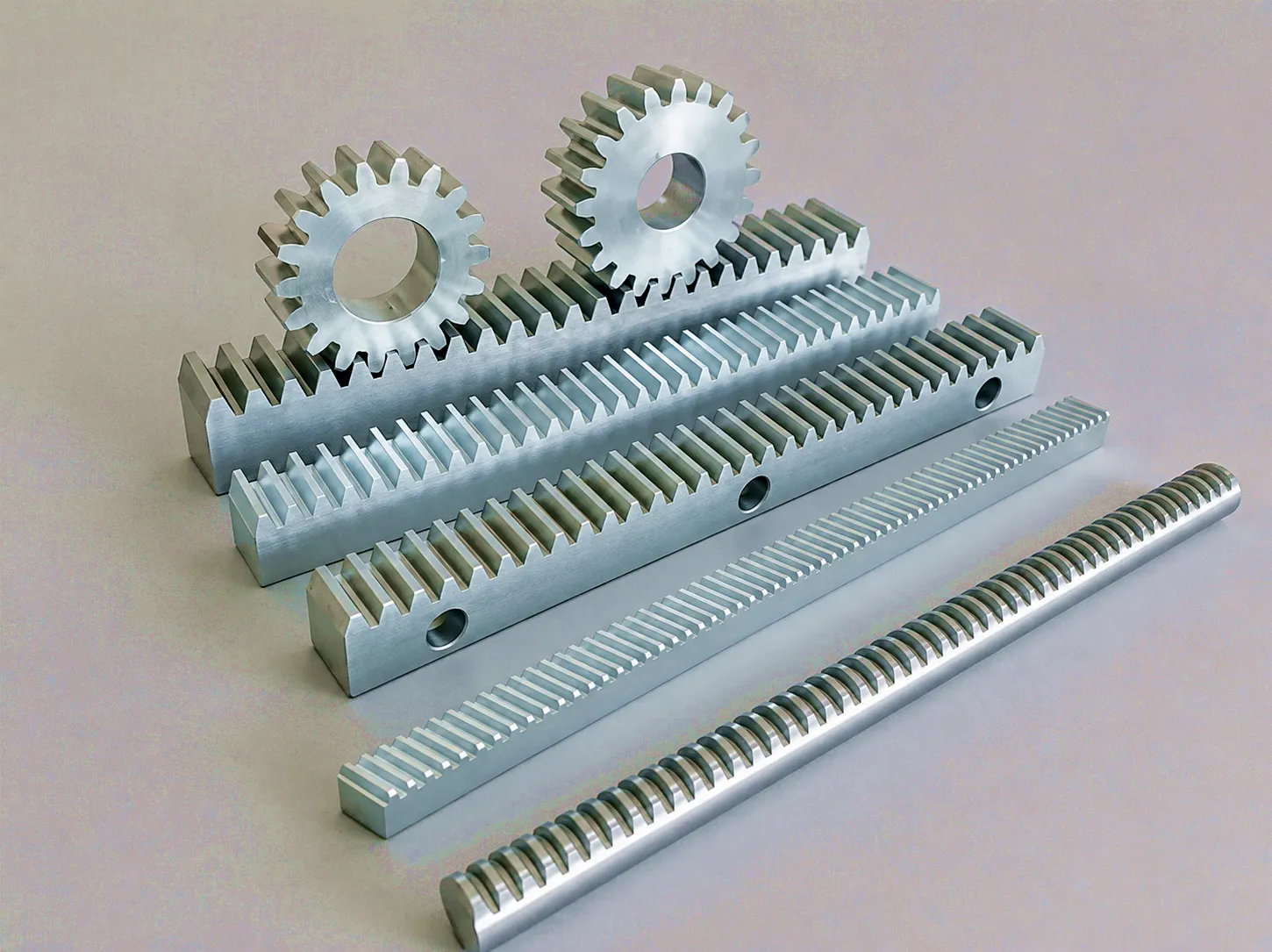
Among the most fundamental components in mechanical power transmission, the gear rack stands apart for one defining quality: it converts continuous rotary motion into precise, controllable linear displacement. This is not a new concept — rack and pinion geometry traces back centuries — but the engineering demands placed on modern gear racks by UK industrial buyers in 2024 have elevated them far beyond their historical origins. Contemporary CNC machining centres in Sheffield, gantry robots operating on automated assembly lines in Birmingham, and agricultural machinery rolling across the East Midlands all depend on gear rack systems to deliver repeatable, low-backlash linear travel.
What makes a gear rack genuinely reliable at speed and under sustained load is a combination of tooth geometry accuracy, base material choice, heat treatment consistency, and mounting precision. When any one of these factors is compromised, the consequences are felt immediately in positioning error, accelerated wear, and unpredictable load response. This article breaks down every critical dimension of gear rack technology — from ground tooth profiles to hardened surfaces and module standards — while illustrating exactly how these components serve the demanding specifications found across British manufacturing, construction, and food processing sectors.
The Engineering Principle Behind Gear Rack Linear Motion
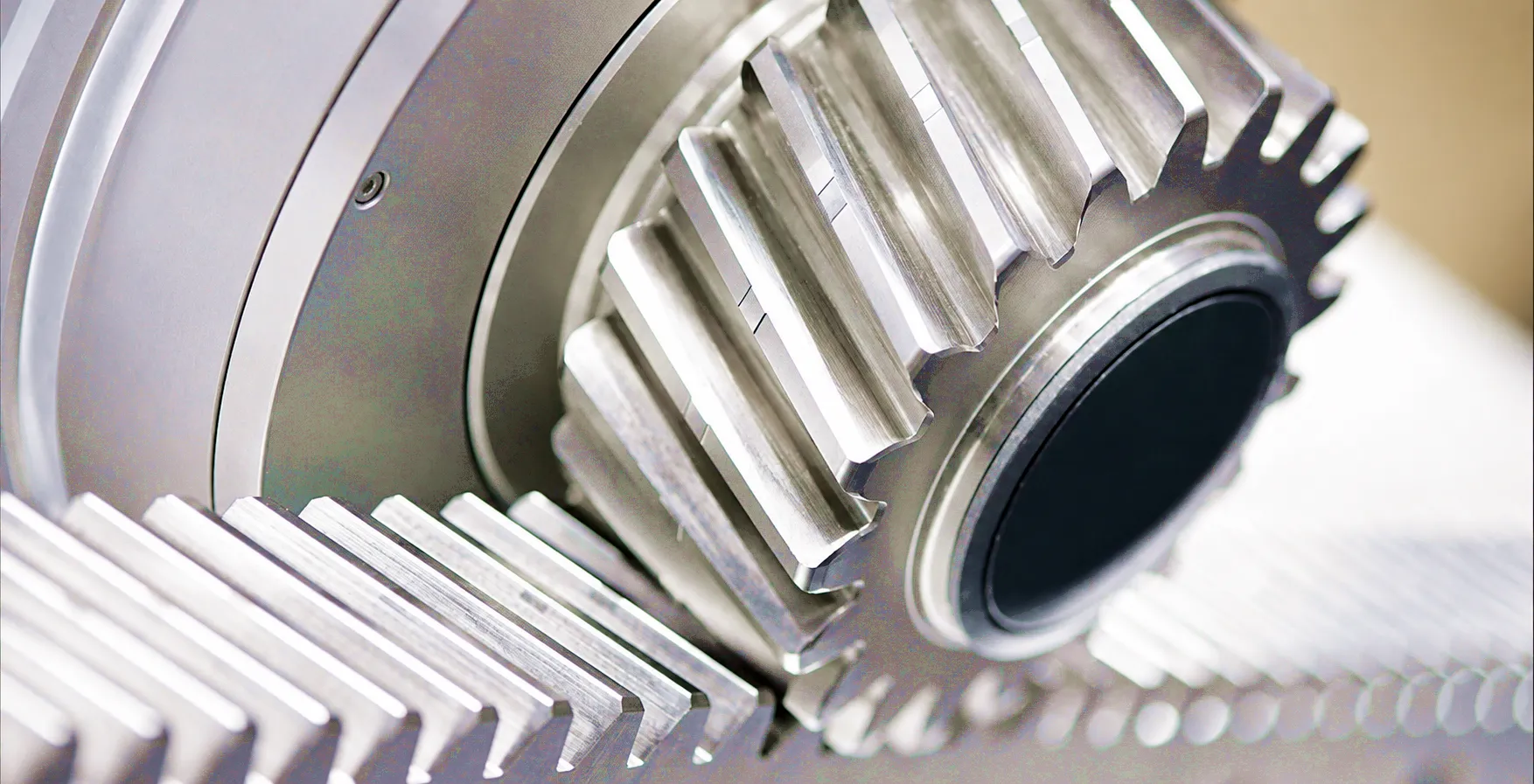
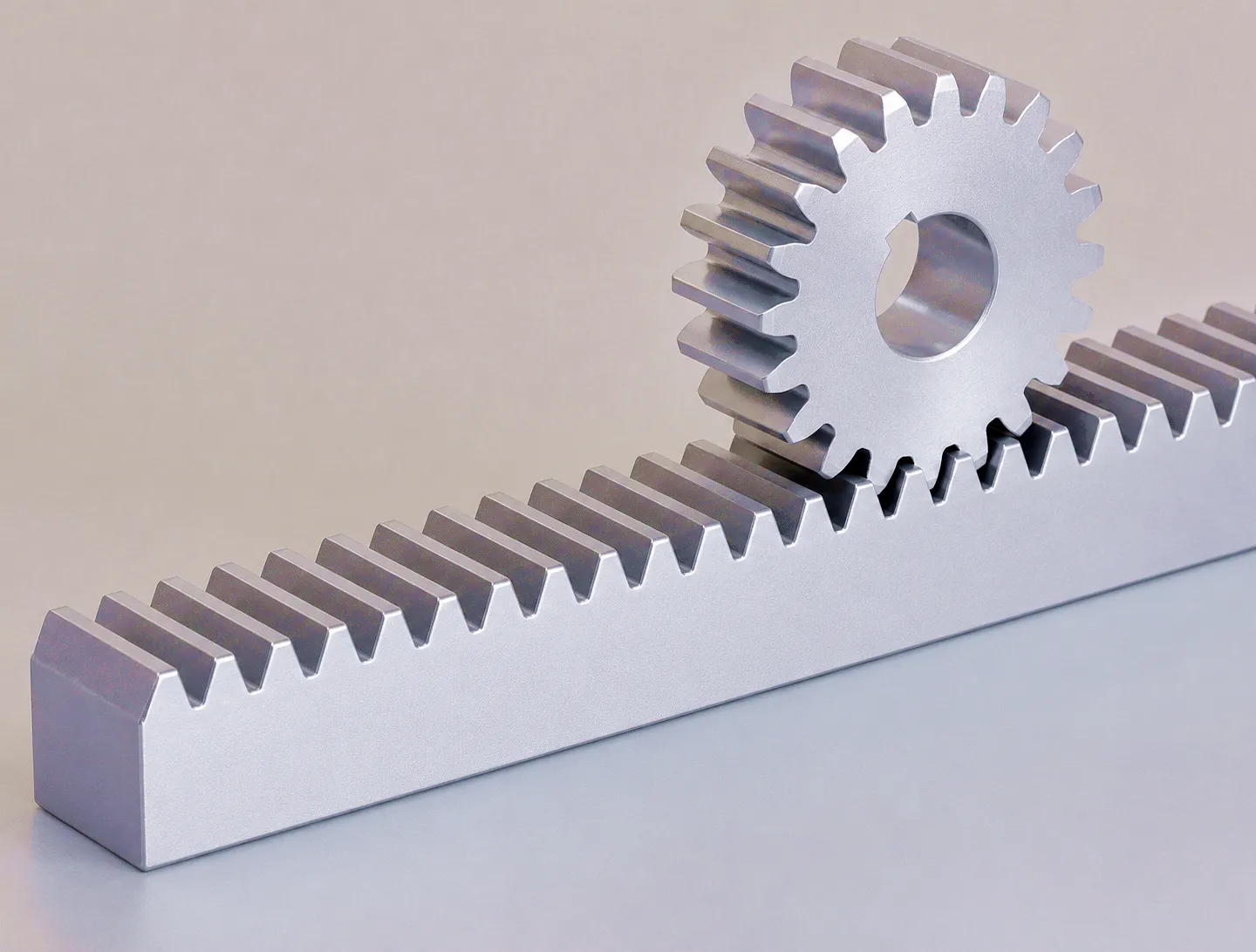
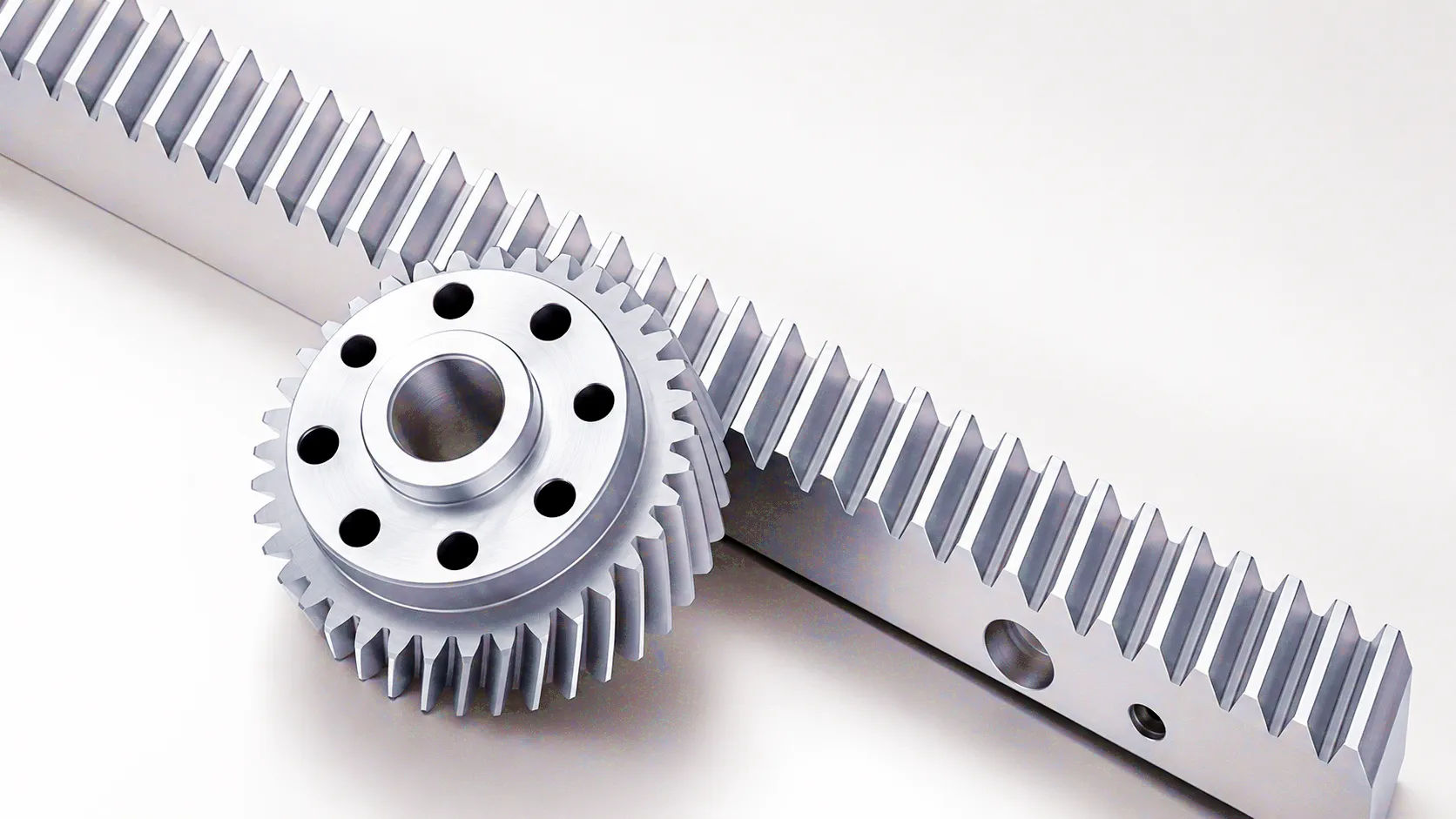
At its mechanical core, a gear rack is a straight bar with teeth cut along one face. When a circular pinion gear meshes with those teeth and rotates, the pinion’s tangential velocity is translated directly into linear travel along the rack’s length. The relationship is geometrically exact: for every full revolution of the pinion, the carriage or moving element travels a distance equal to the pinion’s pitch circle circumference. This predictability is precisely what makes gear racks the preferred choice over belt drives, lead screws, and pneumatic actuators when positional accuracy and load capacity must both be maintained simultaneously.
The teeth can be cut in two configurations. Straight-cut (spur) racks have teeth oriented perpendicular to the rack’s axis, producing a clean but sometimes abrupt tooth engagement. Helical racks have teeth cut at an angle — typically between 15° and 25° — which allows multiple teeth to share the load at any given instant, producing smoother, quieter motion and significantly higher load capacity per unit length. For high-speed gantry applications common in UK automotive component manufacturing plants, helical gear racks are almost universally specified because the reduced vibration directly protects the quality of machined surfaces and the accuracy of sensor positioning systems.
The module (m) is the fundamental sizing parameter, defining the relationship between tooth pitch, tooth height, and overall rack dimensions. British engineers working to ISO 1328 standards typically specify module values ranging from m1 through m10, with m2 and m3 being extraordinarily common in CNC router tables and automated pick-and-place systems. The correct module selection depends on tangential force, pinion diameter, and required positioning resolution — a calculation that should always be verified against the specific duty cycle and expected service life of the installation.
Core Material Selection and Heat Treatment
The default choice for general-purpose gear racks in moderate-load applications. With carbon content around 0.45%, this steel achieves a good balance of tensile strength (approximately 600–750 MPa) and machinability. Surface hardening via induction brings the tooth face hardness to HRC 48–54, while the core remains relatively tough — reducing the risk of brittle fracture under impact loads. Widely used across UK logistics automation and conveyor systems.
The alloy steel of choice for demanding applications — heavy gantry cranes, large-format CNC machining centres, and steel mill handling equipment found throughout Rotherham and Scunthorpe. The chromium-molybdenum alloying raises through-hardened strength to 950–1100 MPa, and after induction hardening the tooth surfaces reach HRC 54–60. This material consistently outperforms carbon steel under cyclic high-load conditions where fatigue failure is the primary design concern.
Corrosion resistance is a non-negotiable requirement in pharmaceutical manufacturing, food processing plants across Yorkshire, and offshore marine applications around Aberdeen. Stainless gear racks sacrifice some absolute hardness compared to alloy steel, but their resistance to oxidation, chloride attack, and chemical cleaning agents makes them the only viable choice. Grade 316L, with its additional molybdenum content, is preferred where chlorinated washdown is part of the daily maintenance routine.
Glass-filled nylon racks have carved out a solid niche in light-duty applications where noise reduction, zero lubrication, and electromagnetic neutrality are priorities — medical imaging gantries, laboratory automation, and light retail display systems. While their load ratings are substantially lower than metallic counterparts, their self-lubricating nature and corrosion immunity make them a cost-effective choice where the operating forces are modest and maintenance access is limited.
Core Technical Advantages of Precision Gear Racks
Ground tooth profiles on precision gear racks achieve cumulative pitch errors below 0.02 mm per metre of travel. For CNC routing tables and laser cutting gantries across West Midlands job shops, this translates directly to part accuracy that removes the need for expensive post-processing and reduces scrap rates substantially.
Unlike belt and cable drives that are inherently limited by tensile strength, a properly specified gear rack can transmit very high tangential forces. Heavy-format rack systems in m8 or m10 module can accommodate dynamic loads exceeding 80 kN per metre — meeting the demands of bridge crane positioning systems and large automated welding gantries found across Sheffield’s steel fabrication sector.
Ball screws and linear motors have practical travel length limitations imposed by whip resonance, cost, and mass. Gear racks can be joined end-to-end — with precision-aligned butt joints and matched module/pitch — to achieve travel distances of tens of metres without a proportional cost increase. This makes them the dominant choice in automated warehouse retrieval systems and long-span plasma cutting machines in UK fabrication workshops.
Zero-backlash gear rack configurations — using twin-pinion preloaded drives or spring-loaded anti-backlash pinions — reduce directional play to less than 0.005 mm. This level of performance is essential in servo-controlled axes where the controller assumes zero mechanical play in its closed-loop algorithm. UK robotics integrators and machine tool builders increasingly specify precision-ground zero-backlash racks as their standard component for secondary axes.
Induction-hardened tooth surfaces with case depths of 1.5–3.0 mm provide exceptional wear resistance under sustained cycling. Coupled with appropriate lubrication intervals, hardened gear racks routinely exceed 30,000 hours of service life in well-maintained industrial environments — a lifecycle figure that justifies their selection over lower-cost alternatives that require frequent replacement and incur costly downtime.
Gear racks are available in rectangular cross-section profiles, T-slot mounting variants, round-tooth guide racks, and V-groove guide profiles — each serving a distinct functional role. Rectangular profile racks mount flush to machine beds; V-type guide racks integrate linear guidance and power transmission into a single component, reducing system complexity and saving assembly time on compact machine platforms.
Product Technical and Performance Parameter Table
| Parameter | Spur Rack (Standard) | Helical Rack (Ground) | Induction Hardened Rack |
|---|---|---|---|
| Module Range (m) | m1 – m10 | m1 – m8 | m2 – m10 |
| Helix Angle | 0° (Straight) | 15° / 19°28′ / 20° | 0° or 15°~20° |
| Accuracy Grade (ISO 1328) | Grade 8 – Grade 9 | Grade 4 – Grade 6 | Grade 6 – Grade 7 |
| Surface Hardness (HRC) | 28–32 (normalised) | 58–62 (ground + hardened) | 54–60 |
| Case Depth (mm) | — | — | 1.5 – 3.0 |
| Pitch Error / metre (mm) | ≤ 0.10 | ≤ 0.02 | ≤ 0.05 |
| Standard Length (mm) | 500 / 1000 / 2000 | 500 / 1000 / 2000 | 1000 / 2000 / Custom |
| Primary Material | C45 / S45C Steel | 42CrMo4 / SCM440 | 42CrMo4 / C45 |
| Max Tangential Force (kN/m) | Up to 30 | Up to 60 | Up to 80 |
| Pressure Angle | 20° | 20° | 20° |
Industrial Application Scenarios
In CNC machining centres, gear racks govern the linear axes — most commonly the X and Y gantry movements — where they work in tandem with servo motors and encoder feedback loops to maintain positioning accuracy across the full working envelope. UK machine tool builders around Coventry and Leicester routinely specify precision-ground helical gear racks for their vertical machining centres, where the combination of high acceleration capability, smooth motion, and fine cumulative pitch error enables consistent surface finish quality across multi-hour production runs. The precision ground helical rack is particularly valued in these environments because the post-grind tooth geometry eliminates the microgeometry errors that hobbed racks introduce, directly improving contour accuracy at high feed rates. Coolant resistance is achieved by phosphate conversion coating or nickel plating, both of which preserve dimensional accuracy while protecting the steel substrate from the aggressive water-based cutting fluids common in UK machine shops.
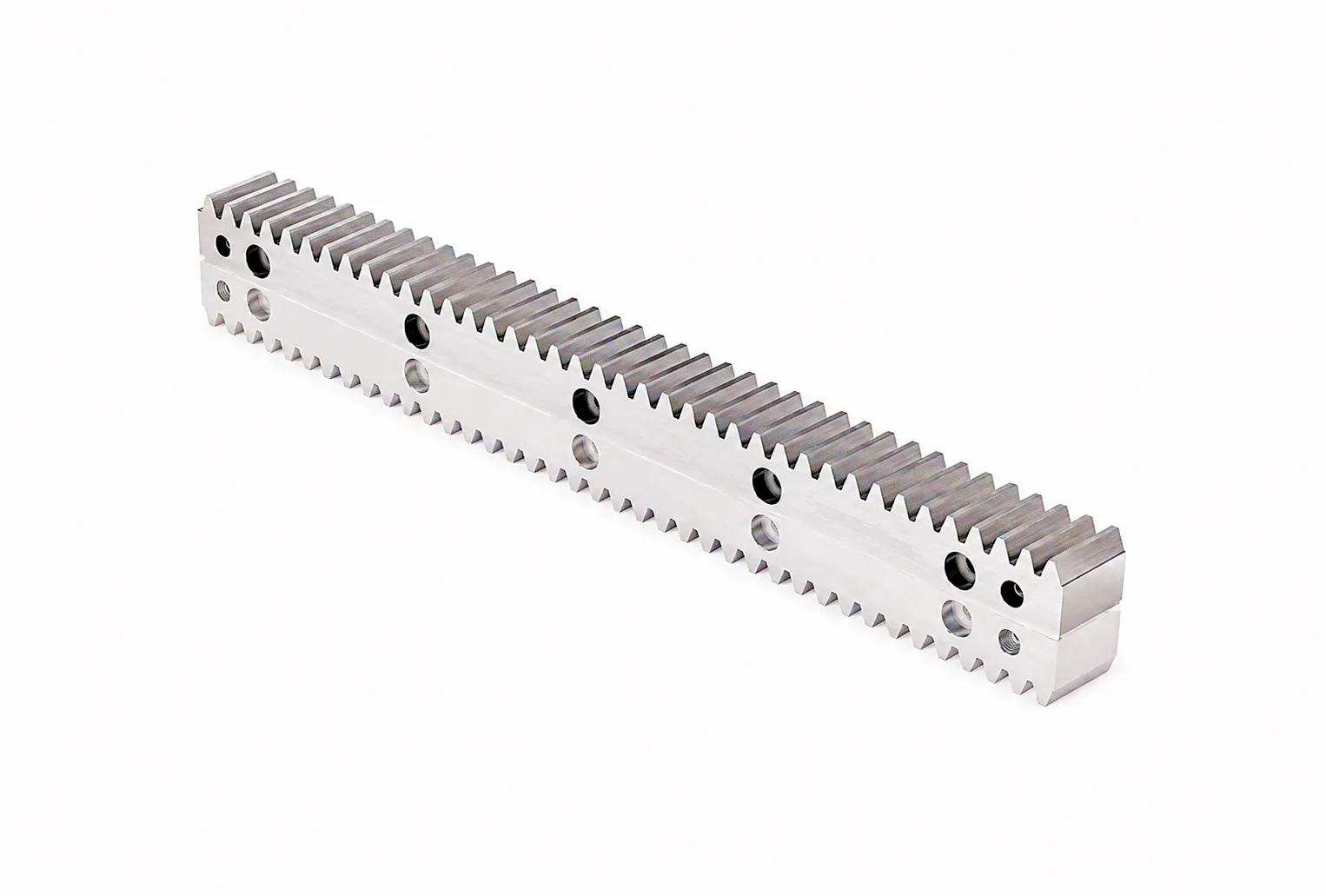
Automated Storage and Retrieval Systems (AS/RS) have expanded rapidly across UK distribution centres near Milton Keynes, Northampton, and the East Midlands logistics corridor. In these installations, gear racks drive the horizontal travel of stacker cranes and shuttle carriers along aisles that can extend 60 metres or more. The critical requirement in this application is not peak load capacity but rather the ability to maintain precise positioning at both ends of very long travel — a challenge that rack-and-pinion geometry addresses far more economically than alternatives. When joined sections of gear rack are precisely aligned and bolted to the structural steel of the racking system, the positional repeatability remains consistent regardless of the number of joint positions along the axis, provided the joining method is correctly executed with precision-ground half-tooth butt joints that maintain module alignment.
Cutting machine manufacturers serving the UK fabrication industry — from structural steel processors in Middlesbrough to shipbuilding component suppliers on Tyneside — demand gear rack drives that combine high traverse speeds with the accuracy required to produce clean cut edges without secondary finishing. Helical gear rack systems are specified almost universally for these gantry machines because the smooth load sharing across multiple teeth eliminates the vibration-induced surface waviness that spur rack systems can produce at high feed rates. The induction hardened helical rack with surface treatment is the standard solution here, delivering both the wear resistance needed for continuous multi-shift operation and the dimensional stability required to maintain cutting path accuracy after thousands of operating hours. Surface treatment options including zinc phosphating and hard chrome plating protect against the humid, spark-rich environment around thermal cutting machines.
Across the agricultural heartland of Lincolnshire, Norfolk, and East Yorkshire, gear racks appear in the steering systems of tractors and self-propelled sprayers, in the height adjustment mechanisms of combine headers, and in the folding mechanisms of large-format tillage equipment. Agricultural gear racks face a unique combination of challenges: they must survive mud, crop debris, water ingress, and significant shock loads from field obstacles, while remaining functional without the regular lubrication intervals possible in factory environments. Heavy carbon steel racks with phosphate-based corrosion protection and greased tooth profiles are the typical agricultural specification, with increasing adoption of stainless alloys in vegetable harvester applications where cleaning chemicals would rapidly degrade standard carbon steel surfaces.
Modern food processing and pharmaceutical manufacturing facilities across Scotland, Wales, and northern England operate under strict hygiene protocols that directly influence material selection for all motion components. In these environments, stainless steel gear racks — typically 316L grade — are specified for any application where the rack is exposed to product, cleaning agents, or the steam cycles used for sanitisation. The self-contained nature of rack-and-pinion drives — with no exposed cable, chain, or belt — makes them the preferred linear motion method for carriage systems on filling lines, labelling machines, and tablet press loading systems. Cleanroom-compatible lubrication, typically food-grade NSF H1 grease, ensures that incidental product contact does not constitute a contamination event, which is a mandatory consideration for production facilities operating under BRC and ISO 22000 certification.
Customer Success Story — Sheffield Structural Steel Fabricator
A structural steel fabrication company based on the outskirts of Sheffield — supplying subcontract cut-to-length and drilled sections to civil engineering contractors across northern England — was operating two aging plasma cutting gantry machines fitted with original spur gear rack drives. The machines were running two-shift production patterns five days per week, cutting up to 50-mm-thick structural steel plate for bridge deck components and foundation weld plates.
After approximately seven years of service, the spur gear racks on both machines had developed accumulated pitch errors exceeding 0.15 mm per metre, causing visible waviness in long cut edges and forcing the operators to reduce traverse speed by 30% to maintain acceptable cut quality. Replacement like-for-like with the same spur rack specification was an option, but the company’s maintenance engineer identified an opportunity to upgrade to helical gear racks and recover the lost productivity through smoother, faster travel — reducing the 30% speed compromise to zero while simultaneously improving edge quality beyond the original machine specification.
The engineering team at Ever Power worked directly with the Sheffield fabricator’s maintenance engineer to specify m4 module, 20° helix angle, 42CrMo4 induction-hardened helical gear racks — ground to ISO Grade 6 accuracy. The retrofit package included pre-matched rack sections with precision butt-joint geometry, full CMM inspection data for each section, and a detailed mounting instruction document tailored to the specific machine bed geometry. Delivery was completed by sea freight to Felixstowe, then onward transport to Sheffield, within 22 working days of order confirmation — meeting the scheduled maintenance window with five days to spare.
Post-installation, both gantry machines operated at full rated traverse speed from day one. Cut edge waviness was eliminated to within the machine’s original design specification, and the first scheduled pitch error check at six months of operation showed cumulative errors within 0.025 mm per metre — demonstrating that the induction-hardened tooth surface was wearing at a fraction of the rate of the original spur racks. The company estimated a payback period of under 18 months based on reduced scrap, restored production speed, and extended maintenance intervals.
What UK Buyers Say About Ever Power Gear Racks
“The pitch accuracy on these helical racks genuinely surprised us. We’ve sourced from European suppliers for years and assumed Chinese manufacture meant a compromise in quality. The CMM reports that came with the order proved otherwise — every section was within tolerance, and the installation went straight in without any adjustment shimming. Our cutting quality is back to factory spec and our operators are no longer fighting the machine.”
“We needed a non-standard rack cross-section to integrate with our proprietary linear guide system. Ever Power’s engineering team turned around a complete DXF drawing within 48 hours and a prototype within three weeks. The custom profile matched our requirements perfectly on the first attempt — something that’s taken two or three revision cycles with other suppliers. For any UK machine builder needing genuine customisation capability rather than catalogue choices, this is the right partner.”
“We specified 316L stainless gear racks for our fish processing conveyor upgrade in Grimsby. Ever Power provided full material traceability — melt certificates, hardness data, dimensional inspection — which our food safety auditors reviewed without requesting any supplementary documentation. The racks have now been running through daily washdown cycles for eight months with zero corrosion. The price was significantly below what our previous European supplier had quoted for equivalent specification.”