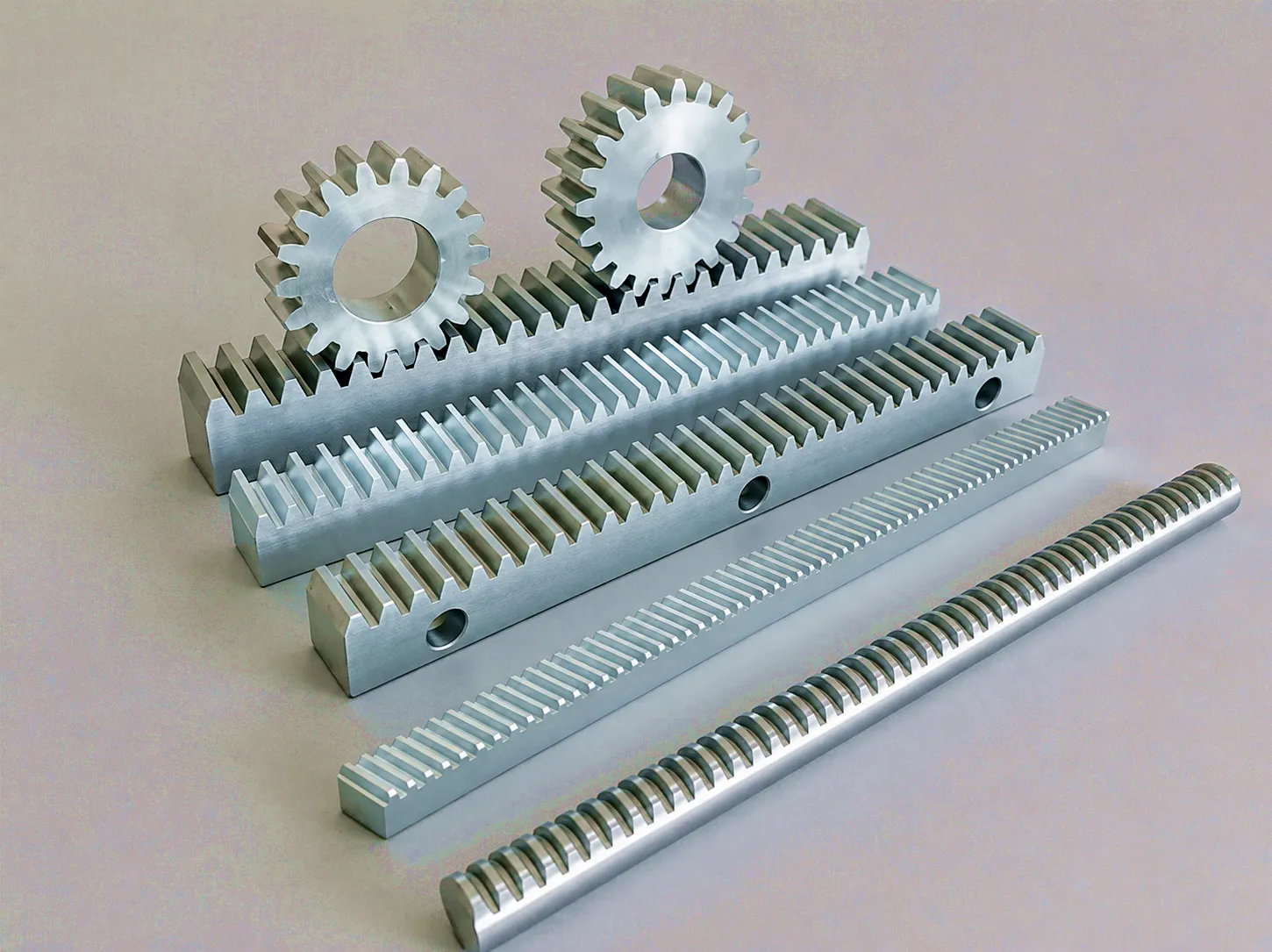
When engineers at a Sheffield-based automation firm or a Birmingham precision machining house sit down to specify a gear rack, the question of material is rarely simple. A gear rack — that straight-toothed bar that converts rotary motion from a pinion into smooth linear movement — is a component where the wrong material choice ripples outward into maintenance cycles, machine downtime, replacement costs, and ultimately, customer trust. The decision cuts across metallurgy, tribology, load engineering, and production economics in ways that a quick product sheet rarely captures.
Steel, cast iron, and engineering plastics each occupy a genuine niche in the gear rack world. Steel brings raw strength and the widest range of surface treatments. Cast iron offers vibration damping and excellent machinability at a cost that suits volume production. Plastics deliver corrosion immunity, low noise, and self-lubrication where metal would fail within weeks. Understanding where these properties intersect with your specific duty cycle, environment, and budget is the core of an intelligent gear rack material decision.
The Three Primary Gear Rack Materials: An Engineering Overview
Each material family has a distinct mechanical personality. Here is a structured overview of what each brings to a rack-and-pinion system before we examine them in granular detail.
The workhorse of heavy-duty linear motion. Steel gear racks, whether carbon grades like C45 or alloy variants such as 42CrMo4, deliver the highest load capacity per unit cross-section of any rack material. Case-hardening, induction hardening, or through-hardening push surface hardness to HRC 55–62, extending wear life dramatically in high-cycle environments. Steel dominates gantry cranes, CNC machining centres, and large portal robots across the UK’s West Midlands manufacturing corridor.
Cast iron’s graphite microstructure provides an intrinsic vibration damping quality that steel simply cannot match. In machine tools, printing presses, and textile machinery — industries still vibrant in Yorkshire and Lancashire — this dampening quality reduces chatter, protects surface finish, and extends tool life on adjacent components. Grey iron grades GG25/GG30 and ductile iron GGG40/GGG60 cover the spectrum from cost-optimised volume parts to higher-strength structural rack applications. Machinability is excellent, enabling close-tolerance finishing at lower tooling cost than alloy steel.
Acetal (POM), nylon (PA66), and UHMW-PE deliver performance that metals genuinely cannot: true corrosion immunity, zero lubrication requirements in light-duty cycles, near-silent operation, and resistance to the aggressive cleaning chemicals used in food processing and pharmaceutical environments. Plastic gear racks have found growing adoption across UK beverage plants, laboratory automation, and marine-adjacent conveyancing systems where even stainless steel requires intensive maintenance schedules. Weight savings of 80–85% versus steel counterparts also matter in lightweight robotics.
How a Gear Rack Converts Rotation to Linear Motion
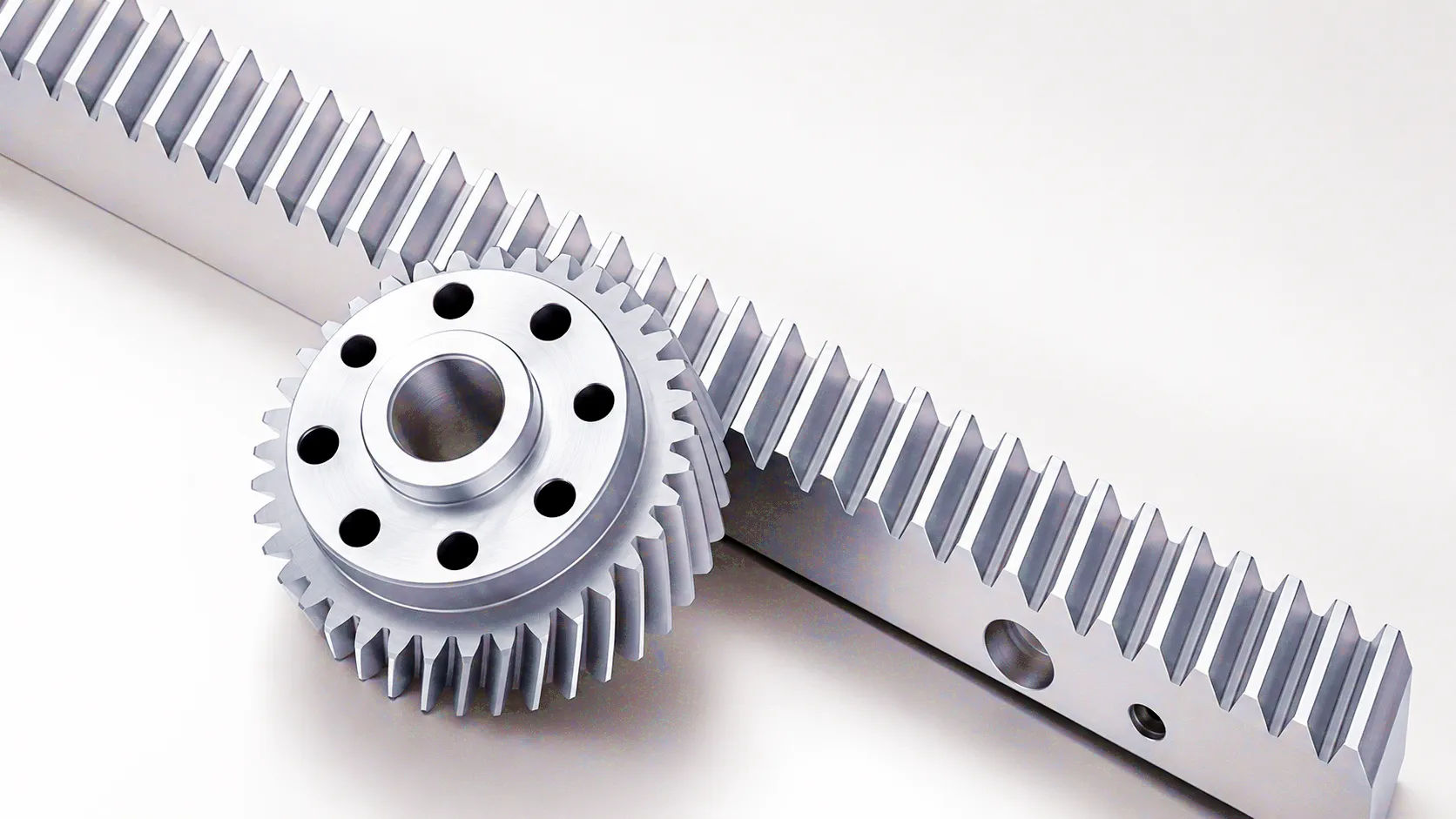
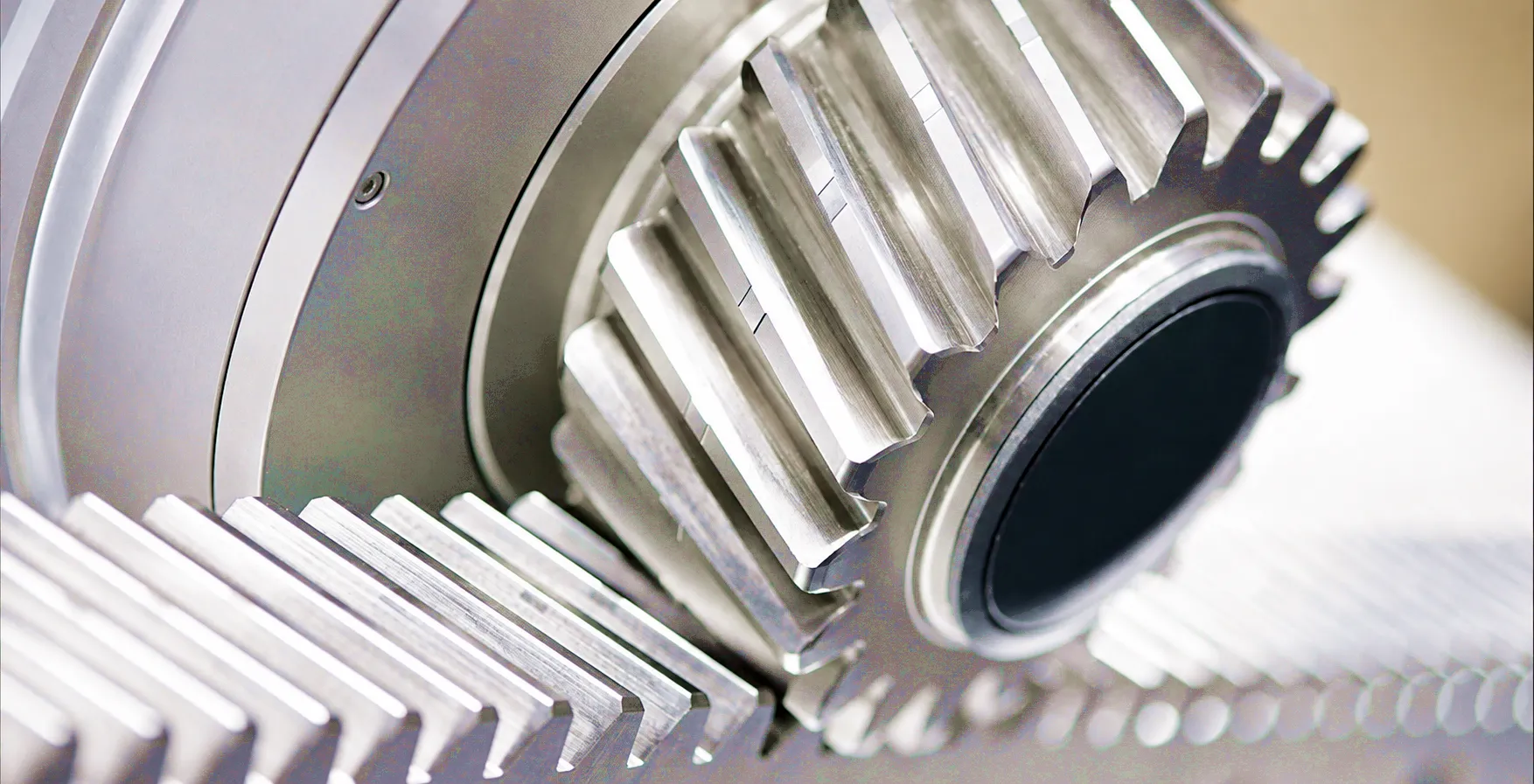 The rack-and-pinion mechanism is among the oldest kinematic pairings in mechanical engineering, and its operational elegance remains the reason it appears in everything from a CNC router gantry in a Coventry aerospace sub-contractor’s workshop to the steering column of a Land Rover Defender. The gear rack — a straight bar with teeth cut at precise pitch intervals along one face — meshes with a circular pinion gear. As the pinion rotates about its central axis, it rolls along the rack teeth, translating angular velocity into linear displacement with high efficiency and predictable accuracy.
The transmission ratio is determined by the pinion’s pitch circle diameter: a 20mm pitch-circle pinion advancing 1 mm of rack travel per degree of rotation. What material the rack is made from does not change this kinematic relationship, but it profoundly affects how long the system maintains positional accuracy under load, and how the mesh behaves under dynamic forces like vibration, shock, and thermal cycling. Ground steel racks hold DIN 6 pitch tolerances that keep cumulative positioning error under 0.02 mm per metre — a figure that cast iron or plastic cannot replicate without specialised tooling, but which may also be unnecessary for many applications.
Steel Gear Racks: Unmatched Strength for Heavy Industry
Steel gear racks are manufactured from carbon steel (C45 being the most widely specified grade in UK industrial catalogues), medium-alloy steels such as 42CrMo4, and case-hardening grades like 16MnCr5. The alloy chemistry directly determines hardenability — the depth to which heat treatment strengthens the material — and is chosen based on rack module size, expected load class, and surface treatment requirements. A ground helical rack produced in 42CrMo4 and induction-hardened to HRC 58–62 at the tooth flanks represents the current standard for high-cycle, high-load linear axes in UK machine tool and robotic applications.
Helical-tooth geometry on steel racks deserves special mention. Unlike straight-tooth (spur) racks where full tooth contact is instantaneous — generating impact load and noise — helical teeth engage progressively along an angular contact line. This gradual engagement distributes force more smoothly across the tooth flank, reducing peak contact stress by 20–35% and dropping operating noise by 4–8 dB(A). For the clean-room-adjacent environments in pharmaceutical device manufacturing around Cambridge or the servo-driven gantries in West Midlands tier-one automotive suppliers, helical ground steel racks are the specification of choice. Explore our precision ground helical rack range for DIN 6 accuracy class components ready for immediate UK delivery.
Cast Iron Gear Racks: Vibration Damping in Demanding Machine Environments
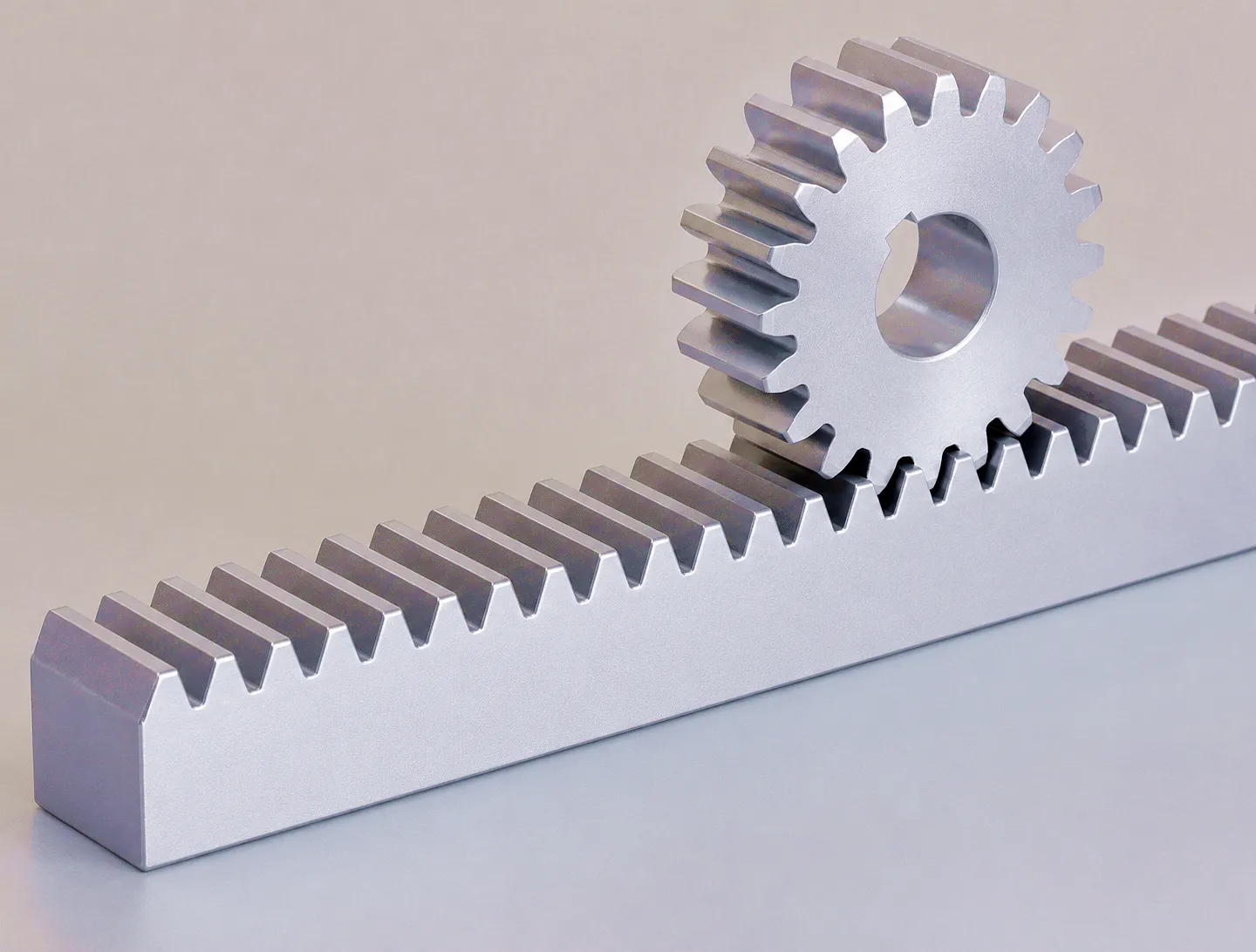 Cast iron’s mechanical behaviour is governed by its graphite phase morphology. In grey cast iron (EN-GJL-250 per BS EN 1561), graphite exists as interconnected flakes within the pearlite matrix. These flake networks act as micro-dampers, absorbing vibrational energy that would otherwise transmit through the drivetrain and degrade surface finish on adjacent components. Measured logarithmic decrement values of 0.1–0.3 for grey iron compare to 0.001–0.01 for steel — a factor-of-ten difference that machine tool builders in Sheffield and Leeds cite as the primary reason for specifying cast iron bed and rack assemblies in surface grinding and jig boring machines.
Ductile iron — also called spheroidal graphite (SG) iron, or GGG grades per the DIN system — modifies the graphite morphology into isolated spheres. This interrupts the stress-concentration pathways of flake iron, raising tensile strength from 200–250 MPa to 400–600 MPa while retaining approximately 60–70% of grey iron’s damping capacity. GGG40 and GGG60 cast iron gear racks occupy a useful middle ground: stronger than grey iron for racks seeing higher dynamic loads, quieter and more damping than steel, and still considerably more economical to machine at volume than alloy steel equivalents.
A critical practical consideration for UK procurement teams: cast iron gear racks typically require oil or grease lubrication because the graphite, while providing some inherent lubricity, does not deliver the sustained boundary lubrication of engineered polymer racks. In textile finishing environments around Huddersfield where water-based treatment chemicals are present, coating the rack (zinc phosphate plus epoxy primer) or selecting stainless steel becomes the more sensible long-term strategy despite the cost premium.
Engineering Polymer Gear Racks: Corrosion Immunity and Silent Operation
Acetal (POM-C), nylon (PA66 + MoS2 filled), and ultra-high-molecular-weight polyethylene (UHMW-PE) are the three engineering polymers most commonly specified for plastic gear rack applications. Each has a distinct mechanical and tribological profile. POM-C delivers the tightest dimensional stability of the three (low moisture absorption below 0.2%), making it the preferred grade for laboratory dispensing robots and medical device assembly tracks where positional drift caused by hygroscopic swelling would compromise process accuracy. PA66 with added molybdenum disulphide lubricant offers higher impact toughness and better fatigue resistance under cyclical loading — properties valued in light-duty material handling conveyors in distribution centres across the East Midlands logistics corridor, where noise limits in modern warehouse facilities increasingly influence component selection.
UHMW-PE combines the lowest coefficient of friction of any solid engineering material (0.10–0.20 against steel) with extraordinary toughness, making it a natural fit for wash-down environments in UK food processing plants operating under BRCGS and HACCP protocols. Plastic gear racks in these environments eliminate the contamination risk of metal particles or lubricant residue that would jeopardise hygiene certification. Rack modules from 1.5 to 6 are achievable in injection-moulded polymer for high-volume applications, while machined stock allows custom tooth profiles for lower quantities. Our zero backlash rack designs are also available in specialist polymer composites for precision-critical light-duty axes.
Gear Rack Technical & Performance Specification Table
This table consolidates the key parameters that differentiate steel, cast iron, and polymer gear racks across duty classification, accuracy, and environmental suitability.
| Parameter | Steel (42CrMo4 / C45) | Cast Iron (GGG40 / GG25) | Engineering Polymer (POM / PA66) |
|---|---|---|---|
| Tensile Strength | 650 – 1,100 MPa | 200 – 600 MPa | 50 – 90 MPa |
| Surface Hardness | HRC 48 – 62 | HB 180 – 280 | Shore D 70 – 85 |
| Accuracy Class (DIN) | DIN 4 – DIN 10 | DIN 7 – DIN 10 | DIN 8 – DIN 10 |
| Vibration Damping | Low (δ ~ 0.001–0.01) | Excellent (δ ~ 0.1–0.3) | Good (viscoelastic) |
| Corrosion Resistance | Poor (coating required) | Moderate (coating recommended) | Excellent (inherent) |
| Lubrication Requirement | Mandatory (grease/oil) | Mandatory (oil) | None – self-lubricating (POM) |
| Temperature Range (°C) | -40 to +400 | -20 to +350 | -40 to +100 (POM) / +120 (PA66) |
| Relative Weight (steel = 1.0) | 1.0 | 0.97 | 0.15 – 0.18 |
| Typical Module Range | M1 – M20 | M3 – M16 | M1.5 – M6 |
| Noise Level (relative) | Medium–High | Medium | Low (near-silent) |
Industrial Application Scenarios Across UK Manufacturing
Gear rack material selection is inseparable from the operating context. These scenarios map real UK industrial environments to the material family that typically delivers optimal total-cost-of-ownership outcomes.
Steel gear racks in 42CrMo4, induction-hardened and precision-ground to DIN 6, are the standard across Birmingham’s automotive tier-one suppliers. Gantry axes on horizontal machining centres traverse at 60–120 m/min, demanding that rack pitch error stays below 0.012 mm per 300 mm to hold dimensional tolerances on cylinder-head and gearbox-casing bores. The high dynamic load from acceleration and emergency deceleration requires the full tooth-flank hardness that properly heat-treated steel provides.
Sheffield’s precision engineering heritage places special emphasis on surface quality. Cast iron gear racks in GGG40 ductile iron are a common specification for surface grinder table traverse drives, where the material’s vibration damping suppresses the micro-chatter that translates into waviness errors in ground surfaces. These racks typically operate at modest traverse speeds (under 15 m/min) with frequent direction reversals, a duty cycle that favours cast iron’s inherent lubricity from graphite phases and excellent fretting resistance under oscillating contact.
Food manufacturing facilities across Yorkshire operate under strict hygiene protocols that eliminate lubricant-dependent metal gear racks from contention. POM-C or UHMW-PE gear racks, often paired with food-grade certified plastic pinions, provide reliable rack-and-pinion positioning for adjustable lane guides, tray loading axes, and container-spacing systems. The self-lubricating nature of these polymers and their compatibility with sodium hypochlorite and high-pressure water jets makes routine CIP (clean-in-place) procedures straightforward without risking bearing contamination or metal particle ingress into the product stream.
Aerospace sub-contractors around Coventry and Derby specifying five-axis machining centres for structural titanium and aluminium components require gear racks at DIN 5 or better — the elite of precision rack manufacturing. Ground helical steel racks in 42CrMo4 with phosphate or nickel plating protect against ambient cutting-fluid mist while maintaining the tooth geometry integrity needed to hold bidirectional positioning repeatability within ±0.005 mm per metre. Rack mounting face-to-pitch-circle parallelism and flatness tolerances are specified and verified with calibrated CMM equipment before assembly.
The rapid expansion of automated warehousing infrastructure across the East Midlands logistics corridor — one of the UK’s fastest-growing distribution hubs — has driven demand for rack-and-pinion drives in stacker cranes and shuttle systems. Here, steel gear racks mounted vertically on aisle masts carry rack-and-pinion drives rated to 500–2,000 kg payload, traversing 30+ metre mast heights at 3–6 m/s. The high duty cycle and severe fatigue loading demand case-hardened steel racks with pitch class DIN 7 or better and documented material certificates to satisfy AS/RS system warranty requirements.
Life-science and pharmaceutical research facilities in the Oxford-Cambridge arc operate liquid-handling workstations and plate-reader gantries that must maintain positional reproducibility through millions of cycles across 200–800 mm travel ranges. POM-C gear racks with M1.5 or M2 module teeth, matched to precision-hobbed polymer pinions, provide the combination of positioning reliability and contamination freedom that these regulated environments require. Stainless steel alternatives are also available for racks that must pass gamma sterilisation cycles in automated cell-culture systems.
Core Technical Advantages of Modern Precision Gear Racks
Precision-ground steel racks achieve pitch cumulative error below 0.02 mm/m (DIN 6). Ground helical profiles further suppress single-pitch deviation to under 0.008 mm, enabling CNC and robotic systems to maintain sub-tenth-millimetre bidirectional positioning accuracy across long travel distances without encoder compensation.
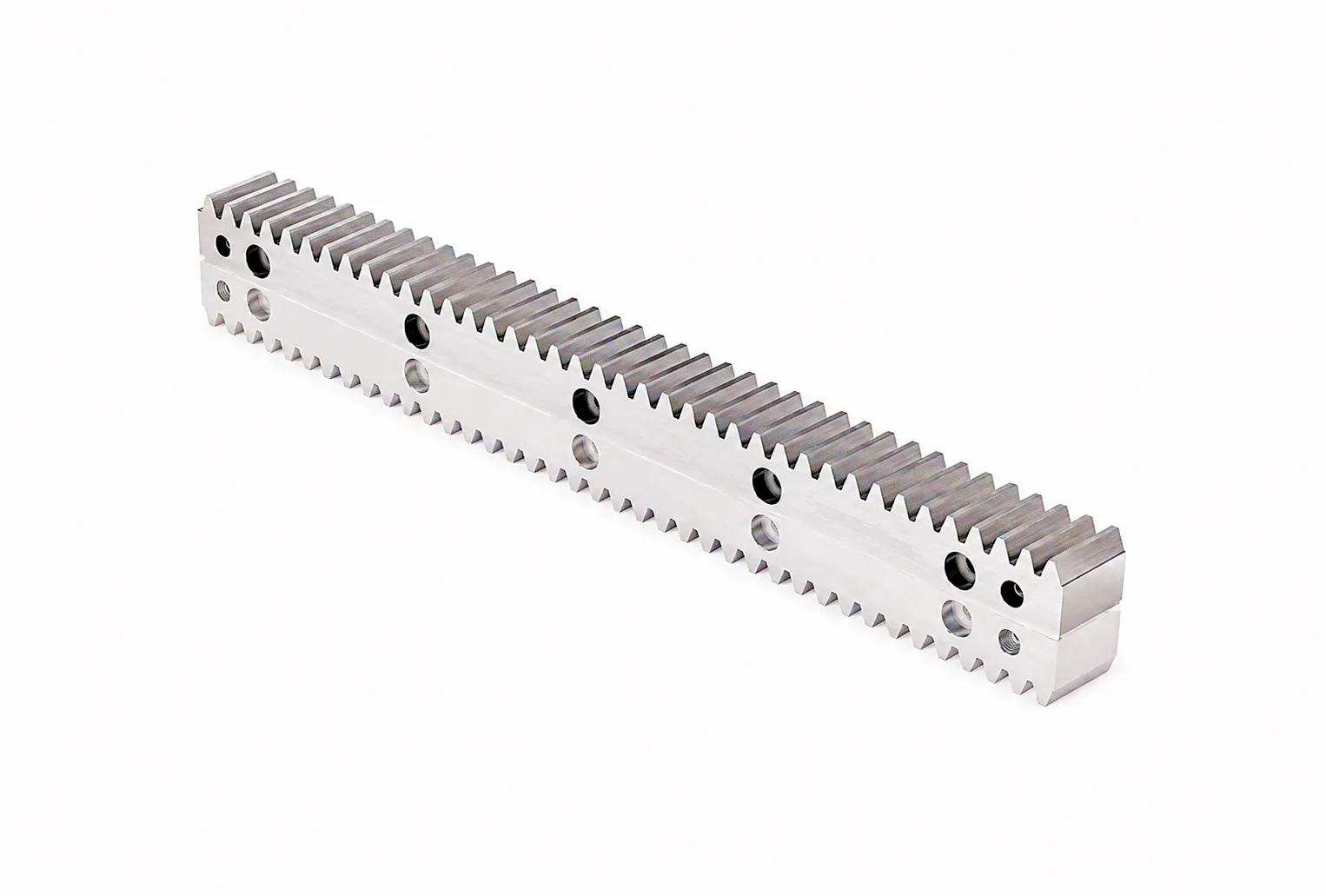
Unlike ball screw or linear motor drives, rack-and-pinion systems have no inherent stroke limitation. Racks are joined end-to-end with precision step-joints (or continuous profile on CNC-machined long bars) to create axes spanning tens of metres. This scalability makes gear racks the default drive for plasma cutters, large-format laser systems, and overhead crane traverses.
A steel rack-and-pinion drive in M8 module with a 200mm-diameter steel pinion can transmit continuous tangential forces exceeding 80 kN — performance that outstrips equivalent-length ball screw configurations by a factor of three to five. This force density makes steel gear racks irreplaceable in large CNC router structures, stone-cutting bridges, and heavy press feed mechanisms.
Steel racks with appropriate coatings or stainless alloy selection operate reliably from sub-zero foundry environments to the elevated ambient temperatures in glass processing lines. Polymer racks handle aggressive chemical environments that would destroy any steel product within months. Cast iron’s thermal stability and consistent modulus simplify FEA-based machine structure design.
Zero-backlash rack-and-pinion systems using twin-pinion anti-backlash mechanisms (one driven, one spring-loaded or servo-compensated) effectively eliminate the direction-reversal error that would otherwise limit positional accuracy. These systems are standard on precision grinding centres and semiconductor handling equipment where backlash errors of even 5 microns are unacceptable.
Standard rack lengths of 500 mm, 1,000 mm, and 2,000 mm serve most applications, but OEM requirements routinely demand non-standard lengths, through-drilled mounting holes, angled attachment faces, or specialised tooth profiles. Rack manufacturers who control their own grinding and CNC milling operations can deliver these custom variants without subcontracting delays — a service-level differentiator that procurement teams at UK machine-builders increasingly require.
Customer Success: Leeds Automation Systems Integrator Increases Throughput by 37%
A Leeds-based automation engineering firm had designed and installed a series of six-axis palletising gantry systems at a regional distribution hub serving an FMCG client in Wakefield. The gantries used standard C45 spur rack sections sourced locally, and within 14 months of commissioning the first line, the client was reporting tooth wear rates that required full rack replacement every 10–11 months — an unacceptable maintenance cycle in a 24/7 operation running 6-metre traverse axes at 80 m/min peak speed. Rack replacement required a 14-hour line shutdown each time, creating a recurring production loss that quickly exceeded the capital cost of the original installation.
The engineering director contacted Ever Power with a detailed application brief. Our technical review identified three compounding failure modes: the spur tooth geometry was generating impact loading at the entry mesh, the C45 base material was undersized for the actual tangential forces (calculated at 42 kN peak), and the rack surface hardness of HRC 42 was insufficient for the velocity and loading combination. Ever Power proposed a redesign around precision-ground helical racks in 42CrMo4, induction-hardened to HRC 58 at the flanks, in M8 module — matched to new helical steel pinions with a 20° helix angle to ensure smooth, gradual tooth engagement. The mounting system was redesigned with back-face ground reference surfaces to achieve consistent pinion backlash across all six gantries.
After twelve months of operation with the Ever Power helical steel gear racks, the client reported zero rack replacements, a verified reduction in rack tooth wear depth of 88% versus the previous solution at the same operating point, and a 37% increase in effective throughput due to elimination of planned and unplanned maintenance shutdowns. The engineering director noted that the tooth noise level had also dropped by approximately 6 dB, which reduced ambient noise in the packing hall to within the client’s voluntary exposure targets without requiring additional acoustic enclosures.
What UK Customers Say About Ever Power Gear Racks
“The 42CrMo4 helical racks Ever Power supplied for our Birmingham machining centre retrofit have now completed 18 months of three-shift operation without any measurable pitch wear. The DIN 6 ground profile held our axis positioning to within 0.015 mm across 3 metres — exactly as their technical team specified it would. We would not hesitate to use Ever Power for our next four machine rebuilds.”
“We specified POM-C gear racks from Ever Power for a wash-down-rated positioning system in our Harrogate beverage plant. The self-lubricating characteristic was critical — our CIP protocols with 85°C caustic wash would destroy any greased metal rack within weeks. Ever Power’s technical team confirmed material compatibility with our chemicals before we ordered, and the racks have operated through 600-plus CIP cycles without any sign of degradation. The food-safety paperwork was thorough and accepted by our BRC auditor without query.”
“The custom-length order process with Ever Power was straightforward — we submitted our drawing with drilling pattern and mounting face tolerances, received a DFM feedback note within 48 hours, and had confirmation of lead time within three days. The finished racks arrived with full CMM inspection reports showing every critical dimension. For a Sheffield aerospace sub-contractor, that documentation trail is non-negotiable. It saved us several weeks compared to our previous domestic supplier who struggled to produce 3.1 certs reliably.”
Featured Gear Rack Products
Frequently Asked Questions About Gear Rack Materials
Common questions from UK engineers, procurement managers, and system integrators.
For high-speed CNC gantry axes in automotive applications, precision-ground helical steel rack in 42CrMo4, induction-hardened to HRC 58 or better, is the standard engineering answer. The helical tooth profile reduces impact loading and noise versus spur racks, while the heat treatment ensures tooth flank hardness adequate for the 60–120 m/min traverse speeds typical in modern machining centres. DIN 6 accuracy class racks maintain the sub-0.02 mm/m pitch error needed to hold dimensional tolerances on precision automotive components without constant axis compensation.
Pricing for custom precision steel gear racks depends on module size, accuracy class, material grade, heat treatment specification, length, and order quantity. Standard C45 spur racks at DIN 9 quality in M3–M6 module can be quoted very competitively for volume orders. Ground helical racks in 42CrMo4 at DIN 6 carry a premium reflecting the longer grinding cycle and additional inspection requirements. Custom features like special cross-sections, integrated mounting faces, or EN 10204 3.1 material certificates add further cost. We encourage UK buyers to request a detailed quotation from Ever Power with full application information — module, accuracy class, material, length, quantity, and required lead time — to receive an accurate price and delivery programme.
For food-processing environments operating under BRCGS or FSSC 22000 standards, you need a gear rack supplier who can confirm material food-grade compliance — specifically that the polymer grade meets FDA 21 CFR or EC 1935/2004 regulations for food-contact materials. POM-C and UHMW-PE are the most common compliant choices. Ever Power supplies food-grade polymer gear racks with material compliance documentation. UK buyers should request the full material data sheet and compliance declarations as part of their supplier qualification process, and verify that the rack material is compatible with the specific cleaning agents used in their CIP programme.
Cast iron gear racks — particularly grey iron GG25 or GG30 grades — provide the best vibration damping of the three material families by a significant margin. Grey iron’s graphite flake network absorbs vibrational energy that would otherwise transmit through the drive system and create chatter marks on ground surfaces. Sheffield’s precision engineering community has historically preferred cast iron for machine tool traverse drives for precisely this reason. If load ratings rule out grey iron, ductile GGG40 or GGG60 retains approximately 60–70% of grey iron’s damping capacity while offering much higher tensile strength for more demanding duty cycles.
To receive a fast and accurate quotation for custom helical steel gear racks, prepare the following information before contacting a supplier: rack module (e.g. M6, M8), tooth type (helical — include helix angle and hand), accuracy class (DIN 6, 7, 8, etc.), material grade required, surface treatment or hardness specification, rack bar length and any non-standard cross-section dimensions, mounting hole pattern if applicable, quantity, required lead time, and whether EN 10204 3.1 material certificates are needed. Email this specification to Ever Power at sales@farm-equipment-parts.com and our technical sales team will provide a detailed quotation and delivery schedule, typically within 48 business hours.
DIN accuracy classes for gear racks define maximum permitted values for single-pitch error (fp), cumulative pitch error (Fp), and tooth profile deviation. DIN 6 racks are ground to tighter tolerances — typically fp < 0.008 mm and Fp < 0.020 mm/metre — compared to DIN 8 which allows fp < 0.020 mm and Fp < 0.050 mm/metre. In practical UK industrial terms, DIN 6 is warranted for CNC machining centre axes, precision measurement gantries, and semiconductor handling where bidirectional positioning repeatability within ±0.010 mm is specified. DIN 8 serves well in packaging machinery, material handling conveyors, and robotic welding axes where positioning tolerance requirements are in the ±0.1 mm range and cost-effectiveness matters more than maximum precision. Choosing a tighter class than the application demands adds unnecessary cost without engineering benefit.
Ever Power’s technical team is available to support material selection, system integration, and custom specification for UK customers across all industrial sectors. Fast quotes, DIN-certified products, and full documentation as standard.
edit by gzl