Fast response within 24 hours · Custom specs welcome
What a Gear Rack Module Actually Means — and Why Standards Exist
The Module Formula
m = p / π
Where p = circular pitch and π = 3.14159
Tooth Height Formula
h = 2.25 × m
Full tooth height including addendum and dedendum
Pitch (Linear)
p = π × m
The distance between equivalent tooth profiles along the pitch line
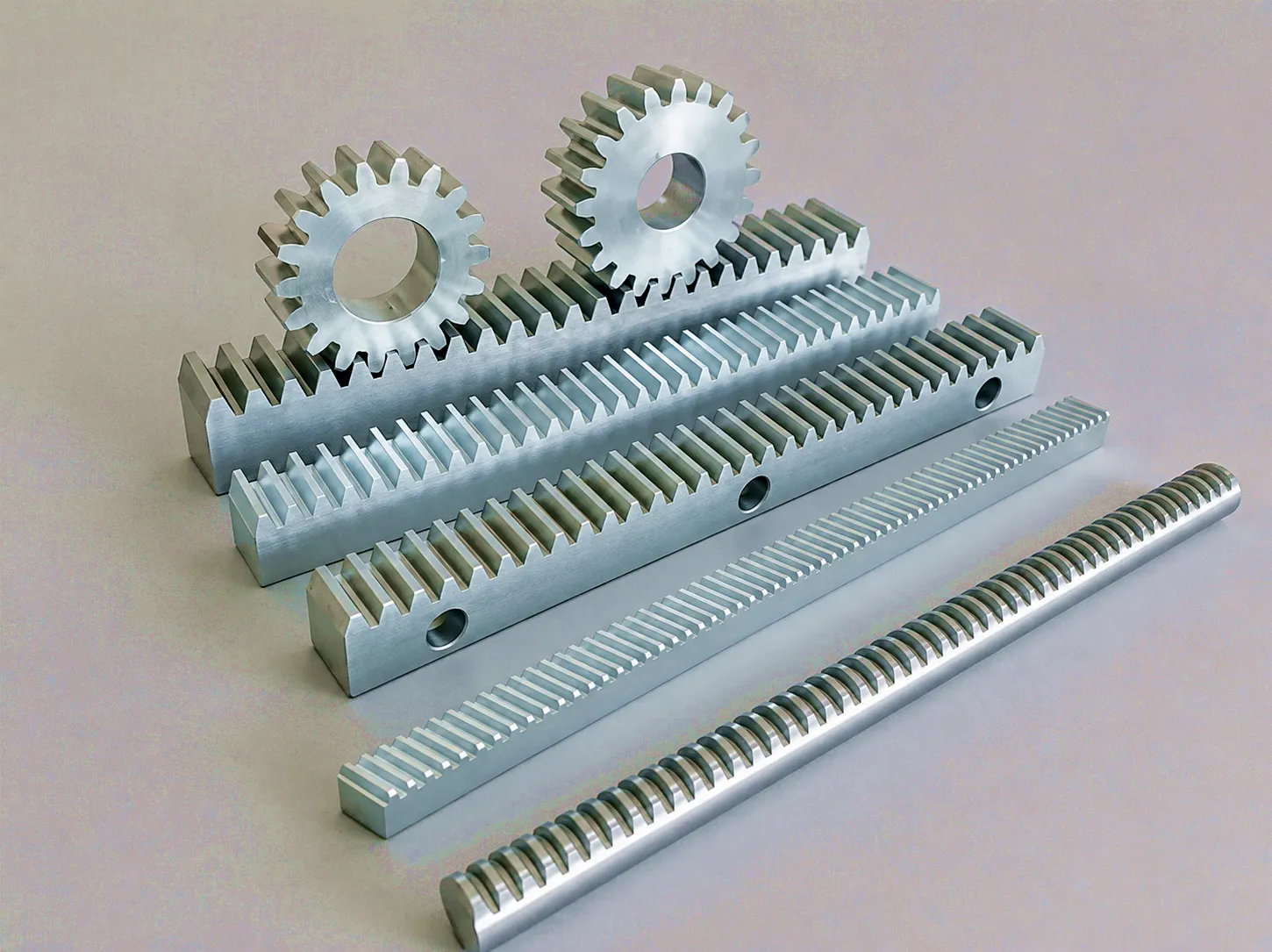
The gear rack module is not simply a size designation — it is a geometric multiplier that simultaneously determines tooth pitch, tooth height, root diameter (on mating pinions), and the minimum number of teeth before undercutting occurs. When DIN, AGMA, and JIS each publish their respective module tables, they are not merely listing preferred numbers: they are specifying the entire dimensional language of tooth geometry. A DIN 867 rack with module 3 has an addendum of 3 mm, a dedendum of 3.75 mm, and a tooth pitch of 9.425 mm. Swap that for a nominally similar AGMA component without checking diametral pitch conversion and you will find mismatched engagement, increased noise, and premature wear — problems that surface quickly in the high-cycle environments typical of Sheffield’s steel processing plants or Birmingham’s automotive transfer lines.
The existence of three competing standards reflects the industrialisation patterns of the twentieth century. German machine tool builders exported DIN-standardised components globally throughout the post-war decades, making DIN the de facto European and international default. American manufacturers developed the AGMA diametral pitch system around inch-based manufacturing, creating a parallel universe of tooth geometry that is fully incompatible at the dimensional level despite serving the same mechanical function. Japan’s JIS standards, while metric and broadly DIN-compatible in module values, carry specific tolerancing classes and surface finish requirements that reflect the demands of high-speed precision machinery. The UK market today encounters all three, particularly in sectors where legacy German-built equipment sits alongside newer North American control systems and Japanese linear motion modules.
DIN Standards for Gear Racks — The European Backbone
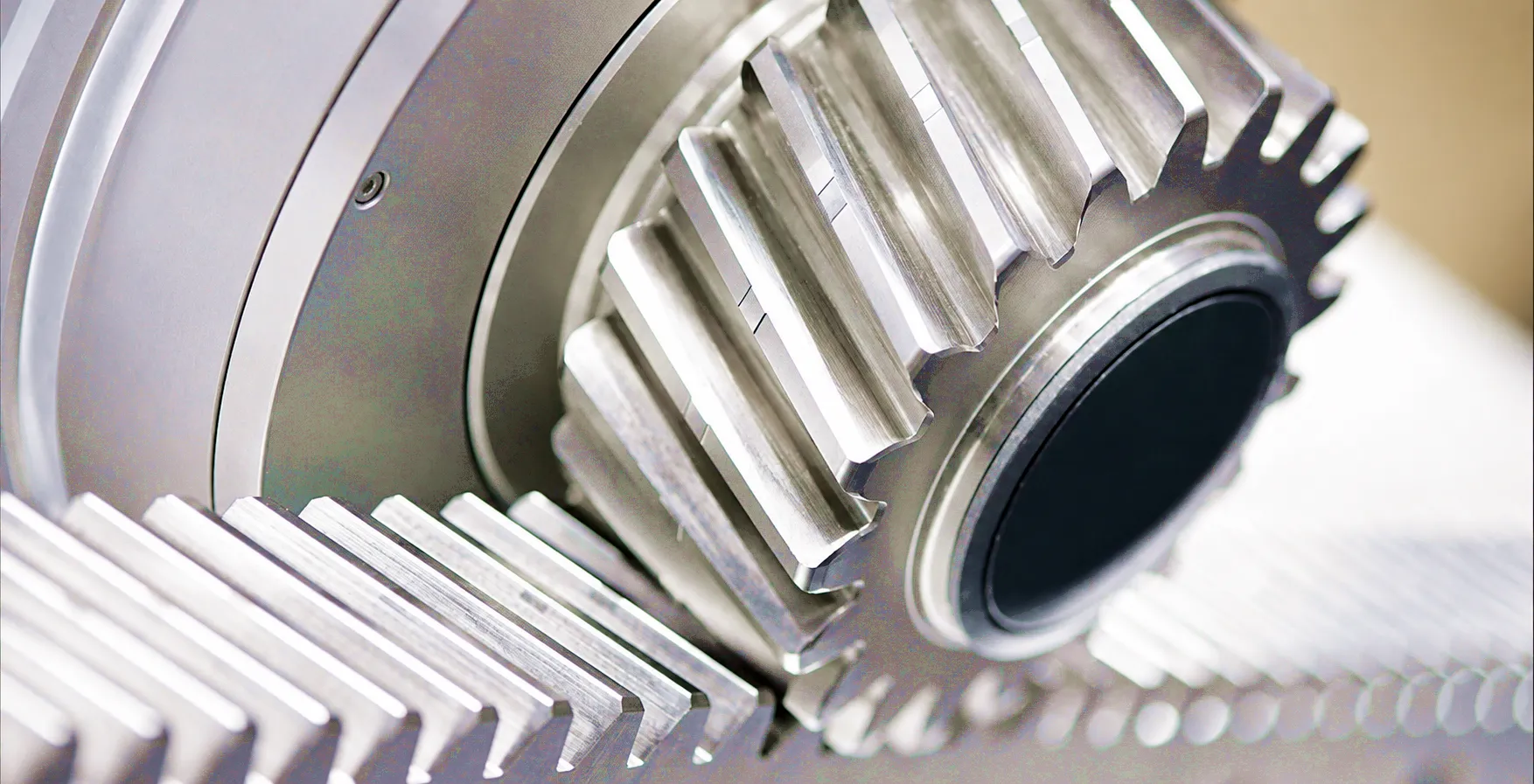
DIN 867 is the principal German standard governing basic rack tooth profiles, and it establishes a pressure angle of 20 degrees as the norm for industrial gear racks. This 20-degree standard — sometimes described as the full-depth tooth form — provides a good balance between tooth strength, smooth engagement, and manufacturing tractability. DIN 6880 extends this framework to keyways and rectangular rack profiles, while DIN 3961 through 3967 govern tolerancing classes ranging from grade 3 (ultra-precision, ground-finished components used in semiconductor lithography and coordinate measuring machines) through to grade 12 (rough-cut racks for agricultural machinery and coarse indexing). The UK engineering community has historically been deeply familiar with DIN standards because German machine tool brands including DMG, Trumpf, and Kessler have dominated the country’s precision manufacturing sector for decades.
For a gear rack to carry a genuine DIN certification, the manufacturer must control not just the module value but a chain of interrelated tolerances: pitch deviation (fp), total cumulative pitch error (Fp), profile form deviation (ff), and helix angle deviation for helical racks. In a grade 5 DIN rack — the grade most commonly specified for CNC machining centres and robotic assembly systems — the allowable cumulative pitch error over any 300 mm length is just ±0.012 mm. Achieving this consistently demands precision grinding on hardened steel, post-grind inspection with a gear measuring centre, and controlled temperature storage. Ever Power’s precision ground helical rack line is manufactured and verified against DIN grade 5 tolerances, making it the appropriate choice for demanding UK automation projects.
DIN Preferred Module Series — Metric Standard (DIN 867 / ISO 54)
AGMA Standards — The North American Diametral Pitch System
AGMA 2000-A88 · AGMA 2001 · AGMA 9005
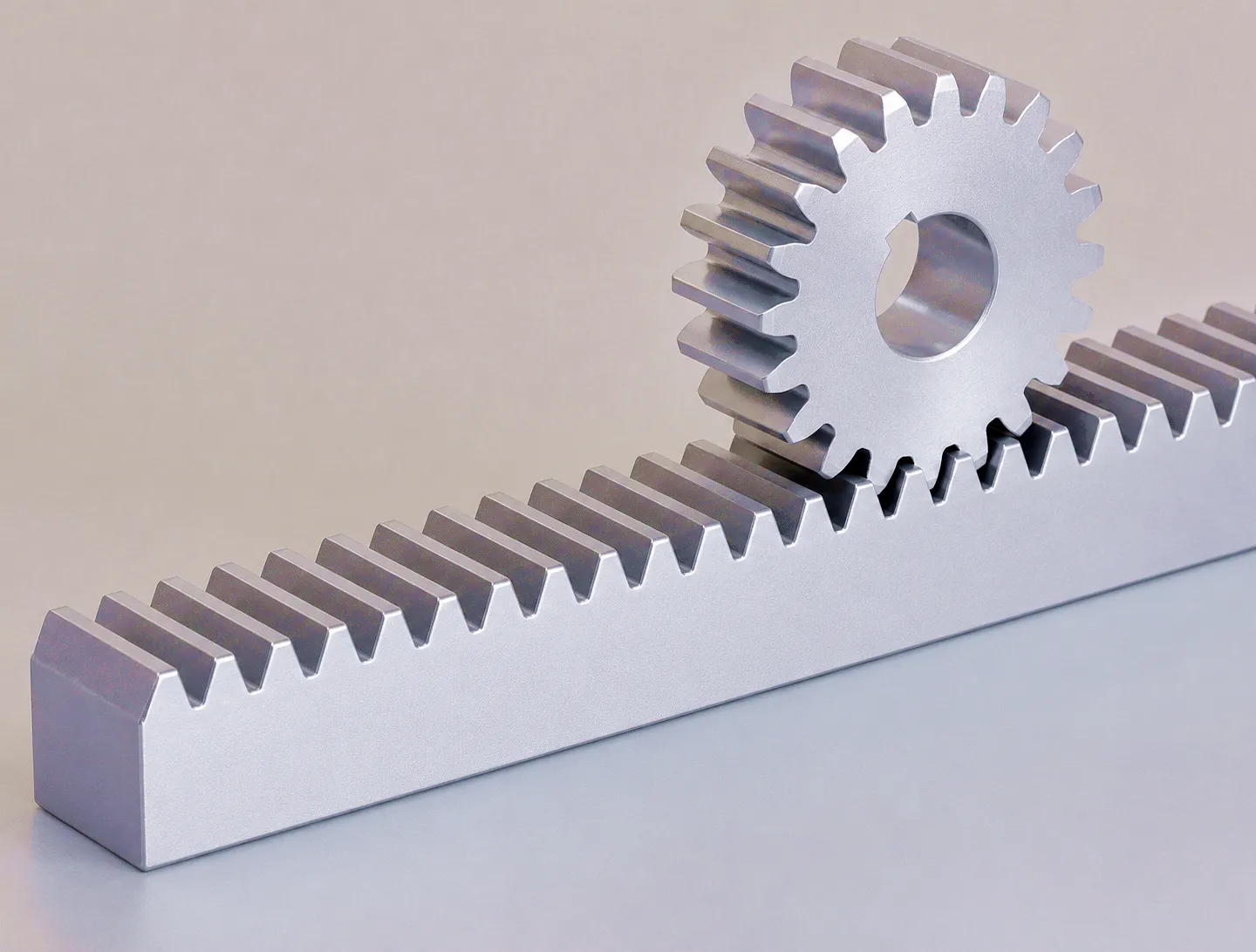
The AGMA system operates on diametral pitch (DP) rather than module, making it dimensionally incompatible with DIN and JIS components at any given nominal size. Diametral pitch is defined as the number of teeth per inch of pitch diameter, and it runs in the opposite direction to module — a higher DP number means smaller teeth, while a lower DP means larger, stronger teeth. The conversion between the two systems follows the relationship: DP = 25.4 / m. So a DIN module 4 rack and an AGMA 6.35 DP rack have equivalent tooth geometry, but they are not drop-in replacements because AGMA tolerancing classes (Quality Numbers 3 through 13 under the older AGMA 2000 system, now superseded by AGMA ISO 1328) define deviations differently and use different inspection methods.
UK companies with operations in the United States, or those importing North American-built packaging machinery, food processing lines, or material handling equipment, will encounter AGMA-specified gear racks regularly. Replacement sourcing requires careful conversion, not just of the pitch parameter but of the pressure angle (AGMA commonly uses both 14.5 degrees and 20 degrees, with 20-degree full-depth now dominant) and of the tooth profile modification (profile shift) if any has been applied at the original equipment level. For British engineers unfamiliar with the AGMA framework, the most common error is ordering a metric rack with an approximately equivalent tooth size without confirming that the mating pinion’s pressure angle and profile shift are correctly matched. Ever Power’s application engineering team handles these conversions routinely for clients across the UK.
DP 8
≈ m 3.175
DP 6
≈ m 4.233
DP 5
≈ m 5.080
DP 4
≈ m 6.350
DP 3
≈ m 8.467
JIS Standards — Japan’s Precision-Driven Approach
JIS B 1702 and JIS B 1703 govern gear tolerances and basic rack profiles in Japan, with module values drawn from the same ISO 54 series used in DIN — meaning a JIS module 3 rack and a DIN module 3 rack are dimensionally similar at the tooth level. The meaningful differences emerge in tolerancing philosophy and surface treatment specifications. JIS employs accuracy grades from Grade 0 (ultra-precision, reserved for master gears and calibration standards) through Grade 12, with the numbering scheme reversed compared to AGMA Quality Numbers but aligned with the newer ISO 1328 framework. For most industrial gear rack applications in Japanese robotics and precision servo systems, JIS Grade 3 to Grade 5 is the target range.
The JIS standard pays particular attention to surface roughness on the tooth flank, specifying values as low as Ra 0.4 µm for precision grades used in high-speed ballscrew-adjacent applications. Japanese linear motion system manufacturers, including those whose components are widely used across UK semiconductor fabrication plants and pharmaceutical packaging lines, routinely export equipment built to JIS specifications. Understanding how to source replacement racks to JIS Grade 4 standards — and to confirm that the tooth flank surface roughness and pitch deviation limits are met — is critical for maintenance engineers at these facilities.
JIS vs DIN Key Differences
Module values are identical (ISO 54 series) · JIS Grade numbers are inverted relative to older AGMA Quality Numbers · JIS specifies surface roughness on tooth flanks as a primary quality indicator, not just as a secondary parameter · JIS B 1702-2 directly references ISO 1328-2, creating a clear pathway to DIN-equivalent verification · Helix angles for helical racks in JIS may differ slightly from DIN 3960 specifications, particularly in finer precision classes.
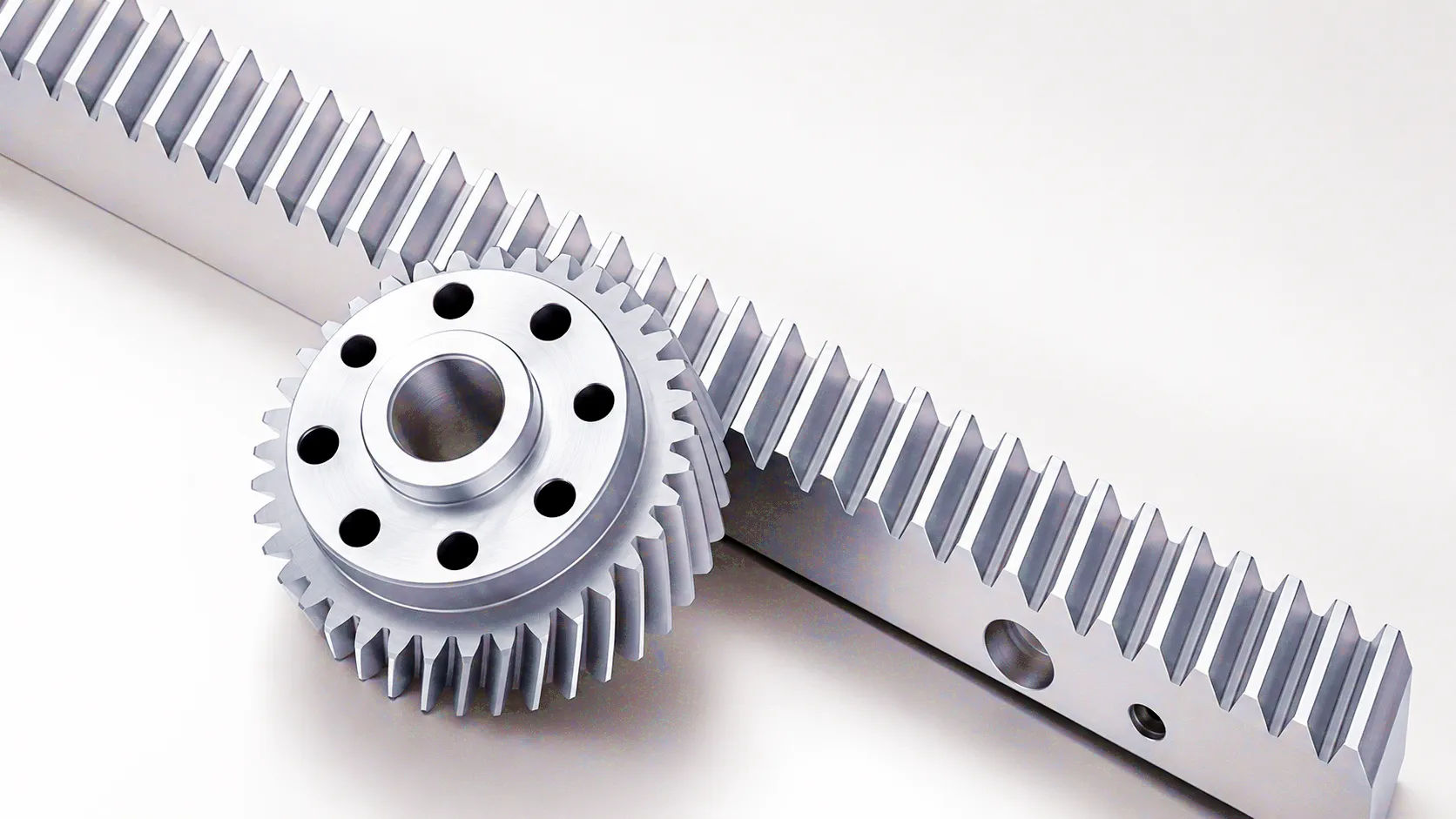
JIS Accuracy Grades
DIN vs AGMA vs JIS — Comprehensive Technical Comparison
Full specification cross-reference for procurement engineers and system integrators
Core Materials in Gear Rack Manufacturing — Selection Principles and Performance Trade-offs
C45 / 1045 Steel
The most widely used base material for standard gear racks. Medium carbon steel with 0.42–0.50% carbon content. Easily machinable in annealed condition, induction hardenable to 52–56 HRC on tooth flanks, compatible with all three standard systems. Cost-effective for high-volume production and widely stocked in the UK.
42CrMo4 / 4140
Chromium-molybdenum alloy steel offering significantly higher core strength than C45. After quench-and-temper treatment, core hardness reaches 28–34 HRC with surface induction hardening to 58 HRC. The preferred choice for high-load gear racks used in Sheffield’s heavy press systems and Birmingham’s automotive transfer lines, where impact loads and sustained high forces are commonplace.
20MnCr5 / Case Hardening
A case-hardening steel used where maximum tooth flank hardness (60–62 HRC) is required throughout the full tooth profile rather than just on the pitch circle. Carburising creates a hard case of 0.8–1.2 mm depth, maintaining a tough core. Typical in aerospace ground support equipment, precision machine tool manufacturers, and DIN Grade 4 applications.
303 / 316L Stainless
Specified for food processing, pharmaceutical, and marine environments where corrosion resistance outweighs maximum load capacity. Stainless steel gear racks cannot be induction hardened to the same level as alloy steels, limiting their use to moderate load, low-to-medium speed applications. Widely used in UK food and beverage production lines across Yorkshire and the East Midlands.
PA66 / Acetal Plastic
Polymer gear racks suit low-noise, light-load, and corrosive media environments. Acetal (POM-C) provides better dimensional stability than nylon for precision applications. Used in laboratory automation, medical imaging gantries, and PCB handling equipment. Not suitable for DIN or JIS precision grades but commonly specified against AGMA Quality 8–10 for functional interchangeability.
Industrial Application Scenarios — Where Each Standard Delivers Maximum Value
Application 01 · CNC Machining Centres — Birmingham & Coventry Automotive Sector
CNC Machining Centre Linear Axes
In CNC machining centres — the backbone of Birmingham’s automotive component manufacturing belt — gear racks serve as the primary linear drive element for gantry-mounted spindles, pallet transfer systems, and cross-rail assemblies on large-format portal mills. The relevant standard here is DIN Grade 5 or better, and the rack profile is almost universally helical rather than spur, because helical teeth provide a higher contact ratio that reduces transmission error and translates directly into better surface finish on machined components. A module 3 helical rack with a 19-degree helix angle and DIN Grade 5 pitch accuracy, ground and induction hardened to 58 HRC on the tooth flanks, is the standard specification for X-axis drives on machines up to 6-metre travel in this sector. The induction hardened helical rack with surface treatment offers precisely this combination of properties, with cumulative pitch deviation held to within ±0.015 mm over any 300 mm length.
Application 02 · Automated Warehouse Systems — Midlands Logistics Parks
Stacker Cranes and Automated Storage and Retrieval Systems
Automated warehousing systems serving the distribution parks around Coventry, Northampton, and Milton Keynes represent one of the highest-volume growth sectors for gear rack consumption in the UK. Stacker cranes that serve multi-tier racking systems up to 40 metres high rely on rack-and-pinion drives for both horizontal travel along the aisle and vertical lifting of the load platform. These drives operate continuously — potentially 22 hours per day in high-throughput centres — and the gear rack specification is therefore driven as much by fatigue life and lubrication retention as by positional accuracy. Module 5 or module 6 racks in 42CrMo4 steel, induction hardened to 52–58 HRC, with DIN Grade 7 or Grade 8 tolerances and a zinc-rich primer coating for corrosion protection in the ambient warehouse environment, are the typical specification.
Application 03 · Steel Processing Lines — Sheffield Special Steel Sector
Rolling Mill Positioning and Coil Transfer Equipment
Sheffield’s special steel producers — among the most technically demanding customers for any mechanical transmission component in Britain — deploy gear racks in rolling mill side guides, coil car positioning systems, and ladle transfer carriages. In these environments, the gear rack faces not only very high loads (tangential forces exceeding 50 kN per rack) but also elevated temperatures, scale contamination, and vibration from the rolling process itself. Specification here invariably uses module 8 or module 10 racks in 42CrMo4, with through-hardened rather than surface-hardened profiles to maintain adequate core toughness, and with labyrinth-style seals on the pinion drive units to prevent scale ingress. The AGMA and JIS standards are rarely encountered in this environment — Sheffield steel plants are almost entirely served by DIN-conforming components from European or Asian suppliers.
Application 04 · Pharmaceutical Packaging — East Midlands Production Sites
High-Speed Blister Packaging and Cartoning Lines
Pharmaceutical packaging lines, particularly the high-speed blister and carton lines common in Nottingham, Leicester, and Loughborough’s pharmaceutical manufacturing cluster, use gear racks in two distinct roles: as the primary positioning element in servo-driven forming dies, and as the transport drive for indexing the blister film through the forming and sealing stations. In the forming die application, positional repeatability and zero backlash are paramount — tolerances on the die position must be held to within ±0.05 mm across the full stroke to maintain blister cavity geometry. JIS Grade 4 or DIN Grade 5 helical racks with zero-backlash preloaded pinion assemblies are the standard solution. The corrosion resistance required in classified manufacturing areas means 316L stainless steel or hard anodised aluminium alloy racks with additional polymer coatings, verified against pharmaceutical industry equipment qualification protocols.
Core Technical Advantages of Precision Gear Racks
📐
High Positional Accuracy
Precision ground gear racks achieve cumulative pitch errors below ±0.012 mm over 300 mm — enabling positioning repeatability that meets or exceeds that of equivalent ball screw systems at longer strokes.
⚡
Unlimited Stroke Length
Unlike ball screws, which face critical speed and whip limitations beyond approximately 4 metres, gear racks can be joined end-to-end with precision-matched joints to provide essentially unlimited travel — critical for gantry routers, large-format laser cutters, and shipyard equipment.
🔩
High Load Capacity
Rack-and-pinion drives support tangential forces from a few hundred Newtons (light automation) up to 200 kN and beyond in heavy-industry configurations. Hardened alloy steel racks can sustain these loads over millions of cycles with appropriate lubrication and maintenance.
🔄
Interchangeability Within Standard
DIN-conforming racks from different manufacturers — verified against the same grade specification — are dimensionally interchangeable, simplifying maintenance logistics and reducing plant downtime when components need rapid replacement at facilities across the UK.
🌡️
Wide Environmental Range
Steel gear racks function reliably across environments from cryogenic storage facilities through steel mill ambient temperatures exceeding 60°C, with appropriate material selection, heat treatment, and lubricant specification — a versatility that few other linear drive technologies can match.
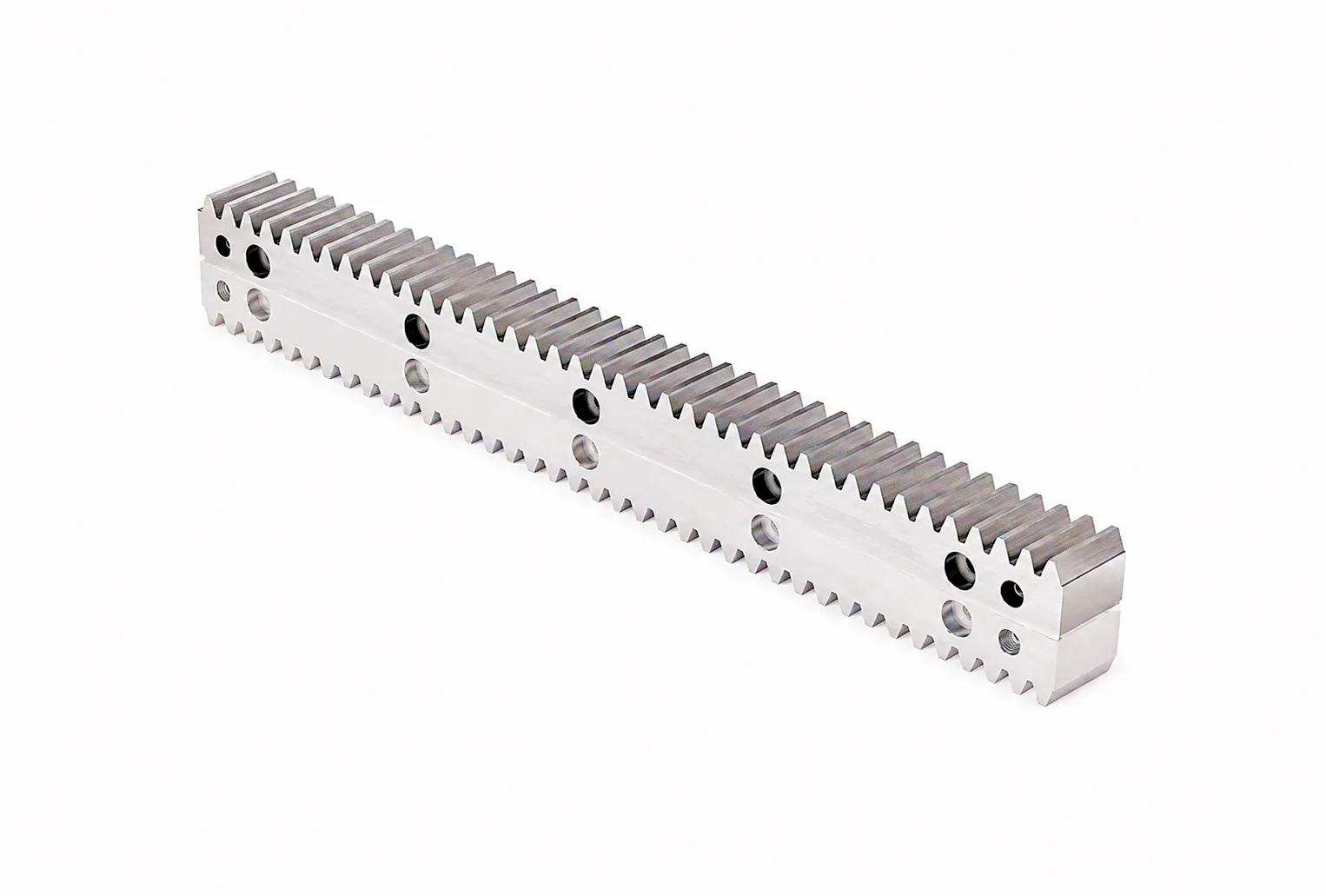
Gear Rack Product Technical and Performance Parameters
Standard product range data — custom specifications available on request
Explore Related Products
Browse our precision rack and guide product range for your specific application requirements
⚙️
Zero Backlash Rack
Preloaded tooth geometry for ultra-precise servo positioning applications
🔩
Precision Ground Helical Rack
DIN Grade 4–5, Ra ≤ 0.8 µm, for CNC machining centre axes
🔥
Induction Hardened Helical Rack
58–62 HRC tooth surface hardness with anti-corrosion surface treatment
📐
V-Type Ground Straight Guide Rack
Integrated guide and rack function for compact linear axis design
Customer Success Story — Sheffield Precision Engineering
Case Study · Industrial Sector: Special Steel Processing · Location: Sheffield, South Yorkshire
Reducing Rack Replacement Frequency by 62% on a Continuous Rolling Mill Side Guide
A Sheffield-based special steel producer operating a 5-stand tandem rolling mill had been experiencing unacceptably high gear rack consumption on their slab positioning side guides — a pair of rack-and-pinion drives that position the entry guides laterally during hot rolling. The existing racks were module 8 spur racks in C45 steel, surface hardened to 52 HRC, sourced from a European distributor at what had appeared to be a competitive price per metre. In practice, the combination of rolling-induced vibration, occasional scale contamination, and the sustained high contact forces was causing tooth spalling at the pitch line after an average of 4.5 months of service — meaning the maintenance team was replacing both racks twice a year and suffering a planned eight-hour shutdown each time.
The plant’s rotating equipment engineer contacted Ever Power’s UK technical sales contact following a referral from another steel sector customer. After reviewing the application data — tangential force per rack calculated at approximately 62 kN at peak rolling load, operating temperature at the guide estimated at 55–70°C ambient, and the confirmed presence of rolling scale in the lubrication zone — the Ever Power application team recommended a transition to module 8 racks in 42CrMo4 steel with induction hardening to 58 HRC and a case depth of 4 mm minimum, combined with a zinc-phosphate pre-treatment and high-viscosity, EP-additive gear lubricant applied via an automated drip lubrication system.
The racks were manufactured to DIN Grade 7 specifications with elongated cross-section mounting slots that simplified installation — a customisation driven by the plant’s existing guide frame geometry that would have required machining if standard mounting configurations had been used. Two sets were shipped DDP to the plant via a consolidated freight arrangement through Felixstowe, arriving ten days ahead of the scheduled maintenance window. The racks were installed during a planned roll change and the first service inspection — conducted at the four-month mark that had previously triggered replacement — confirmed tooth flank wear within normal operating parameters. At the time of writing, the racks had been in service for fourteen months without intervention, and the plant’s maintenance planner had provisionally extended the replacement interval target to 24 months.
Outcome: Rack replacement frequency reduced from 2.4 sets per year to fewer than 1 set per year. Annual maintenance shutdown time attributable to guide rack replacement reduced by an estimated 16 hours. Total cost of ownership per year reduced by approximately 38% despite a higher unit price per rack, reflecting the dominant influence of shutdown cost over material cost in this application.
Client Reviews
★★★★★
“We’d been chasing a DIN Grade 5 helical rack in module 3 with a 19-degree helix for nearly six weeks from European stock. Ever Power had it in production within three days of receiving our drawing and delivered ahead of schedule. The inspection report matched our own metrology results exactly.”
— Rotating Equipment Manager, CNC machine tool rebuilder, Coventry
★★★★★
“Our packaging line uses a mixture of DIN and JIS-spec components from the original Japanese equipment supplier. Ever Power was the only manufacturer we approached who understood the distinction without requiring a lengthy technical briefing. The JIS Grade 4 stainless racks have now been in service for eight months in a wash-down environment without any dimensional issues.”
— Engineering Manager, pharmaceutical packaging, Nottingham
★★★★★
“The custom cross-section work Ever Power completed for our portal crane runways saved us roughly £12,000 in structural modification costs that we would have incurred adapting standard rack profiles. Their application team understood exactly what we needed and the finished racks arrived with full dimensional and hardness certification. We’re specifying Ever Power on the next two crane projects as a result.”
— Senior Mechanical Engineer, overhead crane manufacturer, Leeds
Frequently Asked Questions
Answers to the most common questions from UK engineers and buyers specifying gear rack components
Ever Power · Precision Gear Rack Manufacturer
DIN · AGMA · JIS · Custom Specifications · UK Delivery · 24-hour Quote Response
📧 sales@farm-equipment-parts.com
edit by gzl