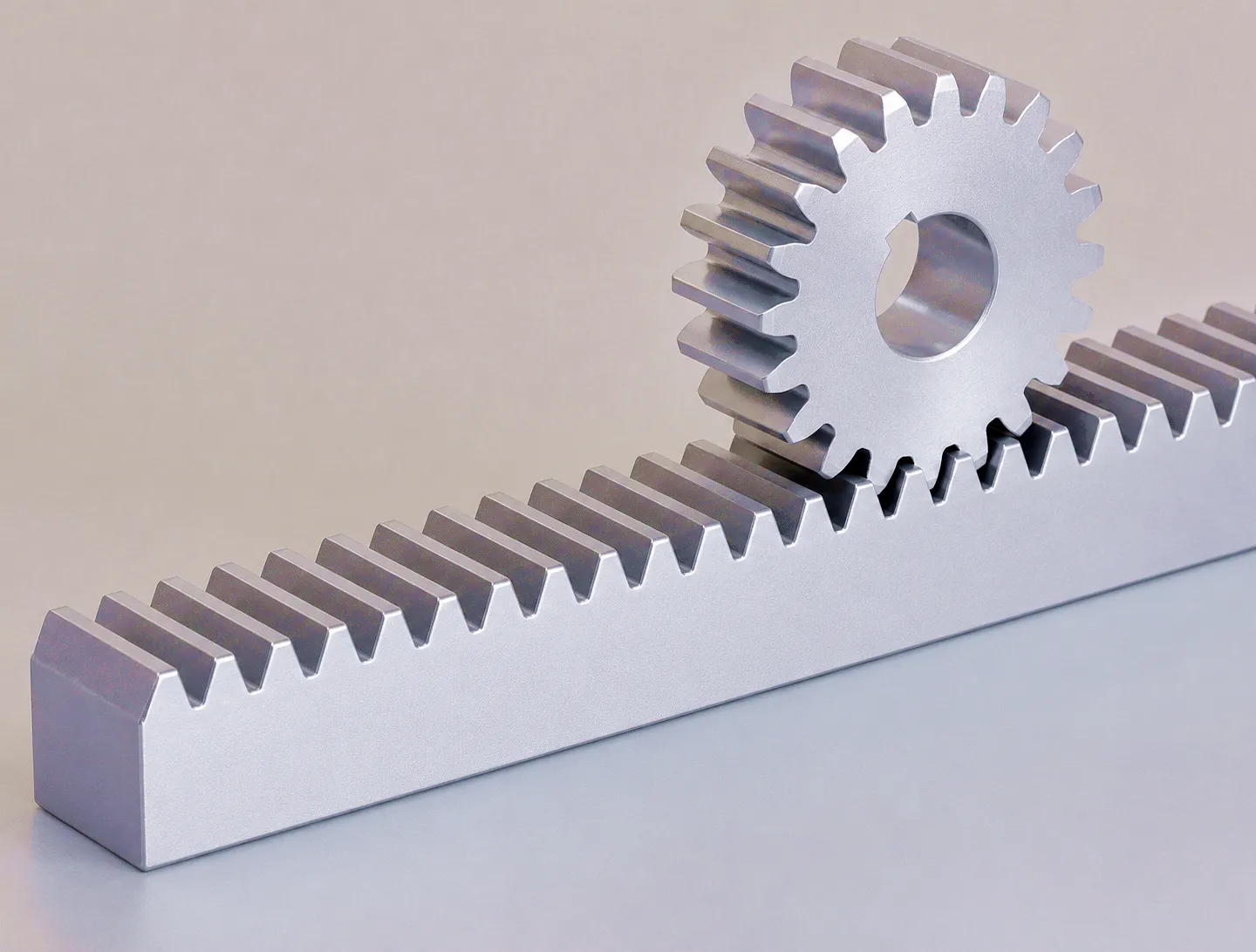
How Gear Racks Convert Motion: The Mechanical Principle
Linear-to-rotary transmission · Rack and pinion mechanics · Load distribution
A gear rack functions as a straight-toothed bar that, when meshed with a rotating pinion, converts rotational motion into precise linear displacement — or vice versa. Each tooth on the rack engages a corresponding tooth on the pinion at the pitch line, transmitting force through a contact zone whose geometry is defined by the pressure angle (typically 20° for standard industrial racks) and the module. The efficiency of this transmission is not simply a function of the tooth profile; the surface texture at the contact interface plays an equally decisive role in determining how smoothly that force transfers, how much energy converts to heat and vibration, and how rapidly the tooth flanks wear.
Under dynamic loading, the contact patch between rack tooth and pinion tooth is not a line but an elongated ellipse. Within that contact ellipse, surface asperities — the microscopic peaks and valleys that characterise any machined surface — interact under pressure. When two rough surfaces meet, actual contact occurs only at asperity tips, concentrating stress far above the nominal Hertzian contact pressure. The lambda ratio (the ratio of lubricant film thickness to composite surface roughness) governs whether the system operates in full film, mixed, or boundary lubrication — and that ratio directly controls the rate of wear, the temperature of the contact zone, and the amplitude of the noise generated during meshing. A gear rack with an Ra of 0.4 µm operates in a fundamentally different tribological regime than one with Ra 1.6 µm, even if every other parameter is identical.
How Surface Texture Directly Controls Gear Rack Noise Generation
Tooth-to-tooth impact · Transmission error · Acoustic frequency content
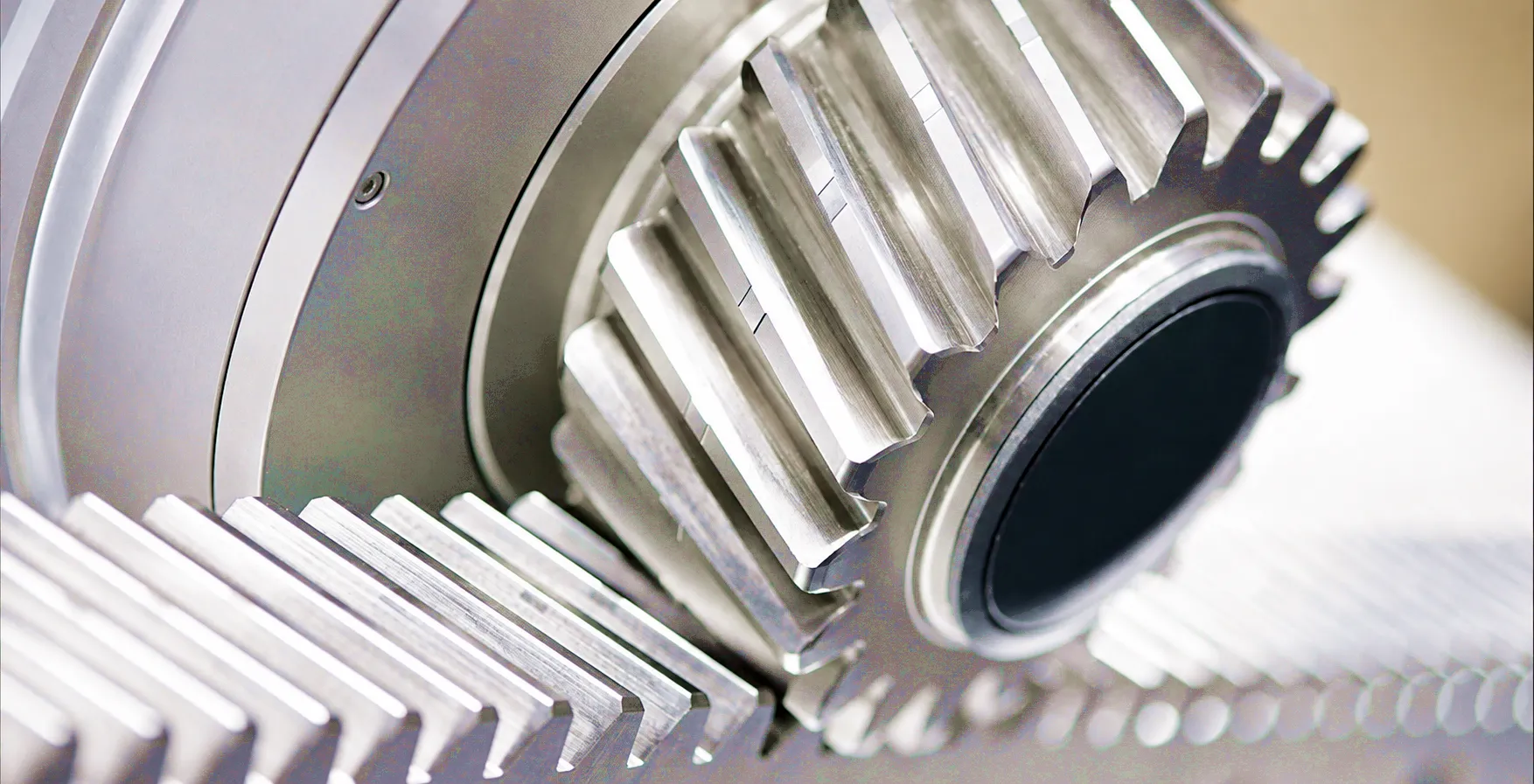
Gear rack noise is primarily generated by two mechanisms: transmission error — the deviation of the output motion from perfectly uniform displacement — and impact excitation during tooth engagement. Surface finish influences both. Rough tooth flanks on a gear rack introduce micro-scale geometric irregularities that modulate the effective tooth profile as engagement progresses, creating small but rapid fluctuations in the instantaneous velocity ratio. These fluctuations produce vibration at the mesh frequency and its harmonics, radiating from the rack body and the machine frame as airborne noise. In factory environments across the West Midlands, where precision CNC machining cells operate in close proximity to assembly areas, even a 5 dB(A) increase in background noise from gear racks can breach workplace noise-at-work regulations and reduce operator concentration.
The relationship between Ra value and noise output is not linear but approximately logarithmic above a threshold roughness. Rack sections ground to Ra 0.4 µm typically produce 6–10 dB(A) less mesh noise than milled racks with Ra 3.2 µm when operating at equivalent pitch line velocities between 0.5 and 3 m/s. This difference corresponds to a perceived loudness reduction of roughly 50–75%, which is the difference between an irritating background hum and an almost inaudible operation — a distinction that matters enormously to UK facilities managers working under the Control of Noise at Work Regulations 2005.
Beyond the decibel figures, surface finish affects the frequency content of the noise spectrum. Coarser surfaces tend to generate higher-amplitude harmonics at multiples of the mesh frequency, producing a characteristically harsh, grating quality that human perception rates as more objectionable than an equivalent sound pressure level at lower frequencies. Precision ground gear racks, by contrast, produce a cleaner spectral signature dominated by the fundamental mesh frequency — far easier to attenuate with standard acoustic enclosures or damping materials if required.
| Surface Finish Process | Ra (µm) | Typical Noise Level | Lubrication Regime | Relative Wear Rate |
|---|---|---|---|---|
| Precision Ground | ≤ 0.4 | Low (< 62 dB(A)) | Full Film (λ > 2) | Baseline (1×) |
| Induction Hardened + Ground | 0.4 – 0.8 | Low–Med (62–68 dB(A)) | Full / Mixed | 1.1× – 1.4× |
| Shaved / Hobbed | 0.8 – 1.6 | Medium (68–74 dB(A)) | Mixed | 2× – 3× |
| Milled (Standard) | 1.6 – 3.2 | High (74–80 dB(A)) | Mixed / Boundary | 5× – 8× |
| Broached / Rough Cut | > 3.2 | Very High (> 80 dB(A)) | Boundary | 10× – 15× |
Core Materials Used in Precision Gear Rack Manufacturing
Steel alloys · Stainless · Polymer composites · Surface treatment interaction
C45 Medium Carbon Steel
The workhorse material for standard industrial gear racks, C45 offers a balance of machinability and strength. After hobbing or milling, C45 racks are typically flame or induction hardened to achieve surface hardness of 50–55 HRC at the tooth flanks while retaining a tough core. The achievable Ra after subsequent grinding on C45 is typically 0.4–0.8 µm — more than sufficient for most industrial conveying, positioning, and gantry applications across UK automotive and engineering sectors. The material’s relatively uniform grain structure responds predictably to grinding, making consistent surface finish achievable across long rack sections used in Sheffield’s heavy fabrication facilities.
42CrMo4 Alloy Steel
For high-load applications — rack-and-pinion drives on heavy gantry cranes, large portal milling machines, or demanding industrial automation in Birmingham’s manufacturing parks — 42CrMo4 (EN 19 equivalent in BS designation) is the preferred choice. The chromium-molybdenum alloying delivers higher hardenability, enabling case depths of 2–4 mm via induction hardening and surface hardness up to 58 HRC. Critically, the finer microstructure of 42CrMo4 supports superior grinding outcomes: skilled grinding operations routinely achieve Ra values below 0.4 µm, enabling full-film lubrication and the lowest possible wear rates even under shock loading conditions common in heavy industry.
316L Stainless Steel
Food processing facilities across the East Midlands, pharmaceutical manufacturers in Cheshire, and offshore equipment suppliers to the North Sea all share a common requirement: corrosion resistance that does not compromise dimensional stability. 316L stainless steel gear racks meet this need, though the material presents distinct grinding challenges. The austenitic microstructure is prone to work-hardening during aggressive grinding, requiring careful control of wheel speed, feed, and coolant supply. When properly processed, 316L racks achieve Ra values of 0.4–1.0 µm — adequate for noise-sensitive environments — while resisting chloride-induced corrosion that would destroy carbon steel racks in coastal or marine-adjacent applications within months.
Nylon / POM Polymer Racks
Polymer gear racks — primarily polyamide (PA66) and polyoxymethylene (POM/Delrin) — occupy a distinct niche where silence is the primary specification driver and loads are moderate. The inherent damping properties of these materials absorb mesh-frequency vibration that steel transmits, making them the quietest option at low-to-medium pitch line velocities (up to ~1.5 m/s). Surface finish of the tooth flanks on injection-moulded or machined polymer racks is typically Ra 1.0–3.0 µm, yet the acoustic output remains low due to the material’s viscoelastic damping. For UK medical device automation, laboratory equipment, and packaging lines where metal-on-metal noise is unacceptable, polymer racks represent a viable engineering compromise.
Core Technical Advantages of Precision Surface Finish in Gear Rack Systems
Measurably Reduced Operating Noise
Precision ground gear racks consistently deliver 6–10 dB(A) lower mesh noise compared with standard milled equivalents. This reduction is achieved through minimised tooth-to-tooth impact, reduced transmission error, and improved lubricant film consistency across the full engagement cycle — delivering workplace environments that comply with UK noise regulations without additional acoustic engineering.
Extended Service Life — Quantified
Field and laboratory data consistently show that moving from Ra 3.2 µm to Ra 0.4 µm extends tooth flank wear life by a factor of 4–8× under equivalent load and lubrication conditions. For a manufacturing plant running three shifts, this translates to rack replacement intervals stretching from under a year to five or more years — a compelling whole-life cost argument that experienced UK plant engineers recognise immediately.
Superior Dimensional Accuracy
Grinding-finished racks achieve pitch accuracy of DIN 6, 5, or even 4 — parameters that milling alone cannot reach. In precision machine tool applications, CNC routing tables, and coordinate measuring systems, pitch error in the gear rack directly manifests as positional error in the workpiece or probe. A ground rack holds tooth pitch tolerances within ±3 µm over a 1-metre section, enabling machine builders to meet the sub-10 µm positioning accuracies that modern aerospace and medical device manufacturing demands.
Optimised Lubrication Performance
Fine surface finish reduces the minimum film thickness required to achieve full-film lubrication, meaning the system can operate in a full-film regime with lighter, lower-viscosity greases or oils. This carries a practical benefit in cold-climate UK facilities: a lower-viscosity lubricant flows more readily at winter ambient temperatures, reducing start-up wear that is disproportionately damaging to rack systems. Additionally, smooth tooth surfaces retain lubricant films more consistently under the sliding motion at tooth root and tip regions.
Lower Operating Temperature
Asperity contact is the primary source of frictional heat in gear systems operating in the mixed lubrication regime. By eliminating the high-pressure asperity interactions that characterise rough surfaces, precision ground gear racks run at lower contact temperatures — typically 15–30°C cooler than milled equivalents at equivalent loads and speeds. Lower operating temperature extends lubricant life, reduces the risk of thermally induced dimensional changes in machine tool structures, and lowers the probability of surface fatigue phenomena such as micropitting that initiate on rough tooth flanks.
Better Pinion Compatibility
A rough gear rack does not just wear itself — it accelerates wear on the mating pinion, whose typically smaller diameter means each tooth passes through the mesh zone far more frequently per revolution. A rough rack surface acts like an abrasive file on the pinion flanks, often destroying a premium pinion in a fraction of its design life. Specifying a precision ground rack protects the entire rack-and-pinion system, reducing total drivetrain replacement costs across multi-axis gantry systems common in UK automotive body-in-white welding lines.
Gear Rack Technical & Performance Parameter Reference Table
Covering module, material, hardness, accuracy class, surface finish and load ratings
| Parameter | Standard Milled | Induction Hard + Ground | Precision Ground | Helical Ground |
|---|---|---|---|---|
| Module Range | 1 – 10 | 1 – 8 | 1 – 6 | 1 – 5 |
| Surface Finish Ra (µm) | 1.6 – 3.2 | 0.4 – 0.8 | ≤ 0.4 | ≤ 0.4 |
| Tooth Hardness (HRC) | 28 – 32 (core) | 50 – 58 (surface) | 55 – 62 (surface) | 55 – 62 (surface) |
| DIN Accuracy Class | 9 – 10 | 7 – 8 | 5 – 6 | 4 – 5 |
| Max Permissible Load (kN per module, m=3) | 8 – 12 | 18 – 24 | 18 – 24 | 20 – 28 |
| Typical Material | C45 | C45, 42CrMo4 | 42CrMo4, 20CrMnTi | 42CrMo4 |
| Pitch Line Velocity (max m/s) | 2 | 5 | 8 | 12 |
| Standard Length (mm) | 500 – 2000 | 500 – 2000 | 500 – 3000 | 500 – 2000 |
| Relative Noise Level | High | Medium | Low | Very Low |
Industrial Application Scenarios: Where Surface Finish Decisions Matter Most
From Midlands automotive lines to Scottish renewable energy installations
CNC Router & Gantry Machining Centres — West Midlands Aerospace & Automotive
Large-format CNC gantry machines used in aerospace composite layup trimming and automotive stamping tool manufacturing are perhaps the highest-stakes application for gear rack surface finish. These machines — deployed extensively by Tier 1 and Tier 2 suppliers across Coventry, Derby, and the surrounding West Midlands corridor — operate at rapid traverse rates of 30–60 m/min while maintaining positional accuracy within 0.02 mm over axes spanning 8–30 metres. At these velocities, a gear rack with Ra 1.6 µm generates a pitch line velocity comfortably in the mixed lubrication regime, where wear rates are 3–5× higher than full-film operation. The result is progressive tooth wear that introduces low-frequency positional drift — a systematic error that increases cycle times as operators widen machining tolerances to compensate. Precision ground gear racks with Ra ≤ 0.4 µm maintain the lambda ratio above the full-film threshold at these velocities with standard ISO VG 220 gear lubricant, preserving positioning accuracy over 25,000+ operating hours.
Automated Storage & Retrieval Systems — UK Distribution Logistics
The expansion of automated warehousing across UK logistics hubs — from the East Midlands distribution parks near Lutterworth to the large Ocado fulfilment centres in Hertfordshire and Andover — has created substantial demand for gear racks that prioritise operational continuity and minimal noise in human-robot collaborative environments. Stacker cranes and AS/RS shuttles in these facilities run 20–24 hours per day, 365 days per year, with the expectation that gear rack systems will deliver 50,000+ operating hours before scheduled maintenance. At such utilisation rates, the difference between Ra 0.4 µm and Ra 1.6 µm is not academic: it determines whether the maintenance interval is five years or under two years. Noise also carries direct operational significance — regulations in fulfilment centres classify zones by ambient sound level, and gear rack noise that pushes areas above 80 dB(A) requires personal protective equipment for workers, reducing efficiency and increasing HR overhead.
Heavy Steel Processing Equipment — Sheffield’s Special Steels Sector
Sheffield retains its standing as one of Europe’s premier centres for special steels and high-value metal processing, with facilities including large-scale rolling mills, forge presses, and cutting equipment that rely on heavy-duty gear rack systems for positioning and feed drives. In these environments, the surface finish specification for gear racks faces a different trade-off: extremely high tooth loads from shock-heavy processing cycles create the risk of contact fatigue and surface pitting that initiates at stress-concentrating asperities on rough tooth flanks. Induction hardened 42CrMo4 racks ground to Ra 0.6–0.8 µm represent the engineering consensus for this sector — hard enough to resist surface fatigue under the high Hertzian stresses involved, and sufficiently smooth to support a stable lubricant film even with the ISO VG 320 or VG 460 gear oils typical in high-load steel industry drives. The zero-backlash rack designs from our specialist product range are particularly suited to precise positioning requirements alongside heavy-duty processing, maintaining tooth contact without play even as thermal cycles cause differential expansion in the surrounding steel structures.
Solar Tracker & Wind Turbine Yaw Systems — Scottish & Welsh Installations
Scotland’s rapidly expanding onshore wind and utility solar sector is creating demand for rack-and-pinion drives in two specific renewable energy applications: wind turbine nacelle yaw systems and single-axis solar tracker drives. Both applications share the characteristic that maintenance access is expensive — climbing a 90-metre turbine tower or traversing a remote Scottish highland solar farm to replace a gear rack is a significant cost event. This makes wear life a paramount specification criterion: an induction-hardened, precision ground helical gear rack installed in a yaw drive at a Caithness wind facility must deliver 20+ years of reliable operation in an environment with extreme temperature swings, coastal salt spray, and the high-cycle fatigue loads of continuous yaw corrections. Similarly, our V-type ground helical guide rack solutions have proven particularly effective in solar tracker applications where precise, consistent angular positioning of the panel array over decades of operation demands both outstanding surface quality and matched guide geometry.
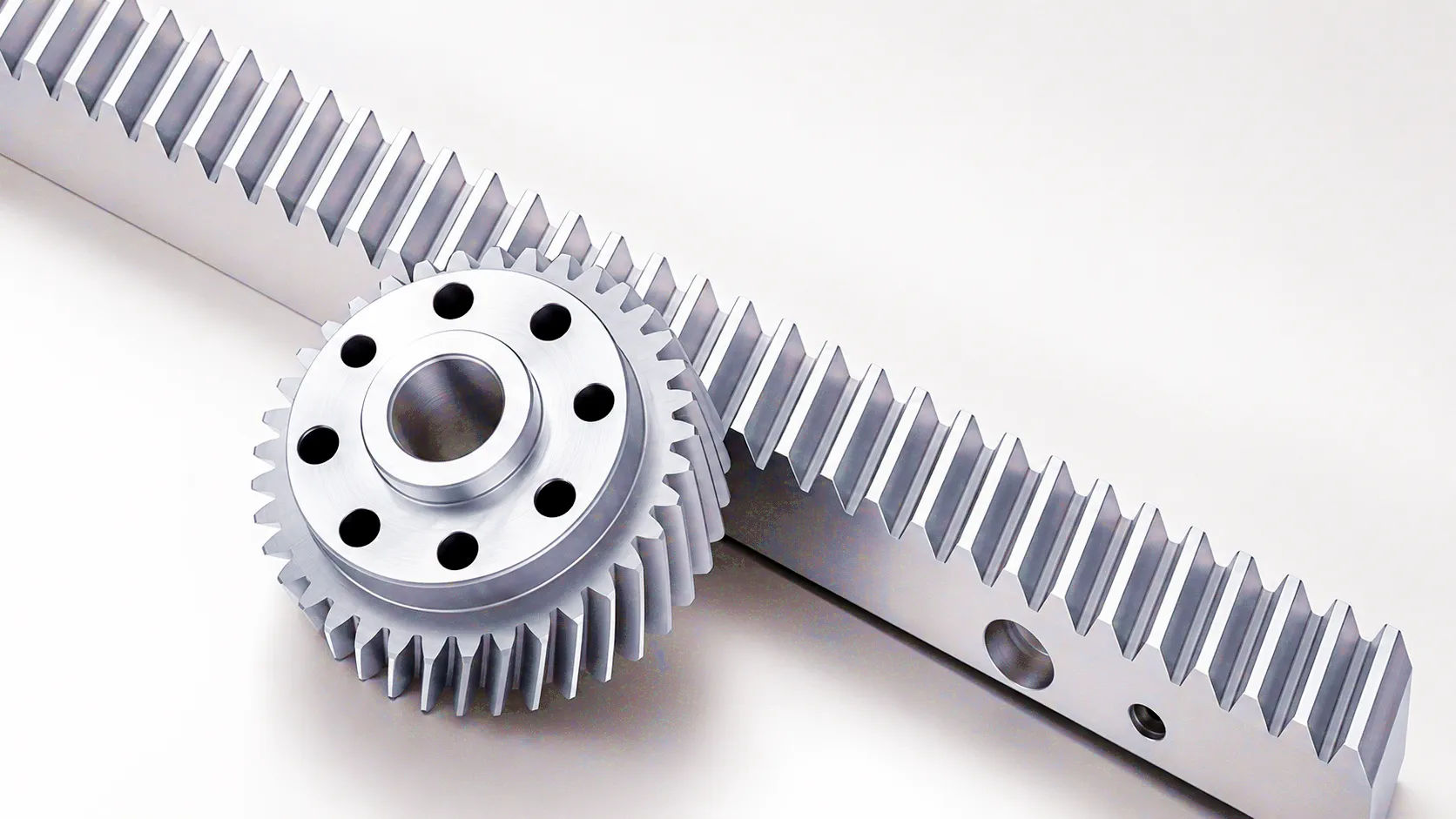
Ever Power: Precision Manufacturing Capability & Custom Gear Rack Solutions
Custom surface finish · Material specification · Length and profile customisation
Ever Power’s manufacturing facility operates a fleet of CNC gear grinding machines capable of holding tooth flank surface finishes to Ra 0.2 µm on demand — significantly finer than the Ra 0.4 µm standard that most precision ground rack suppliers offer. This capability matters for applications such as medical robotics, semiconductor wafer handling, and high-precision optical positioning systems where even sub-Ra-0.4 µm surfaces carry measurable performance advantages. Our in-house profile grinding department handles modules from 1 to 10 and rack lengths up to 3,000 mm per section, with hardness verification by Vickers and Rockwell testing after each production batch.
Customisation at Ever Power extends beyond surface finish to cover tooth profile modifications including tip relief, root relief, and profile crowning — all techniques that further reduce transmission error and noise, particularly important in high-speed gantry applications. Our engineering team works directly with UK machine builders and OEMs from initial specification through to dimensional and acoustic validation, shortening the development cycle compared with the lengthy approval processes that multi-tier supply chains impose. Lead times for standard precision ground stock range from 3–7 working days for UK-stocked modules; custom-profile or non-standard length orders typically ship within 4–6 weeks, with express production slots available for time-critical projects.
Ready to specify the right surface finish for your gear rack application?
Our technical team provides free specification consultation for UK engineering projects.
Customer Success: Sheffield Automotive Tooling Manufacturer Cuts Rack Replacement Costs by 70%
Case study — South Yorkshire precision engineering sector
🚺 Automotive Tooling
📈 70% Cost Reduction
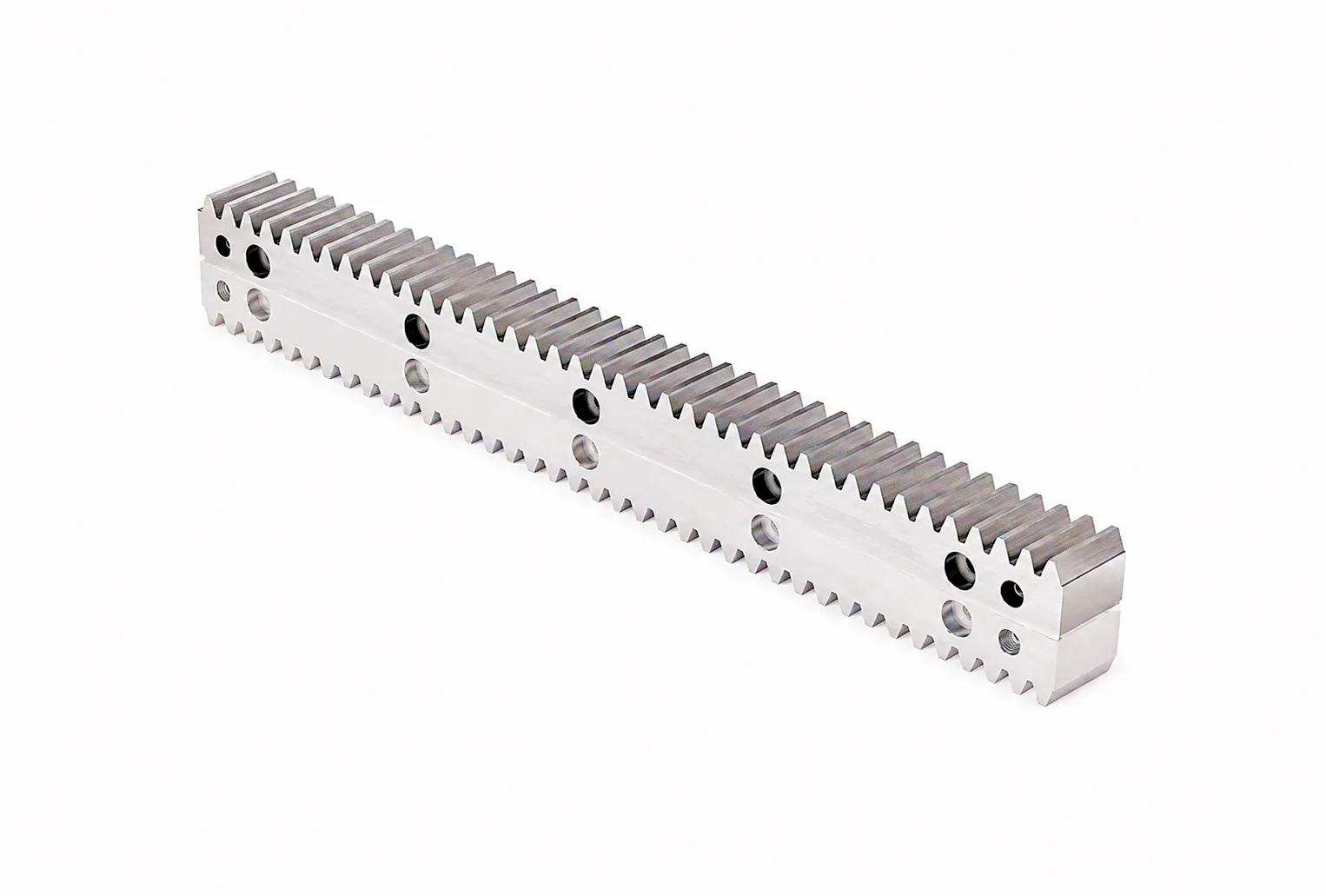 Meridian Precision Tools Ltd, a Sheffield-based manufacturer of pressing dies and stamping tooling serving Tier 1 UK automotive suppliers, operates four large-format CNC gantry machining centres with rack-and-pinion X-axis drives spanning 14 metres. By 2022, the facility was replacing the X-axis gear racks on each machine every 14–18 months, experiencing escalating positioning errors — manifesting as a 0.08–0.12 mm systematic drift at mid-axis — that required increasingly frequent re-referencing during production runs. The total annual spend on replacement racks, installation labour, and lost machine time had reached approximately £47,000 across the four machines.
The facility’s production engineer, who had previously encountered Ever Power’s catalogue through a trade distributor in Leeds, contacted our UK sales team to discuss the specification in detail. Our technical assessment identified three converging problems: the existing C45 milled racks had Ra values measured at 2.1–2.8 µm on the tooth flanks; the lubricant specification (a general-purpose multi-purpose grease) was grossly mismatched to the contact conditions; and the pinion gear was undersized relative to the dynamic loads from rapid traverse acceleration. Ever Power specified a direct replacement using 42CrMo4 induction-hardened precision ground helical racks (Ra ≤ 0.4 µm, DIN 5 accuracy, module 4), with a recommended change to ISO VG 220 semi-fluid gear oil in automatic lubrication dispensers.
After 24 months of operation, the precision ground gear racks showed no measurable tooth wear on optical measurement, and positioning repeatability had improved from ±0.05 mm to ±0.012 mm. Machine noise levels dropped by approximately 7 dB(A) — a reduction noted by operators without prompting during post-installation interviews. The projected rack replacement interval extended to 7+ years, and the automatic lubrication system eliminated the previously labour-intensive manual greasing schedule. Meridian Precision’s total annual maintenance cost for the four X-axis drives fell from £47,000 to approximately £14,000 — a 70% reduction — with the payback period on the premium specification being under six months.
What UK Engineers Say About Ever Power Gear Racks
“We’ve been specifying precision ground gear racks from Ever Power for our 5-axis machining centres for the past three years. The Ra 0.4 µm finish holds exactly as documented, and we can verify it on our own contact profilometer — the spec is real, not marketing. The jump in positioning stability alone justified the additional spend per rack within the first production quarter.”
“The noise reduction on our AS/RS stacker cranes was remarkable. We replaced 42 metres of standard milled rack with Ever Power ground racks and the ambient noise in the warehousing zone dropped enough that we reclassified two work areas — removing the mandatory hearing protection requirement. The EN 10204 3.1 material certs made our quality audit straightforward.”
“We had a non-standard module 2.5 requirement for a bespoke portal grinding machine. Most rack suppliers couldn’t accommodate the profile without minimum order quantities that made the project unviable. Ever Power’s team came back with a custom quotation within 48 hours and delivered fully inspected precision ground racks on a six-week lead time. The customisation capability is the real differentiator.”
Frequently Asked Questions
Answering the questions UK engineers and procurement teams ask most often
What surface finish Ra value should I specify for a precision ground helical gear rack used on a CNC gantry in a UK manufacturing facility?
+
For CNC gantry applications where positioning accuracy and low noise are both priorities, Ra ≤ 0.4 µm is the recommended specification. This value places the tooth contact in the full-film lubrication regime across the typical pitch line velocity range of CNC machines (5–40 m/min), minimising wear and acoustic output. If the gantry operates at very low speeds (under 5 m/min) or in an environment where lubricant supply cannot be guaranteed consistently, an additional surface treatment such as phosphating or DLC coating can supplement the ground finish.
How much does a precision ground gear rack cost compared to a standard milled rack, and where can I get a quote from a UK-serving supplier?
+
Precision ground gear racks typically carry a unit cost premium of 40–120% over standard milled equivalents of the same module and material. However, when whole-life cost is calculated — accounting for the 4–8× longer wear life, the reduced lubricant consumption, the lower pinion replacement rate, and the elimination of production downtime from positional drift — the precision ground option consistently delivers lower total cost of ownership over a 5-year horizon. For an accurate quote for UK delivery, contact Ever Power directly at sales@farm-equipment-parts.com with your module, length, material, and required surface finish specification.
Which gear rack material is best for a food processing conveyor system operating in a Sheffield facility that requires regular washdown?
+
For food processing environments subject to regular washdown — particularly where chlorinated cleaning agents are used — 316L stainless steel is the recommended base material. The molybdenum content of 316L provides meaningful resistance to pitting corrosion in chloride-rich environments that would destroy carbon steel racks within weeks. If load requirements are low-to-moderate (below 8 kN per tooth at module 3), an engineering-grade polyamide (PA66) rack may offer superior chemical resistance with the additional benefit of lower noise at the mesh frequency, which is relevant in facilities where food safety auditors assess ambient hygiene conditions holistically.
How do I know when my gear rack tooth wear has reached a point where replacement is necessary, and what inspection methods do UK maintenance teams typically use?
+
The practical wear limit for a gear rack is typically defined as 20–25% reduction in tooth thickness at the pitch line, or the point at which backlash in the rack-and-pinion pair has increased to the extent that positional repeatability degrades beyond the application’s tolerance. UK maintenance teams most commonly use a calibrated gear tooth vernier calliper to measure over-pin dimension at regular service intervals, comparing against the as-new drawing dimensions. On precision machines, the CNC controller’s encoder feedback can detect the onset of significant backlash as a systematic positional lag; setting up a trend-monitoring routine comparing commanded and measured axis position provides early warning without physical measurement access.
Where can a Birmingham-based machine builder source custom-length precision ground gear racks with DIN 5 accuracy class and documented material certification?
+
Ever Power supplies custom-length precision ground gear racks to UK machine builders nationwide, including regular shipments to Birmingham, Coventry, Wolverhampton, and the wider West Midlands engineering community. Each order is accompanied by EN 10204 3.1 material certificates, CMM pitch accuracy reports, and surface roughness measurement documentation — the documentation package required by most quality management systems in the UK automotive supply chain. Custom lengths up to 3,000 mm per section are available in a single grinding pass, with matched-pitch joining sections for longer axes. Contact sales@farm-equipment-parts.com with your specification for a quotation within 24 hours.
What is the difference between a helical gear rack and a straight-tooth rack in terms of noise and load capacity, and which should I choose for my UK automation project?
+
Helical gear racks engage progressively along the tooth length rather than simultaneously across the full face width, which distributes the contact stress more evenly, reduces the impulse load at tooth entry, and produces a smoother, lower-amplitude transmission error. The acoustic consequence is typically 4–8 dB(A) lower noise than a straight-tooth rack of identical module and surface finish. Load capacity per unit face width is also higher for helical designs due to the larger theoretical contact length. For UK automation projects where high speed, quiet operation, or high dynamic loads are involved, helical precision ground racks are almost always the better choice; straight-tooth racks are appropriate for lower-speed applications where simplicity, lower cost, or single-directional loading make the helix angle advantageous. The helical rack generates an axial force component that must be reacted by the guide system — a constraint to check with your linear guide supplier before specifying.
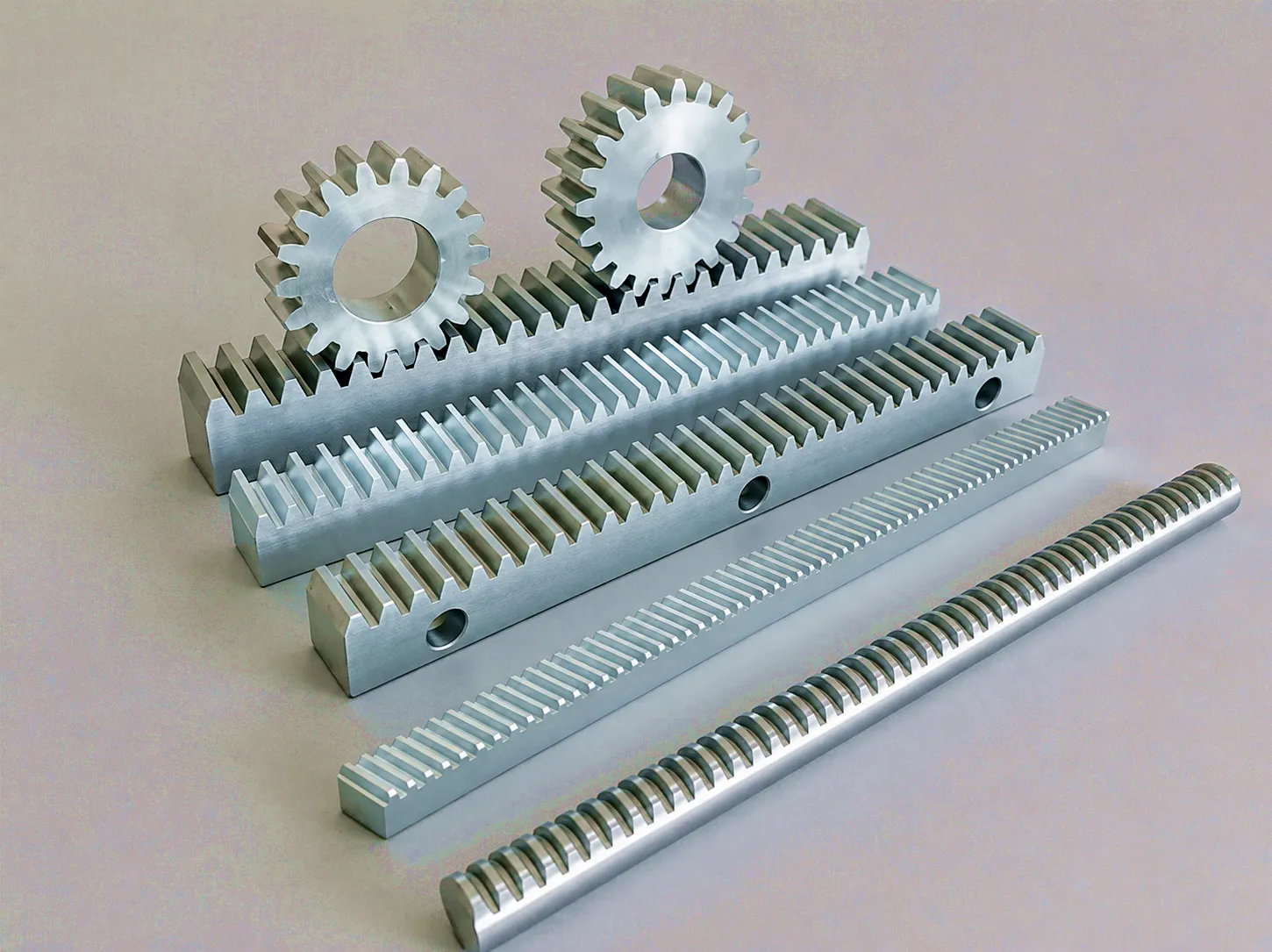
Start Your Gear Rack Specification Today
Send your application details — module, load, speed, surface finish requirement, length — and our engineering team will respond with a technical recommendation and pricing within 24 hours.
📧 Get a Quote — sales@farm-equipment-parts.com
edit by gzl