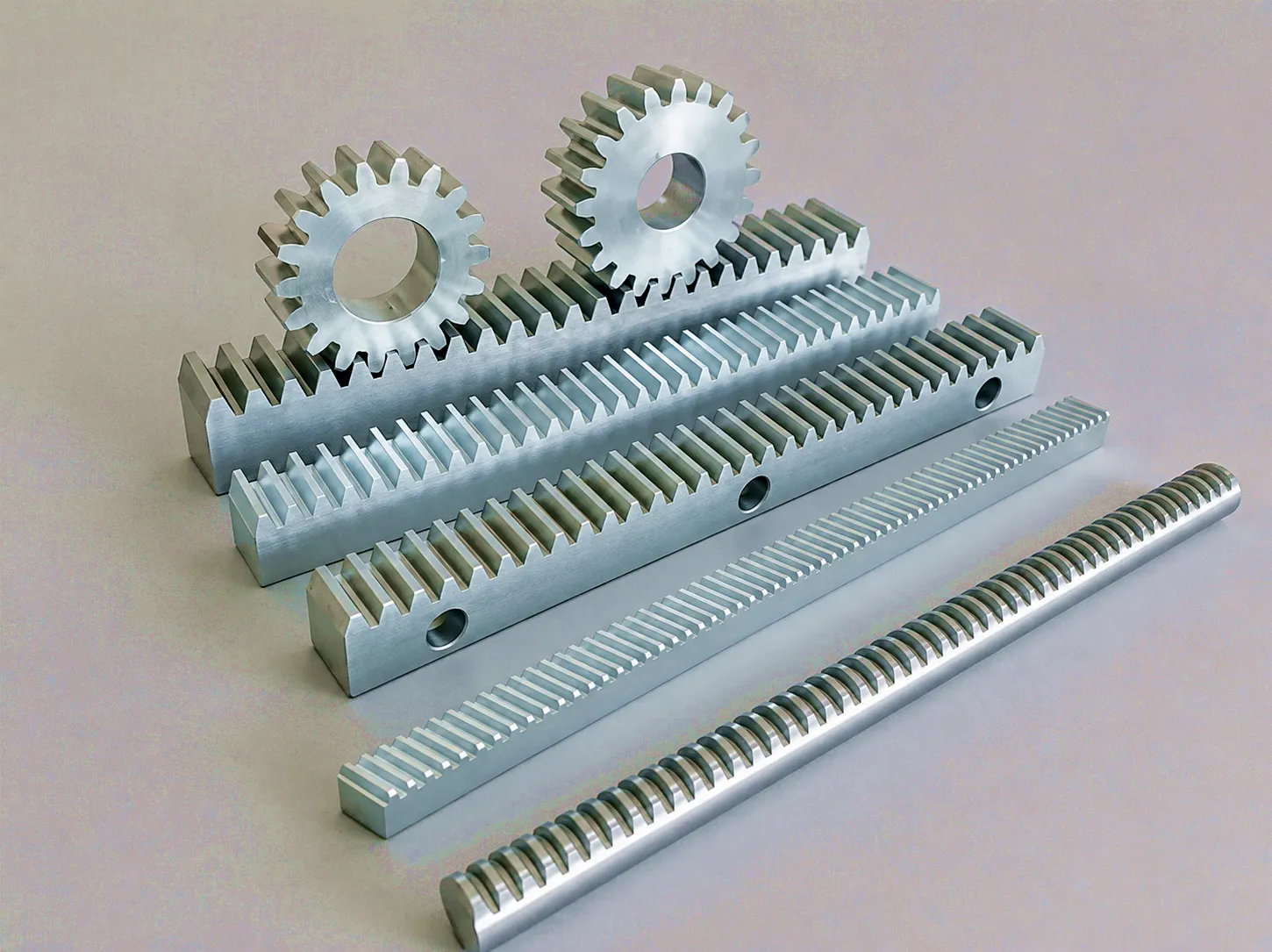
What Heat Treatment Actually Does to Steel at a Metallurgical Level
Microstructure Transformation
When carbon steel is heated above its critical austenite transformation temperature — typically around 820–880 °C depending on grade — the body-centred cubic ferrite structure opens into a face-centred cubic austenite phase that can dissolve significantly more carbon. Rapid quenching then traps that carbon in a supersaturated, highly strained tetragonal lattice called martensite. Martensite is extremely hard — often exceeding 60 HRC — but also brittle in its as-quenched form. A subsequent tempering cycle at 150–250 °C relieves internal stresses, redistributes some carbon into fine carbide precipitates, and restores toughness without sacrificing more than a few HRC points of hardness. The result is a tooth surface that resists pitting, wear, and bending fatigue across the full service life of the rack.
Core vs. Case Properties
For a high-load gear rack, engineers rarely want uniform hardness through the full cross-section. A fully hardened bar is too brittle for shock-loaded applications such as crane travel drives or press-brake positioning axes. The engineering solution is selective hardening — either through induction hardening of the tooth region alone, or through carburising and case-hardening to produce a hardened surface layer (case) over a softer, more ductile core. The case absorbs Hertzian contact stress at the tooth flank, while the core’s toughness prevents catastrophic crack propagation under bending loads at the tooth root. This engineered gradient of properties is what distinguishes a precision rack from a commodity bar with teeth.
Dimensional Stability After Hardening
One practical consequence of heat treatment that many buyers underestimate is dimensional change. Martensitic transformation involves a volume expansion of roughly 0.1–0.4%, and uneven temperature gradients during quenching can induce warping or twist along the rack length. This is why high-precision racks — particularly those destined for CNC machining centres, coordinate measuring machines, or optical inspection systems — are heat-treated before final grinding. The grinding pass removes distortion and restores the pitch accuracy, tooth profile geometry, and surface finish specified on the drawing. Attempting to grind first and harden second is almost always counterproductive for critical applications. Specifying the correct sequence is as important as specifying the correct hardness.
The Four Principal Heat Treatment Methods Used on Gear Racks
Each heat treatment route carries distinct trade-offs between hardness depth, dimensional control, material compatibility, and cost. Selecting the wrong route for the application is one of the most common specification errors in rack procurement, and it results in premature failure even when everything else — module, material grade, mounting — has been correctly chosen.
Induction Hardening
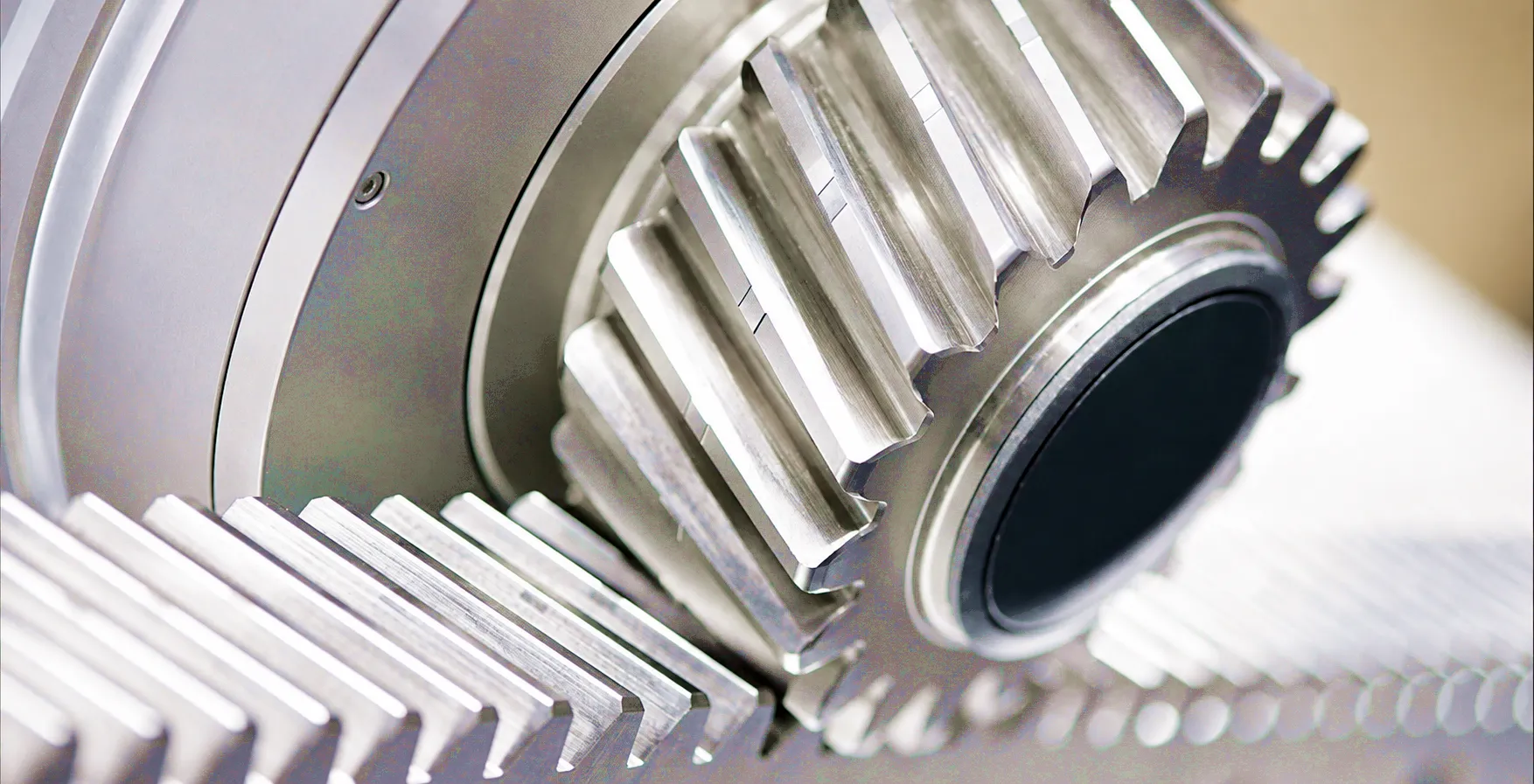
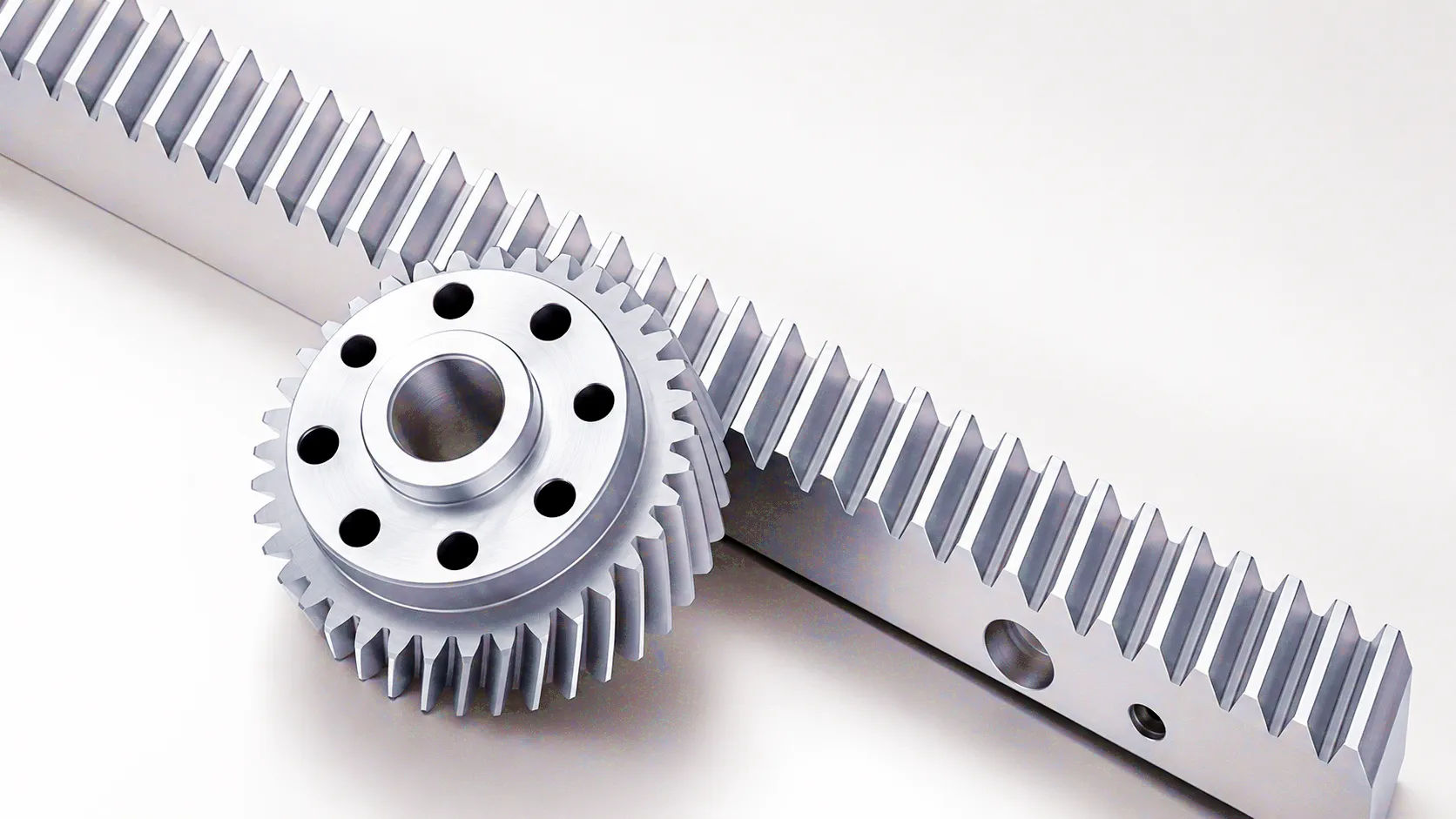
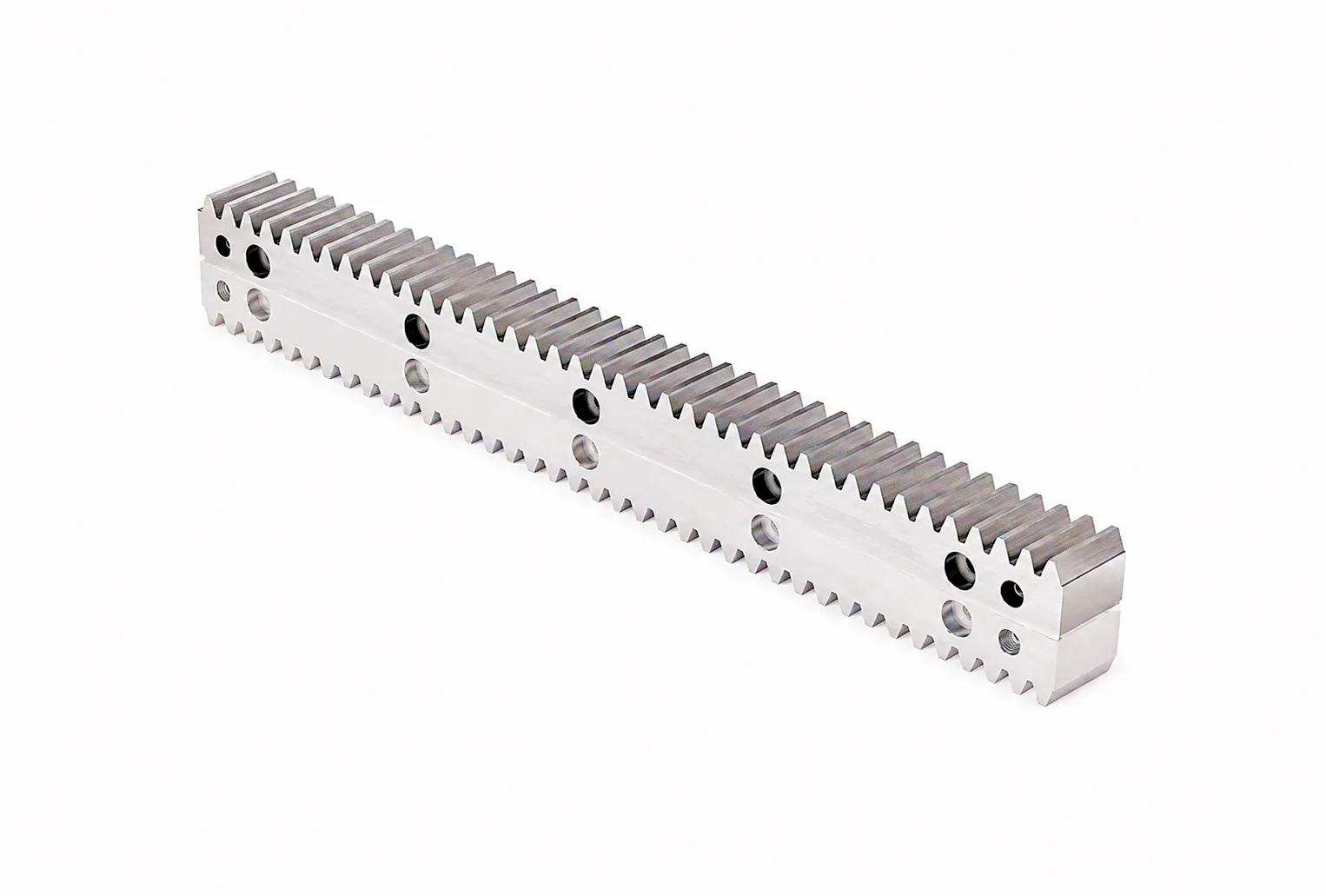
Induction hardening uses a high-frequency alternating electromagnetic field to heat only the tooth region of the rack to austenitising temperature in a matter of seconds, followed by immediate quenching with polymer or water spray. Because the heating is localised, the bulk of the bar remains relatively cool, minimising distortion and allowing the core to retain its original toughness. This makes induction hardening the preferred method for long racks — those over 1,500 mm — where distortion control is paramount. The achievable surface hardness is typically 56–62 HRC, with an effective case depth of 1–3 mm depending on module size and frequency used. Induction hardening is widely applied to rack systems in Birmingham’s automotive press shops, Leeds handling equipment manufacturers, and Bristol aerospace assembly lines where consistent, repeatable tooth hardness across a 3,000 mm stroke is non-negotiable. See our induction hardened helical rack with surface treatment for a representative specification.
Carburising and Case Hardening
Carburising is a thermochemical process in which a low-carbon steel (typically 17CrNiMo6 or 20MnCr5) is exposed to a carbon-rich atmosphere at 900–950 °C, allowing carbon to diffuse into the surface layer to a depth of 0.5–2.0 mm. After carburising, the component is quenched to form a hard martensitic case, while the low-carbon core remains tough and ductile. The resulting surface hardness regularly reaches 60–64 HRC, with exceptional fatigue strength because the case is in residual compression after quench. Carburised racks are the standard choice for high-cycle, high-contact-stress applications — think tunnel boring machine drive racks in London Crossrail infrastructure projects, or rack-and-pinion steering systems in heavy agricultural equipment used across the Yorkshire Wolds. The process does require careful atmosphere control to avoid intergranular oxidation and decarburisation, both of which reduce fatigue life if left unaddressed in the subsequent grinding pass.
Nitriding and Nitrocarburising
Nitriding introduces nitrogen into the steel surface at relatively low temperatures (480–560 °C), avoiding the dimensional distortion associated with high-temperature austenitising and quenching. The process produces a compound layer (epsilon or gamma-prime nitrides) on the surface with hardness values of 650–1,100 HV, plus a diffusion zone beneath that provides excellent fatigue resistance. Because no quench is involved, dimensional change is minimal — often less than 0.05 mm on a 2,000 mm rack — making nitrided racks ideal for applications where final grinding after treatment is difficult or impossible. The principal limitation is case depth: nitriding rarely produces effective case depths beyond 0.3–0.5 mm, so it is most appropriate for moderately loaded applications where corrosion resistance and surface fatigue life matter more than rolling-contact load capacity. Water treatment plant racks, food-processing automation systems, and pharmaceutical packaging machinery in Manchester’s life sciences corridor are typical application fits.
Through Hardening
Through hardening heats the entire cross-section to the austenitising temperature and quenches uniformly, producing a martensitic structure throughout rather than just at the surface. The attainable hardness depends strongly on section size and hardenability of the steel grade — a 42CrMo4 rack of 25 mm section height can typically achieve 48–54 HRC uniformly, while larger sections will show a hardness gradient from surface to core due to the cooling rate differential. Through hardening is suited to smaller module racks (module 1–3) operating under moderate loads in machine tool positioning, where consistent dimensional accuracy after grinding matters more than maximum surface hardness. It is less suitable for large-module, heavy-load applications because the brittleness at high hardness levels increases the risk of tooth root fracture under shock loading. Sheffield’s tool and die manufacturing sector, with its precision small-part machining lines, is a typical UK environment where through-hardened racks with ground flanks deliver the best cost-performance balance.
Core Materials — Why Alloy Selection Drives Heat Treatment Outcomes
Heat treatment cannot rescue a poorly chosen base material. The alloy composition determines hardenability (the ability to harden to depth), toughness after tempering, fatigue resistance, and the risk of quench cracking. These are the principal steel grades used in precision gear rack manufacture and how each responds to the four treatment routes described above.
The workhorse of the gear rack industry. Excellent hardenability in sections up to 60 mm, responds well to both through hardening and induction hardening, achieves 48–56 HRC with good impact toughness. Widely stocked by UK steel stockholders including those serving Sheffield and Rotherham. Best for medium-to-heavy load applications in general engineering.
The preferred grade for carburised case-hardened racks. Low core carbon keeps the core tough post-quench; nickel and molybdenum additions improve case toughness and resist intergranular oxidation during gas carburising. Achieves surface hardness of 60–64 HRC with a case depth of 0.8–1.8 mm. Standard in demanding automotive, heavy rail, and mining applications.
EN24T (as its British designation is widely known in the UK supply chain) is a premium Cr-Ni-Mo alloy steel with outstanding core toughness at high hardness levels. Often specified for induction-hardened racks in high-shock environments such as railway buffer stops, offshore winch drives, and mining conveyors. Achieves 52–58 HRC surface hardness with excellent retained toughness in the core.
For food-grade, medical, or corrosive environments, 316L stainless or dedicated nitriding grades such as 31CrMo12 (Nitralloy) are selected. These cannot be conventionally hardened to the levels achievable with alloy tool steels, but nitriding of Nitralloy grades yields a compound layer of 700–900 HV with excellent corrosion resistance — suitable for wash-down environments and clean rooms in UK pharmaceutical production.
Product Technical and Performance Parameters
The table below consolidates typical specification ranges for heat-treated gear racks supplied by Ever Power. Values are subject to confirmed engineering drawings; contact us for material certification and CMM inspection reports.
Industrial Application Scenarios: Where Heat-Treated Gear Racks Deliver
The following application areas represent environments where the correct heat treatment specification is not optional — it is the defining factor between acceptable service life and catastrophic mechanical failure. Each scenario poses distinct tribological, dynamic, and environmental challenges that the metallurgist and designer must address before the first tooth engages the pinion.
Core Technical Advantages of Heat-Treated Gear Racks
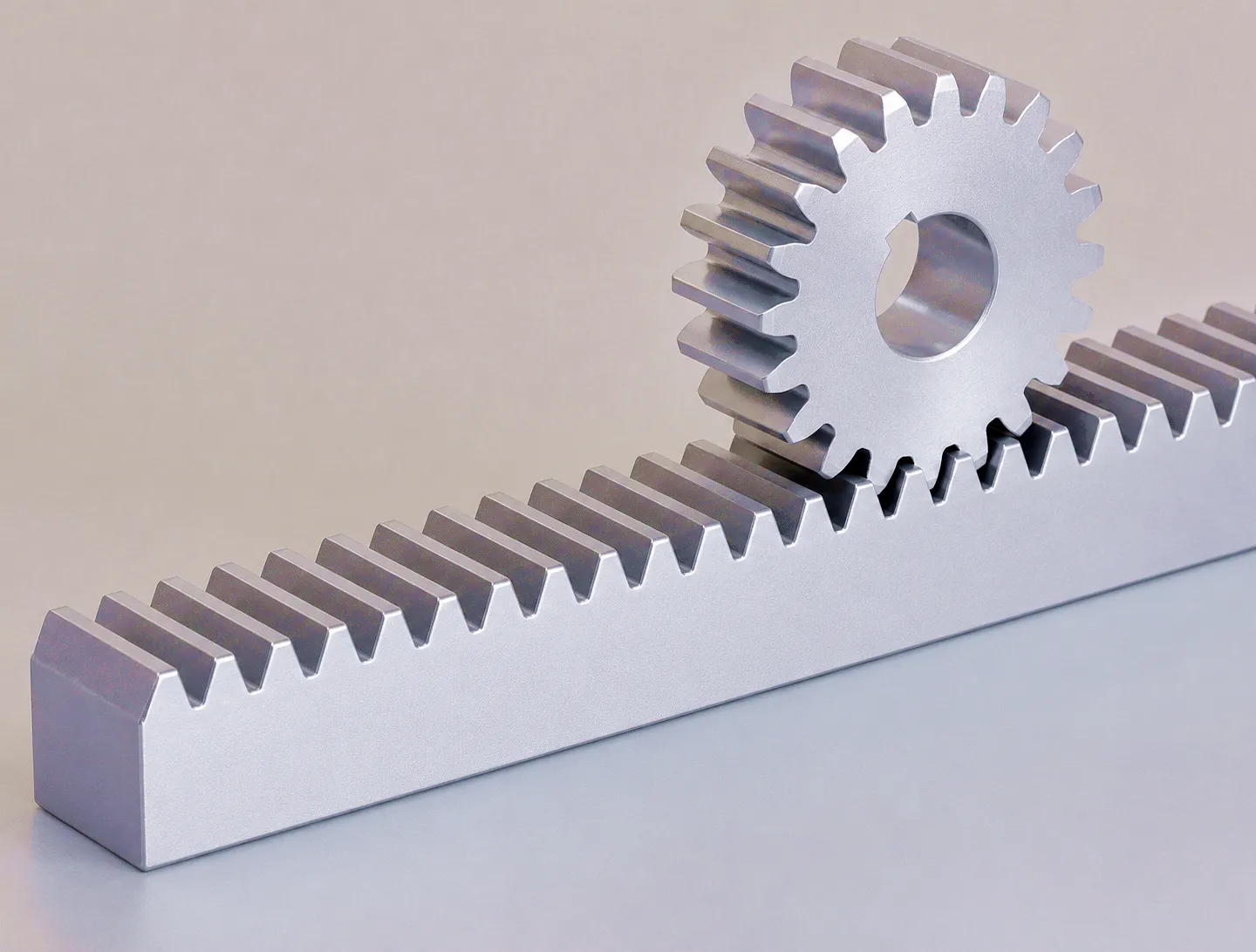
The performance gains from correctly specified heat treatment are not incremental — they are categorical. The following represents the principal engineering and commercial advantages that a heat-treated gear rack delivers over an unhardened or poorly processed alternative, based on standardised fatigue and wear test data across common industrial load profiles.
3–8x Greater Wear Life
Hardened tooth flanks resist abrasive and adhesive wear at Hertzian contact pressures that rapidly destroy unhardened surfaces. Field data from crane travel applications consistently show 3–8x longer re-machining intervals compared with normalised steel racks operating under identical loads and lubrication regimes. This directly reduces maintenance downtime and unplanned production stoppages — a commercial benefit that translates directly to lower total cost of ownership and is particularly valued by the capital-equipment-intensive sectors dominant in Birmingham, Coventry, and the East Midlands manufacturing belt.
Higher Load Capacity per Module
ISO 6336 contact stress calculations show that a hardened tooth flank (60 HRC, Ra 0.4 µm) can sustain allowable Hertzian contact stress (sigma_H lim) values of 1,500–1,800 MPa, compared with 700–900 MPa for normalised steel. This means a smaller-module rack can carry the same load as a larger-module unhardened alternative — reducing envelope size, weight, and mating pinion cost simultaneously. For machine builders working in Sheffield’s precision component sector, specifying a module 4 induction-hardened rack instead of a module 6 normalised rack is often the difference between a design that fits the machine envelope and one that doesn’t.
Sustained Pitch Accuracy Under Load
A hardened and ground tooth profile maintains its DIN pitch accuracy far longer than a machined-only profile. For CNC machining centres, laser-cutting gantries, and coordinate measuring machines — applications where positioning error accumulates directly into part quality — this sustained accuracy is the fundamental specification requirement. Creep and plastic deformation under load on a soft tooth surface is measurable within thousands of cycles; a properly hardened surface retains its profile across millions of cycles without detectable drift, maintaining the repeatability that quality-critical production lines in the UK’s precision engineering sector depend on.
Residual Compressive Stress — Fatigue Life Multiplier
Both induction hardening and carburising introduce beneficial residual compressive stresses at the tooth surface and root fillet. These compressive stresses counteract the tensile bending stress generated at the tooth root during meshing, effectively reducing the stress amplitude seen by the material and extending fatigue life by factors of two to five over a normalised baseline. Shot-peening of the root fillet after hardening can extend this benefit further, and is commonly specified for aerospace tooling racks and high-cycle automation drives where fatigue is the primary failure mode rather than simple wear.
Ever Power — Precision Gear Rack Manufacturing & Customisation
Ever Power operates a vertically integrated gear rack production facility equipped with CNC profile grinding centres, dedicated induction hardening lines, vacuum carburising furnaces, and gas nitriding retort furnaces — all in-house and under the same quality management roof. This integration is not a marketing claim; it is the operational structure that allows Ever Power to guarantee that the heat treatment specification agreed at the quotation stage is the specification actually applied to your shipment, verified by hardness testing and case depth metallographic cross-sections that ship with every order above 20 pieces.
Customisation at Ever Power is not simply offering a choice of module and material from a catalogue. The engineering team works from customer drawings or functional specifications to design the optimum rack solution — including tooth profile, helix angle, joining hole pattern for multi-length installations, specific coating requirements (zinc phosphate, DLC, electroless nickel), and packaging format for direct line-side delivery at UK distribution hubs in Birmingham, Coventry, and Manchester. Lead times are quoted firm at order confirmation, and partial shipments of prototypes ahead of series runs are available for customers in validation testing. Contact us today to discuss your specific heat treatment and dimensional requirements with an Ever Power application engineer.
Customer Success Story: Automotive Press-Line Upgrade, Birmingham
Stamping Press Transfer Axis — From Monthly Failures to 36-Month Maintenance-Free Operation
A mid-tier automotive tier-1 supplier operating three transfer stamping presses at their Tyseley facility in Birmingham was experiencing tooth pitting failures on the press-transfer axis gear racks every 10–14 weeks. The existing racks were sourced from a European distributor as stock items in normalised C45 steel, module 6, with no heat treatment specified. The failure mode — progressive pitting of the tooth flank followed by root cracking — was consistent with Hertzian contact fatigue on an unhardened surface operating above its contact stress limit.
Ever Power’s application team reviewed the press cycle data, calculated the actual tooth contact stress using ISO 6336-2, and identified that the existing rack was operating at approximately 140% of its allowable contact stress limit for normalised C45. The recommended solution was a replacement rack in 17CrNiMo6, carburised and case hardened to 62 HRC with a 1.4 mm case, and post-hardening ground to DIN 5 accuracy. Delivery to the Birmingham facility was arranged via Ever Power’s UK logistics partner in Coventry, with the four rack sections arriving cut-to-length with pre-drilled mounting holes matching the press’s existing mounting pattern — avoiding any structural modification and allowing a planned weekend changeover.
What UK Customers Say About Ever Power Gear Racks
“We’ve run the Ever Power carburised racks for three years now on our Tyseley press line and they show no detectable wear. The case depth and hardness documentation they provided satisfied our internal quality audit on first submission — something that had taken months to resolve with previous suppliers.”
“The customisation capability was what won us over. We needed a module 5 helical rack at a non-standard helix angle with M8 threaded mounting holes at 200 mm centres — Ever Power produced DXF confirmations within 48 hours and delivered to our Sheffield facility ahead of the promised date. The induction hardness certificate matched specification exactly.”
“We transitioned our CNC router gantry positioning from a domestic rack source to Ever Power’s ground helical racks after repeated backlash growth issues. The DIN 5 accuracy on their nitrided racks eliminated the periodic re-calibration we had accepted as normal. Positioning repeatability improved from ±0.08 mm to ±0.02 mm without any other mechanical change.”
Related Products from Ever Power
Browse Ever Power’s precision-engineered rack and motion-guide product range, designed to complement heat-treated gear racks in complete linear drive system assemblies.
Frequently Asked Questions
Answers to the questions UK industrial buyers ask most often about heat-treated gear rack specification, pricing, and supply.
What is the difference between an induction hardened gear rack and a carburised gear rack, and which one should I choose for a heavy crane application in Sheffield?
Induction hardening heats only the tooth region rapidly and quenches it, giving 56–62 HRC with minimal distortion — ideal for long crane rack spans in Sheffield steelworks. Carburising diffuses carbon through the whole surface before quench, producing a deeper case and slightly higher hardness (60–64 HRC), better for very high contact stress but requiring more post-treatment grinding. For crane travel drives with spans over 10 metres, induction hardening is almost always the engineering recommendation because distortion control is easier to manage across long sections.
How much does a heat-treated gear rack cost in the UK, and where can I get a quote for a custom module and length?
The cost depends on module, length, material grade, heat treatment route, and accuracy class. Standard induction-hardened helical racks in module 4–6 and lengths up to 1,000 mm are available in volume at competitive prices comparable to European distributors. Custom specifications — non-standard modules, bespoke hole patterns, special coatings — are quoted individually by Ever Power’s sales team, typically within 48 hours of receiving a drawing or dimensional brief. To get an accurate quote for your specific application, email sales@farm-equipment-parts.com with your module, helix angle, length, quantity, and required accuracy class.
Which gear rack heat treatment gives the highest surface hardness, and is harder always better for high-load industrial applications in Birmingham?
Carburising produces the highest surface hardness — typically 60–64 HRC — followed by induction hardening at 56–62 HRC, and nitriding at 650–900 HV equivalent. However, harder is not always better. Maximum hardness reduces toughness. For applications with significant shock loading — such as press-transfer axes in Birmingham’s automotive sector or forklift mast drives — a moderate hardness (58–60 HRC) with high toughness in the core is the optimum, not the maximum achievable hardness. The application’s duty cycle and failure mode must drive the specification, not the highest available HRC number.
How long does it take to supply a batch of custom induction hardened gear racks to a manufacturing site in Manchester or the North West of England?
For standard modules (3–8) in stock lengths, supply to UK destinations including Manchester, Warrington, and the wider North West typically runs 15–25 working days from order confirmation, including production, hardness testing, and sea freight consolidation to Ever Power’s UK logistics partner. Custom specifications requiring dedicated production runs are typically quoted at 25–40 working days. Prototype quantities of 2–5 pieces can sometimes be expedited. Delivery is arranged DDP (Delivered Duty Paid) to your facility, so no import administration is required on the customer’s side.
What documentation and quality certificates should I request when buying heat-treated gear racks from a supplier for use in a safety-critical UK industrial application?
For safety-critical applications — crane drives, railway equipment, pressure barrier gates — the minimum documentation package should include: a material certificate (EN 10204 3.1 or 3.2) for the base steel, a hardness test report (Rockwell readings at tooth tip, flank, and root), a case depth metallographic report (sectioned sample from the same heat treatment batch), a pitch accuracy inspection report against the specified DIN grade using CMM or gear-measuring equipment, and a dimensional inspection record for critical features such as mounting holes and overall length. Ever Power provides this full documentation package as standard for orders above 20 pieces, and on request for smaller quantities.
Where can I find a reliable gear rack supplier in the UK that offers both standard and custom heat treatment specifications for OEM machine builders?
UK OEM machine builders sourcing heat-treated gear racks have two practical routes: purchasing from European distributors who stock a fixed range, or working directly with a specialist manufacturer such as Ever Power who can engineer to your specification. Ever Power operates as a direct-to-customer manufacturer with established UK logistics and customs arrangements, offering a wider range of materials, heat treatment routes, and custom dimensions than a typical stocking distributor — at manufacturer pricing. The most efficient route is to send a drawing or specification brief to sales@farm-equipment-parts.com for a direct quotation with lead-time confirmation.
Ready to Specify the Right Heat-Treated Gear Rack?
Tell Ever Power your module, length, application load, and accuracy class, and our engineering team will confirm the optimum heat treatment route, material grade, and full specification within 48 hours.
📅 Request a Technical Quote Now