เลือกหน้า

Precision Engineering · UK Industrial Series

Stainless Steel Gear Racks: When Corrosion Resistance Takes Priority

A deep technical guide for UK engineers, procurement managers, and OEM designers who need linear motion components that hold up where carbon steel simply cannot.

Corrosion Resistance
304 / 316 Stainless
B2B UK Supply
Custom Manufacture

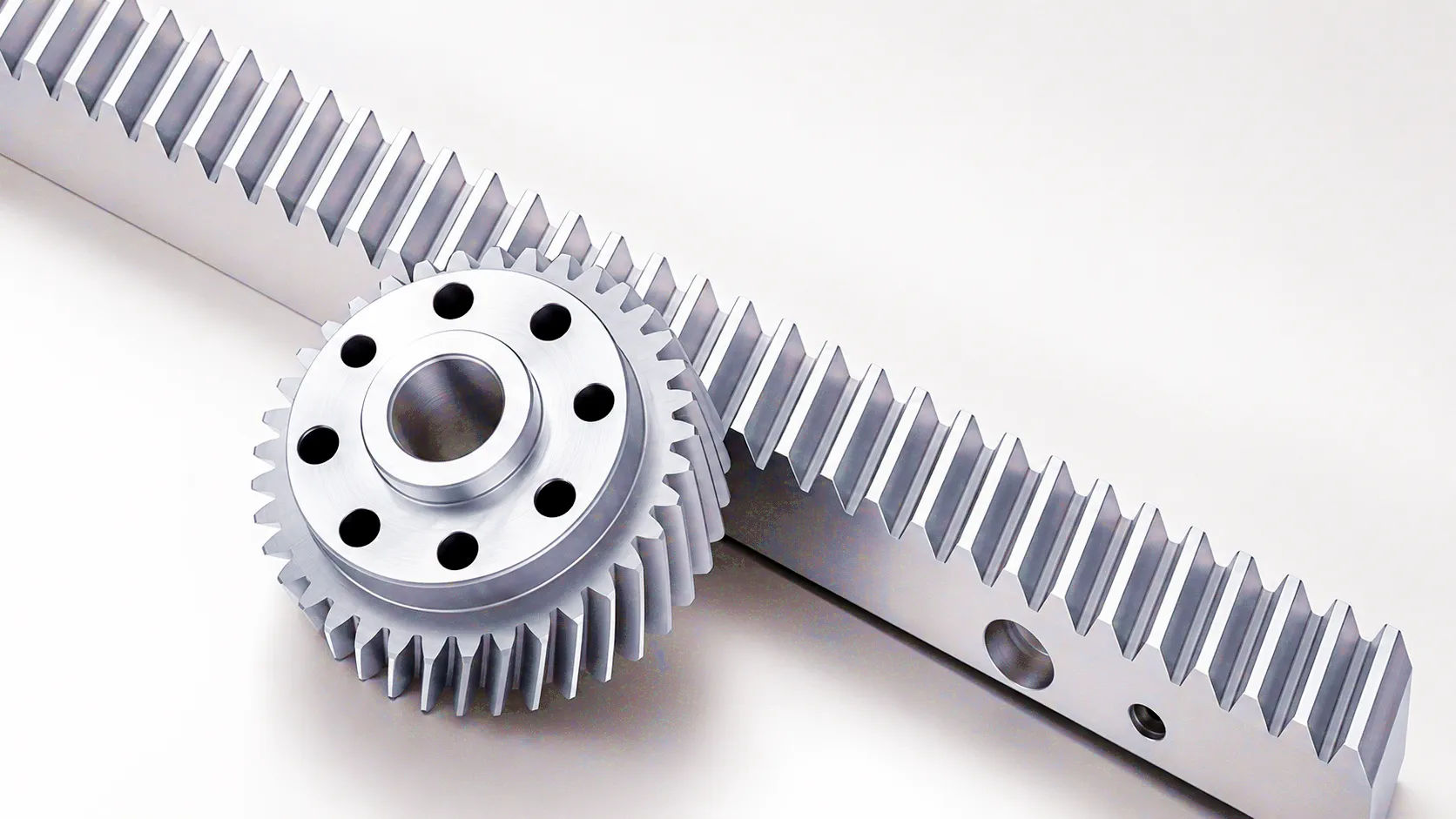
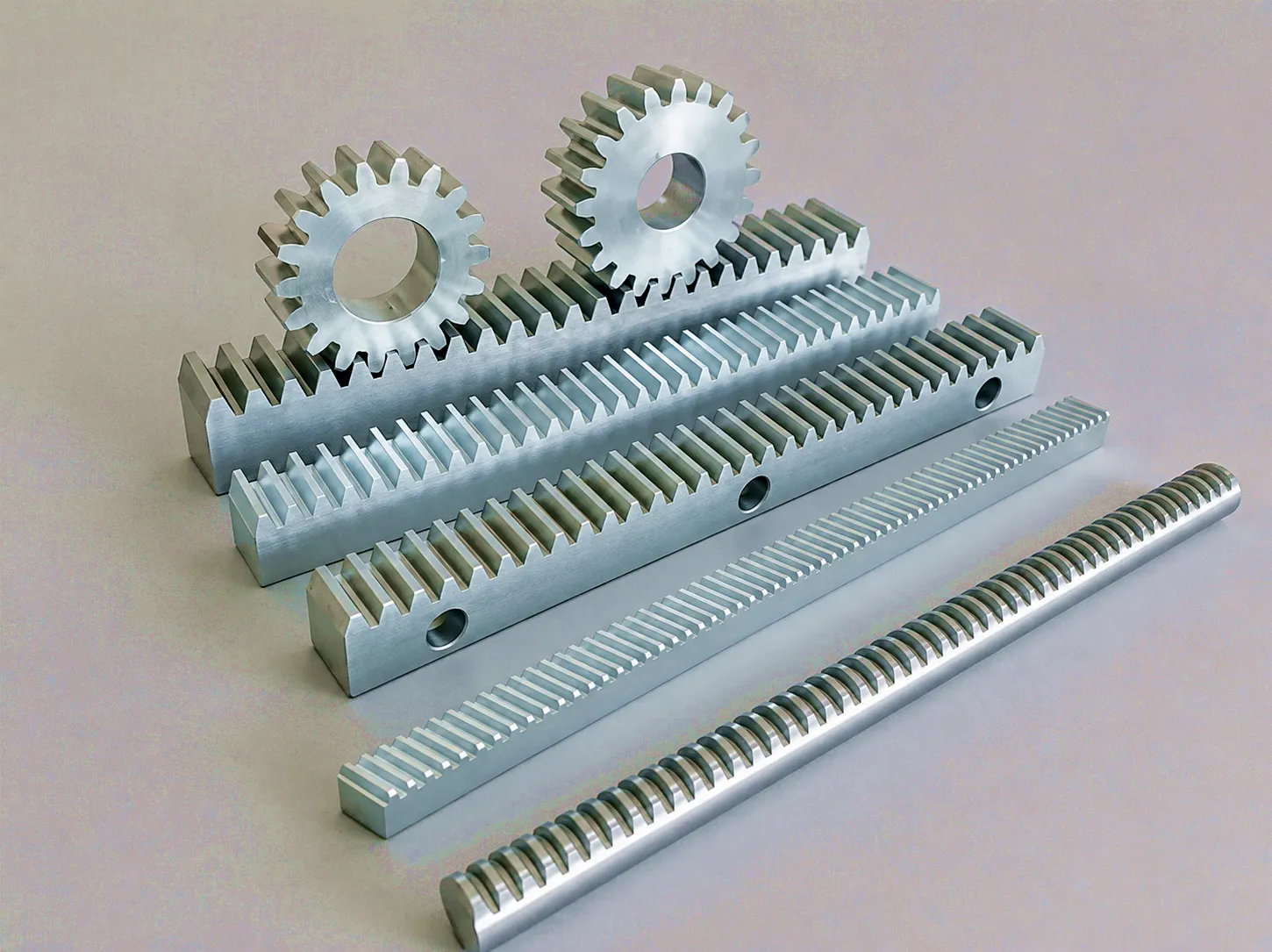
Stainless Steel Gear Rack by Ever Power

There is a reason why stainless steel gear racks occupy a distinct and growing corner of the precision motion market. In environments where moisture, chemical exposure, washdown cycles, or salt-laden air are part of daily operating reality, a standard carbon steel rack — however well lubricated or surface-coated — will ultimately yield to oxidation. For UK manufacturers and systems integrators operating across food processing lines in Yorkshire, offshore equipment yards on the North Sea coast, pharmaceutical clean rooms in Hertfordshire, or marine fabrication workshops in Portsmouth, this is not a theoretical risk. It is an operational reality that drives downtime, inflates maintenance budgets, and shortens equipment service life. Stainless steel gear racks address that risk directly, offering inherent corrosion resistance baked into the alloy itself rather than layered on as a coating. Understanding how they work, where they excel, and how to specify them correctly is what separates an informed procurement decision from an expensive guesswork.

This guide covers the full picture: the metallurgy behind stainless grades, gear rack geometry and how it converts rotary motion into precise linear displacement, the critical material differences between 304 and 316 variants, application environments where stainless is the only sensible choice, and the technical parameters you need to match rack to load, speed, and duty cycle. Whether you are specifying for a new automated production line or replacing a corroded assembly on existing equipment, the technical grounding here will help you get it right.

Working Principle

How a Gear Rack Converts Rotational Force into Linear Motion

Rack and Pinion Geometry

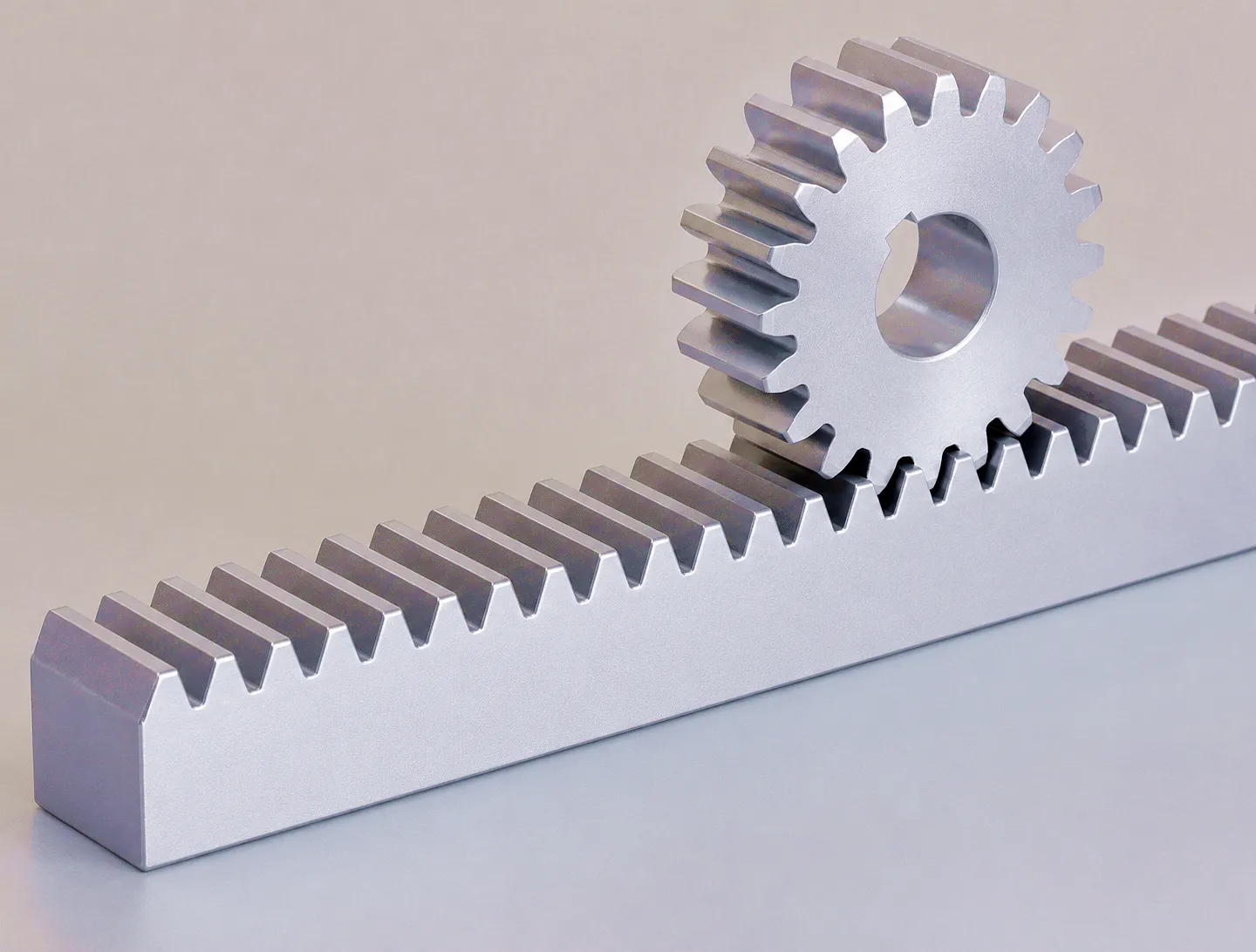
A gear rack is a flat or round bar with machined teeth cut at a defined pitch and pressure angle. When a rotating pinion gear meshes with those teeth, the rack translates that rotation into straight-line displacement. The distance the rack travels per revolution of the pinion equals the pinion’s pitch diameter multiplied by pi — a relationship that gives system designers a predictable, repeatable conversion ratio. In stainless variants, the tooth geometry follows the same involute profile as carbon steel racks, maintaining full interchangeability with standard pinion specifications while delivering the corrosion resistance that the environment demands.

📈
Precision and Backlash Control

Ground stainless steel gear racks achieve tooth profile accuracy at DIN class 5 to 7, with pitch errors typically below 0.015 mm per 300 mm of rack length. This level of precision matters enormously in automated assembly equipment, where cumulative positional error over long travel distances directly affects product quality and throughput. The zero backlash rack design takes this further, using preloaded twin-pinion configurations or spring-tensioned engagement to eliminate the dead zone between rack and pinion during direction reversal — critical in servo-driven axes where positioning repeatability is specified in microns rather than millimetres.

🔗
Joining Lengths Seamlessly

Long-travel systems are assembled by butting multiple rack sections end to end, each machined with a half-tooth at the join point so that the mesh remains uninterrupted across the joint. In stainless systems, ensuring consistent tooth geometry across this join is especially important because any pitch discontinuity creates a vibration pulse as the pinion crosses over — a problem magnified in high-speed gantry systems. Quality manufacturers supply matched rack sets where joining faces are ground to the same cumulative pitch standard as the body, allowing clean installation without shimming or manual adjustment on site.
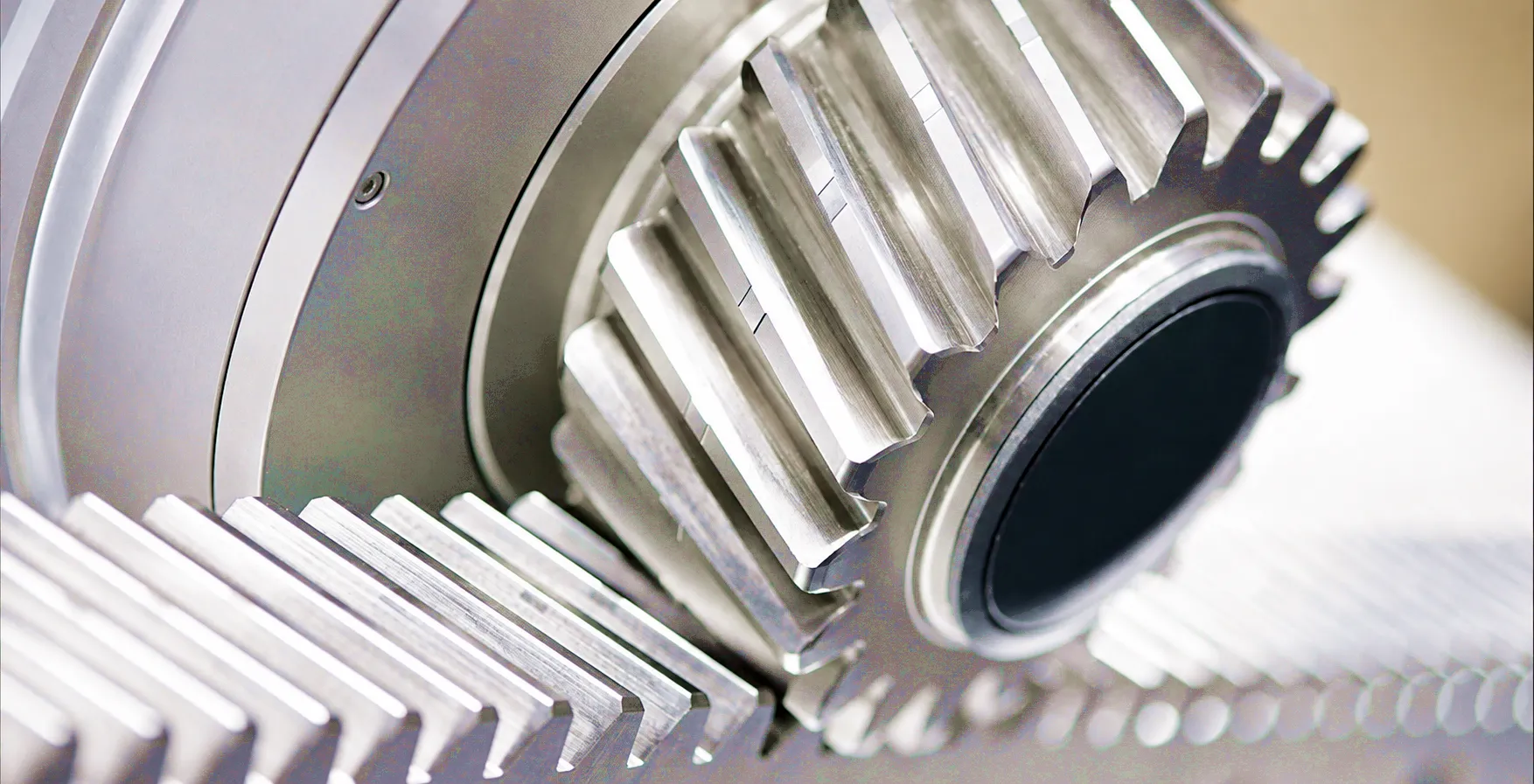
Ever Power Stainless Gear Rack Close-up

Material Science

304 vs 316 Stainless Steel: Choosing the Right Grade for Your Environment

The designation “stainless steel” covers a broad family of iron-chromium alloys, and not all of them perform equally when confronted with the chemicals and conditions typical in UK industrial settings. For gear rack applications, the conversation almost always comes down to two austenitic grades: 304 and 316. Both contain a minimum of 18% chromium, which forms the passive oxide layer that gives the material its corrosion resistance. The critical difference lies in molybdenum. 316 stainless adds 2% to 3% molybdenum to the alloy, and that addition fundamentally changes how the material behaves in the presence of chlorides — the ions found in seawater, many cleaning agents, certain food process streams, and the salt-laden coastal air that affects facilities from Aberdeen to Plymouth.

304 Stainless — General-Purpose Corrosion Resistance

Grade 304 (18% Cr, 8% Ni) is the workhorse of stainless applications and represents the majority of stainless gear rack production worldwide. It handles atmospheric corrosion, humidity, dilute acids, and the mild chemical exposure of most food-grade, pharmaceutical, and light-industrial environments with ease. In UK facilities where the challenge is moisture control — dairies in Somerset, soft-drink production lines in the Midlands, or general automation in humidity-controlled warehouses — 304 grade provides fully adequate protection at a lower material cost than 316. Where it falls short is in sustained chloride exposure above ambient concentrations, where pitting corrosion can initiate at the grain boundaries of the passive film. For those applications, the upgrade to 316 is not optional.

  • Tensile strength: 515 MPa minimum
  • Yield strength: 205 MPa minimum
  • Hardness: approx. 70–80 HRB (annealed)
  • Suitable for: food processing, pharmaceutical, general automation

316 Stainless — Marine and Chemical Grade

The addition of 2–3% molybdenum in 316 grade disrupts the mechanism by which chloride ions attack the passive film, dramatically raising the pitting resistance equivalent number (PREN) and extending the material’s useful life in aggressive environments. Offshore platform equipment operating in the North Sea, tidal gate mechanisms on the Thames Estuary, chlorinated water treatment systems, and chemical dosing lines in industrial estates around Teesside all represent environments where 316 stainless gear racks earn their cost premium many times over through extended service intervals and reduced unplanned downtime. The 316L variant (low carbon) is preferred wherever welding is required in the assembly, as it prevents sensitisation and the associated risk of intergranular corrosion around heat-affected zones.

  • Tensile strength: 515 MPa minimum
  • Yield strength: 205 MPa minimum
  • PREN value: approx. 25 (vs. ~19 for 304)
  • Suitable for: marine, offshore, chemical, washdown environments

Product Advantages

Why Stainless Steel Gear Racks Outperform Coated Carbon Alternatives

🛡
Intrinsic Corrosion Protection

Unlike zinc plating, nickel coating, or black oxide surface treatment, the corrosion resistance of stainless steel is a bulk property of the alloy — it runs all the way through the material. This matters critically for gear racks because the teeth are subject to continuous sliding and rolling contact that inevitably erodes surface coatings, exposing the base metal underneath. On a stainless rack, wear on the tooth flanks simply reveals more stainless steel. This property alone accounts for a substantial proportion of the total cost of ownership difference between stainless and coated carbon solutions over a five-to-ten-year service horizon.

🌬
Hygienic Surface Properties

The smooth, non-porous surface of ground stainless gear racks does not harbour bacteria or biofilm in the way that corroded or rough-textured surfaces do. This is directly relevant to UK food safety regulations — specifically the requirements of the Food Standards Agency and the broader framework of EC 1935/2004 on materials in contact with food. Stainless gear racks used in conveyor systems, portioning equipment, and filling lines comply with food-contact material standards in a way that painted or coated carbon racks simply cannot. Cleaning and sanitisation cycles that would strip coatings and initiate corrosion on carbon racks have no effect on correctly specified stainless components.

Reduced Maintenance Burden

For UK facilities operating on lean maintenance schedules — and this includes a broad swathe of the manufacturing base from the automotive supply chain in the West Midlands to the brewing industry in Burton-on-Trent — stainless gear racks offer a meaningful reduction in scheduled maintenance activity. They do not require periodic re-greasing to counter corrosion in the way that carbon racks do, they do not need re-coating when the protective layer shows signs of degradation, and they are far less susceptible to the kind of surface pitting that creates stress concentration sites and initiates fatigue cracking over time. Many facilities find that stainless rack installations run for years between maintenance interventions, whereas carbon alternatives demand inspection and re-treatment at much shorter intervals.

🔥
Temperature and Oxidation Stability

Austenitic stainless steels retain their structural integrity across a broad temperature range. 316-grade stainless remains serviceable at continuous operating temperatures from cryogenic to approximately 870°C — a range that far exceeds the operating window of most surface coatings and of zinc-plated carbon steel, which begins to develop oxide scale at temperatures above 200°C. In practice for gear rack applications, this means stainless is an appropriate choice in bakery oven conveyor systems, in sterilisation autoclave handling equipment, and in glass-manufacturing facilities in the West Midlands, where ambient temperatures around furnace areas can be sustained well above what painted carbon steel can tolerate without degradation.

Non-Magnetic Option for Sensitive Applications

Austenitic stainless steel is essentially non-magnetic in its annealed state, a property that becomes significant in applications involving electromagnetic compatibility — MRI scanning equipment, precision laboratory instruments, semiconductor fabrication environments, or motion stages used adjacent to high-powered magnets. While the practical magnetic permeability of stainless can increase slightly under cold-working conditions, the base material remains magnetically benign enough for most sensitive applications. This gives stainless gear racks a niche that no amount of coating on carbon steel can replicate, and it is a specification point that UK machine builders in the medical device and scientific equipment sectors commonly call out explicitly in their design requirements.

🍏
Compatibility with Clean Lubricants

Stainless gear racks are fully compatible with food-safe lubricants classified to H1 or H2 under NSF International standards — a requirement for any linear motion component that could incidentally contact food product or primary packaging. Carbon racks in similar applications typically require heavy-duty petroleum greases partly to protect against corrosion, but those lubricants are not food-safe. The switch to stainless removes this conflict, allowing the use of lightweight, odourless, food-grade greases or even dry lubricant coatings (such as PTFE-based sprays) that are entirely appropriate in food manufacturing environments governed by HACCP plans and scheduled for third-party hygiene audits.

Technical Data

Stainless Steel Gear Rack — Performance and Specification Reference Table

The following table consolidates the primary specification parameters for stainless steel gear racks across standard module ranges. Values represent typical production capabilities; custom specifications outside these ranges are available on application. All tooth forms are involute profile to DIN 867 unless otherwise specified. Ground versions offer tighter pitch accuracy than milled; specify accordingly for high-precision servo axes.

Parameter Standard Range Ground (Precision) Unit / Note
Module 1 – 8 0.5 – 6 m (ISO 54)
Pressure Angle 20° 14.5° / 20° degrees
Pitch Accuracy DIN 9–10 DIN 5–7 class
Cumulative Pitch Error ≤ 0.06 mm / 300 mm ≤ 0.015 mm / 300 mm mm
Section Length 250 – 2,000 250 – 1,500 mm per piece
Material Grade 304 / 316 / 316L 316 / 316L AISI / EN 10088
Tensile Strength (316) ≥ 515 ≥ 515 MPa
Yield Strength (316) ≥ 205 ≥ 205 MPa
Hardness 70–85 HRB 70–85 HRB Rockwell B
Surface Roughness (Ground) Ra ≤ 1.6 Ra ≤ 0.4 μm
Tooth Form Straight / Helical Straight / Helical
Operating Temperature -200 to +870 -200 to +870 °C (316 grade)
Mounting Hole Pattern Standard / Custom Standard / Custom per drawing

Application Scenarios

Industrial Applications Where Stainless Steel Gear Racks Deliver a Decisive Advantage
🍱 Food & Beverage Processing Lines

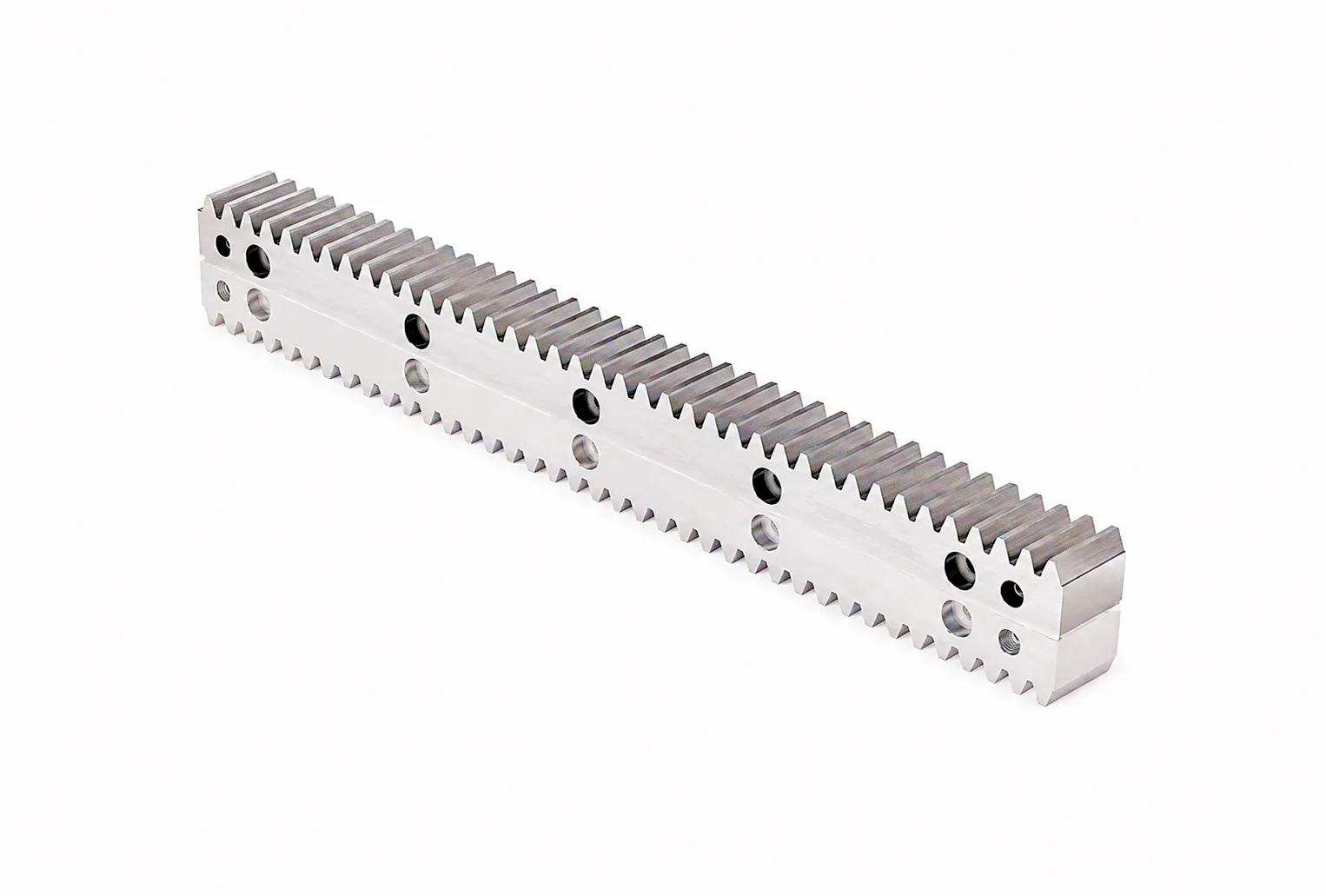
Food manufacturing facilities across the UK — from the large-scale dairy operations of Cheshire and Somerset to the drinks bottling plants in Northamptonshire — routinely operate conveyor and portioning systems that require frequent high-pressure washdown, often using caustic cleaning agents. In these environments, the gear rack is part of the drive mechanism for product movement, and any corrosion on its surface is a direct food safety risk. Stainless steel gear racks eliminate that risk without requiring the protective grease quantities that complicate hygiene validation. They withstand daily cleaning cycles involving chlorinated agents and alkaline detergents, satisfy HACCP audit requirements, and can be paired with food-grade lubricants applied at intervals dictated by production scheduling rather than corrosion management. The V-type ground straight guide rack is a particularly effective choice in these environments, providing both linear guidance and precision drive from a single stainless component with a ground tooth flank surface finish.

🌎 Marine, Offshore, and Coastal Infrastructure

The UK has an extensive offshore energy sector, a large commercial shipping industry, and a significant base of coastal infrastructure including tidal barriers, harbour locks, and port handling equipment. All of these environments subject mechanical components to chloride concentrations far above anything encountered inland, and the combination of salt spray, humidity, and mechanical cycling is among the most aggressive conditions a gear rack can face. Aberdeen-based offshore service companies, shipbuilders on the Clyde, and naval engineering contractors based in Portsmouth and Barrow-in-Furness have historically struggled with carbon steel rack corrosion requiring scheduled replacement and contributing to equipment downtime during critical operational windows. 316 stainless steel gear racks provide service life in these environments measured in years rather than months, and their dimensional stability under corrosive attack maintains mesh geometry far longer than carbon alternatives — a factor that directly affects system positioning accuracy over time.

💊 Pharmaceutical Clean Rooms and Controlled Environments

UK pharmaceutical manufacturing, centred around facilities in Hertfordshire, Cambridge, and the Oxford-Cambridge Biomedical Corridor, operates under GMP guidelines that are extremely stringent about particle generation and material compatibility. In clean room automation — robotics, dispensing gantries, inspection carousels — gear racks must be non-shedding, non-contaminating, and resistant to the alcohol-based solvents and peroxide vapour used for surface disinfection. Stainless gear racks, particularly in ground finish versions, satisfy all these criteria. Their passive surface chemistry does not interact with active pharmaceutical ingredients, they do not shed metallic oxide particles in the way that corroding carbon racks do, and the density and smoothness of the stainless surface inhibits microbial adhesion during routine disinfection cycles. For controlled environment applications, the use of 316L grade is standard practice, its low carbon content ensuring there is no carbide precipitation at weld zones during equipment fabrication.

📈 Water and Wastewater Treatment Infrastructure

Water treatment facilities operated by UK water utilities across England and Wales rely on mechanical actuation systems — valve operators, screen drives, gate actuators — that are in continuous contact with chlorinated water and chemically dosed process streams. These are environments where the degradation of carbon steel is not just a maintenance headache but a compliance issue, since rusted components can contribute to water quality problems and trigger regulatory intervention. Stainless steel gear racks used in these drive systems offer corrosion resistance matched to the chlorine and chloramine concentrations found in drinking water treatment. For more aggressive industrial effluent treatment environments — chemical works in Teesside or battery manufacturing sites in the West Midlands — 316-grade specification offers resistance to the hypochlorite, sulphide, and organic acid chemistry that characterises those process streams.

🏭 Chemical Processing and Specialty Manufacturing

The UK chemical industry, concentrated in clusters around Teesside, Grangemouth in Scotland, and the Humber estuary, handles a wide range of corrosive media — acids, bases, chlorinated solvents, and oxidising agents — that create some of the most hostile mechanical environments imaginable. Automated valve operation, chemical drum handling gantries, and laboratory-scale dispensing equipment all require linear drive components that can coexist with the surrounding chemical environment without rapid degradation. Stainless steel gear racks in these settings provide a mechanically capable and chemically stable solution. For particularly aggressive acid environments, the 316L grade’s molybdenum content raises resistance to reducing acids (particularly dilute hydrochloric and sulphuric acid) significantly above 304 grade, though neither grade should be considered universally suitable across all chemical environments — correct specification requires matching the alloy’s known resistance to the specific media concentration and temperature in the application.

🔧 Medical Device and Laboratory Automation

UK medical device manufacturers — from the large-format imaging equipment makers in the Thames Valley to the surgical robotics companies in Sheffield’s Advanced Manufacturing Research Centre — specify stainless steel in linear motion components wherever the combination of sterilisation compatibility, non-magnetic behaviour, and biocompatibility is required. Stainless gear racks used in robotic surgery platforms, diagnostic imaging positioning stages, and laboratory liquid handling systems provide the dimensional stability and surface quality that servo-driven precision positioning demands. The ground tooth flank finish achievable on stainless — Ra down to 0.4 micrometres — is compatible with the extremely tight positional tolerances these systems specify, and the material’s non-magnetic property prevents any interaction with the sensitive electromagnetic systems co-located on medical platforms.

Ever Power Gear Rack Production

Ever Power — precision stainless steel gear rack manufacturing under quality-controlled production conditions

Manufacturing Partner

Ever Power: Precision Stainless Gear Rack Manufacture and Custom Engineering

Precision Stainless Rack Tooth Profile

Ever Power has developed a focused capability in stainless steel gear rack production that goes well beyond catalogue supply. The manufacturing process begins with certified stainless bar stock, with material certificates traceable to EN 10088 or ASTM A276 provided as standard for quality-critical applications. Tooth profiles are generated on CNC gear milling centres and then — for precision ground variants — finished on dedicated gear grinding machines capable of achieving tooth profile errors below 0.005 mm and surface finishes to Ra 0.4 micrometres. This is the level of accuracy demanded by servo-driven gantry systems and precision laboratory automation platforms, and it requires both the correct equipment and a disciplined quality process to achieve consistently across production runs.

The customisation capability at Ever Power is particularly relevant for UK customers who find that standard catalogue dimensions do not quite match their application requirements. Non-standard module sizes, mounting hole patterns specific to a customer’s structural design, extended rack lengths with matched join pieces, combined guide-and-rack profiles, and mixed material specifications (316 body with 304 mounting hardware, for instance) are all within the scope of Ever Power’s custom manufacture service. Lead times for custom stainless rack production are quoted on a per-project basis, with standard production runs typically dispatched within four to six weeks of drawing confirmation and express services available where production scheduling allows.

🔍
In-Process Inspection
CMM verification of tooth geometry on all ground rack production; first-article reports available on request.
📦
UK-Focused Logistics
DDP shipping to UK mainland addresses; customs documentation handled at origin; consolidation available for multi-line orders.
Custom Drawing Service
DXF and STEP files accepted; drawing review and DFM feedback provided within 48 hours of submission for standard enquiries.
📄
Material Certification
EN 10204 3.1 certificates available for all stainless grades; trace back to mill heat number maintained throughout the production chain.

Customer Success Story

Sheffield Automation Systems Integrator: Replacing Corroded Carbon Racks in a Washdown Conveyor Application
Industrial Gear Rack Application

A Sheffield-based automation systems integrator had designed and installed a modular conveyor system for a large-scale fresh produce packaging facility in Lincolnshire. The system used carbon steel gear racks with zinc-nickel plating to drive a series of product transfer gates along a 14-metre automated line. Within eighteen months of installation, accelerated corrosion on the rack tooth surfaces — driven by twice-daily high-pressure caustic washdown cycles — was causing mesh noise, measurable positional drift, and visible flaking of the protective coating into the production area. The customer’s food safety team flagged the risk of metallic contamination in the product zone, and the facility faced the prospect of a temporary shutdown during the peak summer harvest season to address the problem.

The systems integrator approached Ever Power with an urgent requirement: a matched set of 316L stainless steel gear racks to the same module and section dimensions as the original carbon racks, but manufactured to a tighter pitch accuracy to compensate for the wear that had occurred on the mating pinions during the period of rack degradation. Delivery to a distribution hub in the East Midlands was required within three weeks of order confirmation, with material certificates and first-article inspection reports needed to satisfy the facility’s supplier qualification process.

Ever Power confirmed a production and shipping programme that met the three-week delivery window. The replacement 316L racks were manufactured to DIN class 6 pitch accuracy, with a ground tooth flank finish of Ra 0.8 µm — a significant improvement over the original milled-and-plated carbon racks. Installation was completed during a scheduled maintenance window, and the facility returned to full production without the unplanned shutdown that had initially been considered inevitable. At the eighteen-month post-installation review, the stainless racks showed no measurable corrosion and maintained their original pitch accuracy within the specified tolerance envelope. The integrator has since standardised on 316L stainless specification for all washdown conveyor applications in its product range.

What UK Customers Say About Ever Power Stainless Gear Racks

★★★★★

“We had been through two sets of zinc-plated carbon racks in three years on our washdown conveyor. The Ever Power 316L stainless racks have now been running for over two years with no corrosion, no positional drift, and no maintenance interventions beyond routine lubrication. The material certificates matched exactly what our food safety team needed, and the custom pitch accuracy was spot on. We should have specified stainless from the start.”

— Project Engineer, Automation Systems Integrator, Sheffield
★★★★★

“The custom rack set Ever Power produced for our offshore gate actuator project required non-standard module sizing and a specific mounting hole pattern that no UK catalogue supplier could match. Ever Power turned around the design review within 48 hours, and the delivered parts met the dimensional drawing perfectly. The 316 grade material was confirmed by the 3.1 certificates. First class service and genuinely responsive technical support throughout the project.”

— Mechanical Design Lead, Marine Engineering Contractor, Aberdeen
★★★★★

“We needed ground stainless gear racks for a laboratory automation platform where positional accuracy and non-magnetic behaviour were both hard requirements. Ever Power’s ground 316 racks met the DIN class 6 accuracy spec, delivered Ra 0.6 µm on the tooth flanks, and the first-article report satisfied our metrology team’s sign-off process without a single query. Competitive pricing relative to equivalent European-sourced stainless rack, and logistics to our Cambridge facility were straightforward.”


— Equipment Development Manager, Medical Device Manufacturer, Cambridge

Frequently Asked Questions

What UK Buyers Ask About Stainless Steel Gear Racks


What is the best stainless steel grade for a gear rack used in a food processing facility in the UK, and how much does it typically cost compared to carbon steel?
316L stainless steel is the specification recommended for UK food processing environments, largely because daily washdown cycles typically involve chlorinated cleaning agents that would accelerate pitting corrosion in 304 grade over time. In terms of price, stainless steel gear racks generally carry a cost premium of between 40% and 90% over equivalent carbon steel racks depending on module size, length, and production quantity — but this premium needs to be assessed against the full lifecycle cost, which includes the frequency of replacement, maintenance labour, and the cost of any downtime event triggered by rack failure in production. Most UK food processing customers who have made the switch report that the total cost over a five-year horizon comes out comparable or lower for stainless, with the additional benefit of eliminating the food safety risk associated with corroding or coating-shedding carbon racks. Contact Ever Power at sales@farm-equipment-parts.com for a project-specific price comparison.

How do I get a quote for custom stainless steel gear racks from a supplier that can deliver to Birmingham or Sheffield within a reasonable lead time?
Submitting a technical drawing — ideally as a DXF or STEP file — alongside a request for quotation to a specialist manufacturer like Ever Power is the most efficient starting point. Include the module, section length, material grade (304, 316, or 316L), quantity, required DIN accuracy class, and any special requirements such as mounting hole pattern or join-piece matching. Ever Power provides a DFM review and quotation for standard custom rack enquiries within 48 hours. For UK delivery, DDP (Delivered Duty Paid) shipping to Birmingham, Sheffield, Manchester, and other mainland addresses is available, with typical production lead times of four to six weeks for ground stainless racks. Email enquiries to sales@farm-equipment-parts.com with your drawing and technical requirements.

Which stainless steel gear rack specification is suitable for offshore platform equipment operating in North Sea conditions near Aberdeen?
North Sea offshore conditions represent one of the most demanding chloride environments encountered in mechanical engineering applications — sustained salt spray, high humidity, temperature cycling, and the presence of biofouling agents all combine to attack passive film stability on stainless surfaces. 316 or 316L grade is the baseline specification for any gear rack used in North Sea offshore environments, with the molybdenum content providing pitting resistance that 304 grade cannot match in seawater chloride concentrations. For splash-zone or fully submerged applications, duplex stainless steel (2205 grade) may offer superior resistance where the added cost is justified by the severity of exposure. Material certification to EN 10204 3.1 is typically required by offshore QA systems, and Ever Power provides this as standard for stainless rack production.

What precision class of stainless steel gear rack do I need for a servo-driven CNC gantry system where the positional accuracy requirement is below 0.02 mm over a 3-metre travel distance?
For a positional accuracy target below 0.02 mm over 3 metres of travel, you will need a ground stainless gear rack at DIN class 5 or 6 as an absolute minimum. The cumulative pitch error for a DIN class 6 ground rack over 3 metres should be no more than approximately 0.018–0.025 mm depending on module, which sits right at the boundary of your target. To create a comfortable margin, specify DIN class 5 with a cumulative pitch error guarantee at or below 0.012 mm over 300 mm reference length. Pair the rack with a preloaded anti-backlash pinion to eliminate the dead zone at direction reversal, and ensure your servo tuning accounts for the elastic compliance of the rack-and-pinion mesh under load. A precision ground helical rack in stainless will further smooth the force transmission profile by distributing load across multiple teeth simultaneously, reducing the tooth-entry shock that can induce vibration in high-acceleration servo axes.

Where can I find a reliable UK-facing supplier of stainless steel gear racks who can also supply helical gears and guide rails as part of a complete linear motion assembly?
Ever Power supplies a comprehensive range of linear motion and power transmission components alongside its stainless gear rack range, making it practical to source a complete drive and guidance assembly from a single supplier and avoid the specification mismatches that can arise when combining products from multiple sources. The range includes helical and spur gears in both stainless and carbon steel, guide rails in rectangular and V-type profiles, and matching pinion gears in the module sizes most commonly used with stainless rack specifications. For UK customers, this consolidated sourcing approach simplifies purchasing administration, reduces logistics complexity, and provides a single point of contact for technical queries across the full assembly. Contact sales@farm-equipment-parts.com with your complete system specification for a consolidated quotation.

How long should a stainless steel gear rack last in a pharmaceutical clean room environment, and when is it time to consider replacement?
In a correctly specified and maintained pharmaceutical clean room environment, a 316 or 316L stainless gear rack should deliver service lives measured in many years rather than months. Unlike carbon steel alternatives, corrosion does not limit service life; mechanical wear of the tooth flanks is the primary wear mechanism, and in clean room environments where loading is typically modest and lubrication is managed carefully, tooth wear progresses very slowly. The practical indicators that trigger replacement consideration are measurable increases in positional error beyond system tolerance (indicating tooth flank wear has opened up the pitch error beyond the precision specification), unusual noise during pinion traversal (indicating localised tooth damage or contamination in the mesh), and any visible crack initiation on tooth roots (extremely rare in correctly specified stainless under normal loading). Regular annual metrology checks — comparing the rack’s cumulative pitch error at a defined measurement interval — give early warning of wear progression without requiring visual inspection of every tooth.

Ever Power supplies stainless steel gear racks and precision linear motion components to UK and international industrial customers. For technical enquiries, custom specifications, or pricing, contact us at sales@farm-equipment-parts.com. All orders include material certification and full technical documentation as standard.
edit by gzl